
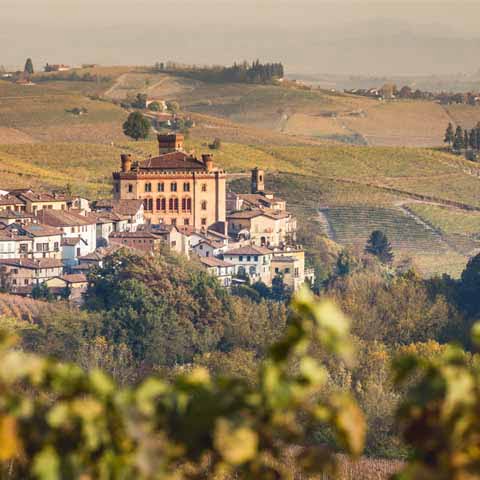
Flavors of Langhe Tour | Vacation Packages for 2025 – 2026
Experience Piedmont’s Langhe region as you savor world-class wines, explore hilltop villages and discover castles in Italy’s gourmet heartland. Starting from $1,448 per person.
HOME » POPULAR ITALIAN DESTINATIONS » ITALIAN TRAVEL GUIDES BY REGION » PIEDMONT TRAVEL GUIDE » PIEDMONT FOOD AND WINE GUIDE
Piedmont Travel Guide Culture History Food and Wine Things to Do Plan My Trip
About this guide: This guide to the food and wine of Piedmont was written by the Italian-born travel specialists at Trips 2 Italy, a custom tour operator that has designed hand-crafted Italian vacations since 2003. Every recommendation below reflects the same first-hand knowledge our team draws on when we build a private Piedmont itinerary around a traveler’s interests, dates, and pace. Read it for your research, then let us translate it into a trip designed entirely around you.
Piedmontese cooking is a court cuisine grafted onto farmhouse roots, and the graft took beautifully. From the Savoy court came refinement, French technique, and a taste for ceremony; from the Langhe farms and alpine valleys came butter, hazelnuts, beef, rice, and the patience of long braises. The result is Italy’s most quietly aristocratic table, rich without excess, precise without fuss, and deeply loyal to its own hills.
Geography writes the menu. The rice paddies of Vercelli fill the risotto pot, the pastures of the high valleys send down butter and cheeses like Castelmagno and Toma, the Langhe supplies Nebbiolo wine, hazelnuts, and the white truffle, and the nearby Ligurian coast explains the anchovies that thread through so many Piedmontese dishes, carried over the mountains for centuries along the old salt roads.
The cheese board alone justifies the journey. Castelmagno, aged in the cool of the Grana valley, crumbles like an ancient monument and melts into the region’s gnocchi; Toma in its many village variations, Raschera, Bra in both soft and hard tempers, and Robiola di Roccaverano from the high Langhe together form one of Italy’s great alpine cheese traditions, best tasted where they are made, with a spoonful of local honey and a glass of Barbera.
It is no accident that the Slow Food movement was founded here, in the town of Bra in the 1980s, with its University of Gastronomic Sciences later established at Pollenzo. Piedmont did not need to be converted to the philosophy of eating locally, seasonally, and unhurriedly. It simply lent its name to what the region had always practiced, and every culinary itinerary we design here is built on that same conviction.
Begin with the pastas. Agnolotti del plin are tiny pinched parcels of roasted meat, sauced with little more than butter, sage, or the roasting juices, and tajarin are golden ribbons enriched with an extravagance of egg yolks, made to carry shaved truffle or a slow ragu. Both are still rolled by hand across the Langhe, and watching a sfoglina pinch the plin explains the dish better than any menu.
The antipasti parade is a Piedmontese institution: vitello tonnato, cool sliced veal under a silken tuna and caper sauce; carne cruda all’albese, hand-cut raw veal dressed simply with oil and lemon; and peppers, anchovies, and the warm garlic and anchovy bath of bagna cauda, the convivial winter dish the region shares from a communal pot. Mains answer with brasato al Barolo, beef braised slowly in the king of wines, bollito misto with its ritual sauces, and the grand fritto misto alla piemontese.
Autumn crowns everything with the white truffle of Alba, shaved tableside over tajarin, eggs, or fonduta, the region’s melted cheese cream. The through-line is seasonality without compromise: asparagus and spring herbs, summer peppers and tomatoes from the Monferrato, then the long glory of harvest, truffle, and braise. We time culinary itineraries to that calendar deliberately, because eating with Piedmont’s seasons is the whole point of coming.
The white truffle of Alba, tuber magnatum, resists every attempt at cultivation. It grows wild in symbiosis with oak, poplar, and hazel roots in the damp autumn soils of the Langhe, Roero, and Monferrato, and it must be found, dog by dog and dawn by dawn, by the trifolau, the truffle hunters whose secret spots pass quietly between generations. Scarcity, mystery, and an aroma unlike anything else on earth explain the reverence.
The season runs roughly from October into early winter, peaking around Alba’s International White Truffle Fair, when the town’s halls fill with the perfume and the year’s great specimens go under the auctioneer’s hammer. Unlike the black truffle, the white is never cooked; it is shaved raw at the table, over dishes chosen for their gentleness, and the first plate of tajarin under a snowfall of truffle is a memory travelers keep for decades.
The hunt itself is half the enchantment. The dogs work the leaf litter with visible joy, the trifolau reads their tails the way sailors read wind, and when a dog freezes and digs, the whole party leans in for the moment the pale gold surfaces from the black soil. It is theater, tradition, and agriculture at once, conducted in a whisper because the best spots are worth keeping quiet about.
We arrange the full experience: a morning hunt through misty woods with a trifolau and his dog, the walk back for a truffle-focused lunch at a farmhouse table, and guided time at the fair for travelers visiting in season. These mornings are personal, unstaged, and arranged through relationships our specialists have kept for years, which is exactly what makes them feel less like an excursion and more like being let in on a secret.
Piedmont is Nebbiolo country, and that demanding grape, translated by two neighboring sets of hills, produces the region’s twin monuments. Barolo, from villages southwest of Alba, is the king of wines and the wine of kings, structured, perfumed with rose and tar, and built for decades. Barbaresco, from ridges just northeast, answers with more grace than muscle. Both belong to the Langhe landscape UNESCO protects, where every famous vineyard can be seen from a castle tower.
Around the monuments spreads a generous family. Barbera d’Asti and Barbera d’Alba bring the everyday red the region actually drinks, bright and appetizing; Dolcetto offers soft, companionable suppers; Roero Arneis and Gavi’s Cortese give the whites their elegance; and Moscato d’Asti closes meals with its gentle sparkle and orchard sweetness. Add Alta Langa’s classic-method sparklers and the vermouth tradition of Turin, and Piedmont covers the entire arc of a well-lived evening.
Vintage matters here as it does in few Italian regions, because Nebbiolo records its year with a diarist’s honesty. Cool seasons give perfume and nerve, warm ones give amplitude, and tasting the same cru across several vintages with the family that made them is one of the most instructive pleasures wine travel offers. Collectors often build entire Piedmont days around exactly that kind of vertical conversation.
What distinguishes wine travel here is intimacy. Most estates remain family houses where the person pouring made the wine, and cellar doors open by appointment rather than to passing traffic. We compose tasting days around producers we know personally, sequenced so each wine explains the next, from a morning Arneis to an afternoon in the Barolo crus.
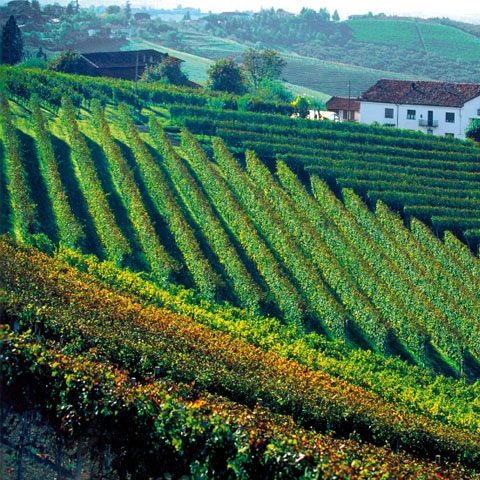
The Langhe, Roero, and Monferrato are a working landscape of rare harmony: vineyard ridges rolling to the horizon, each crest carrying a village, a castle, or a bell tower, with the snowline of the Alps floating beyond. In 2014 UNESCO inscribed the whole ensemble as a cultural landscape, recognizing what travelers feel immediately, that centuries of careful winegrowing have composed these hills as deliberately as any garden.
A proper visit unfolds slowly. Mornings might climb the tower at Serralunga d’Alba or the castle of Grinzane Cavour, where the vineyards spread below like a map of appellations. Middays belong to long lunches in wine villages, and afternoons to cellars, from historic estates with generations of dusty vintages to young growers reinventing their family’s hectares. During the vendemmia, the harvest weeks of September and October, the whole landscape hums with purpose.
With a private driver handling the ridge roads, a wine country day becomes pure pleasure: two or three estates thoughtfully sequenced, a table among the vines, and the villages of Barolo, La Morra, and Neive unrolling between them. It is the single most requested experience in our Piedmont itineraries, and the one we take the greatest care composing.
Turin is Italy’s chocolate capital, and its signature is gianduja, the velvet union of cocoa and Langhe hazelnuts born when chocolatiers stretched scarce cocoa with the local harvest. The gianduiotto, its gold-wrapped ingot form, is still cut and folded by hand in historic workshops, and a tasting walk through the city’s chocolatiers and confectioners is one of the sweetest afternoons in Italy.
The cafes frame the ritual. Under gilded ceilings that once hosted philosophers and conspirators, Turin serves the bicerin, its layered glass of espresso, drinking chocolate, and cream, alongside pastries from the Savoy court’s repertoire. The region’s dessert canon continues with bonet, the amaretto and chocolate custard of the Langhe, panna cotta in its birthplace, torta di nocciola with the hazelnut’s full voice, and pears poached in Nebbiolo.
Behind the sweetness stands the hazelnut itself, the Tonda Gentile of the Langhe, widely considered the finest in the world. Its orchards share the hills with the vines, its late-summer harvest has its own quiet rituals, and its influence runs from the humblest village torta to the most celebrated confections of the city. Tasting a freshly roasted Langhe hazelnut beside a piece of gianduja is a small lesson in why origin matters.
The rituals extend to the table’s edges: grissini, the thin crisp breadsticks invented in Turin for a delicate Savoy prince, appear at every meal, and the aperitivo hour, poured over the city’s own vermouth, opens each evening as it has for two centuries. Fine dining flourishes across the region, from countryside rooms elevating farmhouse classics to celebrated tables in the wine villages, and we reserve the rooms suited to each evening of an itinerary.
A Trips 2 Italy culinary itinerary begins with how you love food, not with a fixed menu of activities. For some travelers that means hands-on: a market morning in Alba or under Turin’s arcades with a cook who shops there daily, then a farmhouse kitchen where agnolotti del plin are pinched and tajarin rolled until lunch becomes the homework. For others it means the hunt, following a truffle dog through the autumn woods, or the cellar, tasting vertically through a family’s vintages with the winemaker.
Because our team is Italian-born and has worked these hills since 2003, the settings are authentic rather than staged: family kitchens in the Langhe, alpine dairies where Castelmagno ages in the cool dark, rice farms outside Vercelli where risotto is stirred within sight of the paddies that grew it, and chocolate workshops in Turin where the day’s gianduiotti are still warm.
Every journey is composed around your dates and the season’s calendar, from spring markets to the vendemmia to the truffle weeks of late autumn, as part of our wine tasting and food tours in Italy. Tell us how you imagine eating in Piedmont, and we will build the days around the table.
Piedmont deserves more than a template. Since 2003, Trips 2 Italy has designed private Italian vacations one traveler at a time, hand selecting every experience based on what you tell us rather than fitting you into a predefined package. Our Italian-born team plans Piedmont with the knowledge of people who call Italy home, from Turin’s royal arcades to the vineyard ridges of the Langhe and the gardens of Lake Maggiore, and we remain at your side throughout your trip with 24/7 assistance. Tell us how you imagine Piedmont, and we will craft the itinerary that matches it.
Experience Piedmont’s Langhe region as you savor world-class wines, explore hilltop villages and discover castles in Italy’s gourmet heartland. Starting from $1,448 per person.
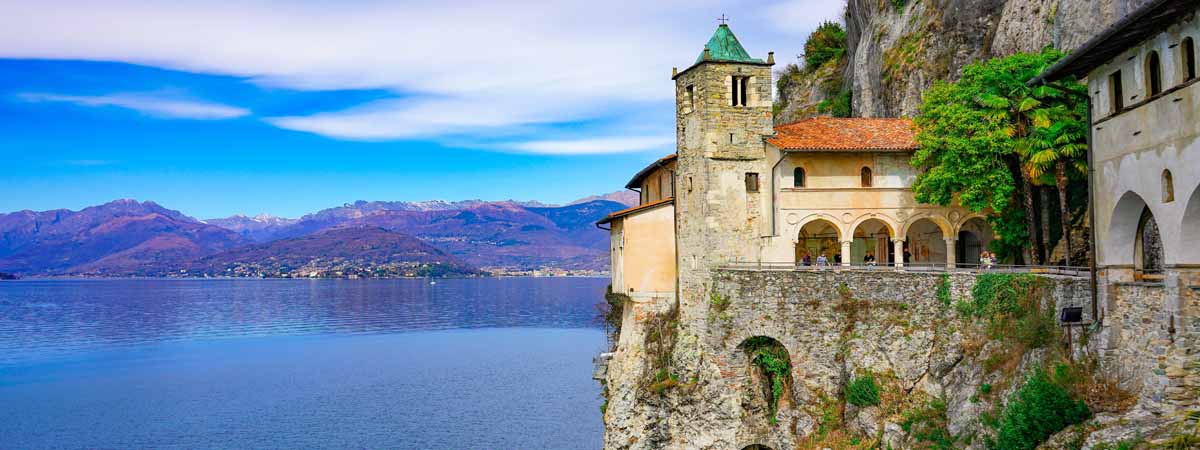
Experience Lake Maggiore, the Borromean Islands and Villa Taranto as gardens, lakeside towns and scenic journeys create a magical Italian escape. Starting from $1000 per person.
Experience Turin as royal palaces, grand piazzas and chocolate cafés reveal the elegance and history of Italy’s first capital. Starting from $1,644 per person.
Agnolotti del plin and tajarin pasta, vitello tonnato, bagna cauda, carne cruda, brasato al Barolo, risotto from the Vercelli rice plain, alpine cheeses like Castelmagno, hazelnuts, gianduja chocolate, and above all the white truffle of Alba. The region is also the birthplace of the Slow Food movement, founded in the town of Bra.
Barolo and Barbaresco, both from the Nebbiolo grape, lead the region, joined by Barbera d’Asti and d’Alba, Dolcetto, Roero Arneis, Gavi, Moscato d’Asti, and the Alta Langa sparklers, with Turin’s vermouth tradition alongside. Trips 2 Italy arranges tastings with producers we know personally, from historic estates to small family cellars.
The season generally runs from October into December, peaking during Alba’s International White Truffle Fair in October and November. It coincides beautifully with the wine harvest and the fog-softened autumn landscape, and we arrange truffle hunts, fair visits, and truffle-focused tables for travelers timing their trip to the season.
Yes, and it is one of the region’s defining experiences. We arrange private morning hunts with a trifolau and his trained dog in the woods of the Langhe and Roero, followed by a truffle-focused lunch. These outings are genuine working hunts arranged through long-standing relationships, not staged demonstrations.
By appointment and with a private driver. Most estates are family houses that receive visitors by arrangement, and the finest visits include the vineyard, the cellar, and often the family table. Trips 2 Italy secures those appointments through long-standing relationships, and a driver lets every glass be enjoyed while the ridge roads of the UNESCO landscape become scenery instead of navigation.
Gianduiotti and anything touched by gianduja, the bicerin in a historic Turin cafe, bonet, panna cotta in its home region, hazelnut torta from the Langhe, and Moscato d’Asti alongside. A guided chocolate and cafe walk through Turin is one of the most delicious afternoons we arrange.