Bergamo Travel Guide

HOME » POPULAR ITALIAN DESTINATIONS » BERGAMO TRAVEL GUIDE

Bergamo Travel Guide        Culture        History        Food and Wine        Things to Do        Plan My Trip

About this guide: This Bergamo travel guide was written by the Italian-born travel specialists at Trips 2 Italy, a custom tour operator that has designed hand-crafted Italian vacations since 2003. Every recommendation below reflects the same first-hand knowledge our team draws on when we build a private Bergamo itinerary around a traveler’s interests, dates, and pace. Read it for your research, then let us translate it into a trip designed entirely around you.

What Makes Bergamo One of Northern Italy's Most Rewarding Cities?

Bergamo is two cities wearing one name. On the plain stands the Città Bassa, an elegant lower town of boulevards, porticoes, and cafes shaped largely in the nineteenth and early twentieth centuries. Five hundred feet above it, ringed by miles of Venetian walls, rises the Città Alta, a complete medieval and Renaissance town of stone lanes, towers, and piazzas that many travelers count among the most beautiful urban spaces in Italy. A funicular has stitched the two together since 1887, and the short ride between them remains one of the country’s great arrivals.

The setting explains much of the magic. Bergamo stands where the Lombard plain meets the first foothills of the Alps, roughly thirty miles northeast of Milan, at the mouth of two deep valleys that climb toward the Orobie peaks. For nearly four centuries the city was the westernmost mainland possession of the Republic of Venice, and the mighty walls the Republic raised in the sixteenth century now carry UNESCO World Heritage status. As one of the anchor cities of Lombardy, Bergamo gathers an extraordinary amount of Northern Italy into one compact, walkable place.

What strikes travelers most is the city’s quiet sophistication. Bergamo holds one of Italy’s finest picture galleries in the Accademia Carrara, a jewel box of a Renaissance chapel in the Cappella Colleoni, the birthplace and living operatic legacy of Gaetano Donizetti, and a table built on handmade casoncelli, mountain cheeses, and its own wines. It offers all of this at a genuinely local rhythm, in piazzas where Bergamasque families still take their evening walk, which is why travelers who discover the city tend to speak of it with a certain protectiveness.

Use this guide to shape your thinking, then let us shape the trip. Every Bergamo vacation we design is composed from what you tell us, hand selected experience by experience, never assembled from a predefined package.

What Is the Geography and Setting of Bergamo?

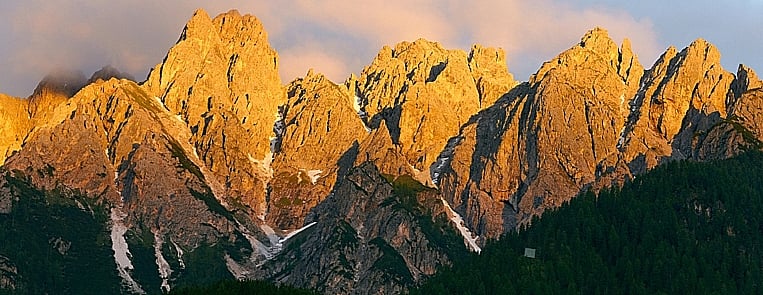
Bergamo occupies a hill at the exact seam between two Italian worlds. To the south stretches the flat, fertile Po plain, reaching toward Milan and the great agricultural heart of Lombardy. To the north rise the Bergamasque foothills and then the Orobie Alps, a wall of peaks above 8,000 feet that feeds the two long valleys flanking the city, the Val Brembana to the west and the Val Seriana to the east. The upper town crowns the last hill before the plain, which is precisely why every civilization since the Celts has fortified it.

The city itself is arranged vertically. The walled Città Alta holds the historic core, the hill of San Vigilio rises higher still behind it with a castle and sweeping views, and the modern Città Bassa spreads across the level ground below, joined to the upper town by funicular, by winding roads, and by centuries-old pedestrian stairways through gardens and orchards. A protected greenbelt, the Parco dei Colli, wraps the hills in woods, vineyards, and terraced smallholdings, so the countryside begins the moment the walls end.

The climate follows the meeting of plain and mountain. Spring and autumn are the glory seasons, mild and clear, with the Alps standing sharp on the horizon after rain. Summers are warm and bright, tempered in the evenings by air moving down from the valleys, and winters are crisp, occasionally dusted with snow that turns the upper town into an engraving. On the clearest days the view from the walls runs across the whole plain, and locals insist you can pick out the skyline of Milan.

When Is the Best Time of Year to Visit Bergamo?

Spring and early summer bring the walls and hillsides into leaf, wisteria over stone gates, and long evenings made for the passeggiata. May and June are ideal for combining the city with the lakes and the lower valleys, when gardens across Lombardy are at their peak and the mountain air is soft. Autumn answers with golden light on the stone, porcini and game arriving on menus, the grape harvest in the Valcalepio hills, and September’s celebration of Moscato di Scanzo in the villages east of the city.

November holds a distinction all its own: the Donizetti Opera festival, when the composer’s home city stages his works in the theater that bears his name and in historic venues of the upper town. Pairing the festival with the season’s polenta, cheese, and new wine makes one of Northern Italy’s most rewarding late-autumn journeys. Winter has its devotees as well, with quiet lanes, lamplit stone, Christmas markets in the lower town, and the Orobie ski slopes barely an hour away.

Summer belongs to the evenings, when the Città Alta cools, terraces fill, and concerts and open-air events animate the piazzas. When we plan a Bergamo itinerary, your dates become an instrument: we align the visit with the opera calendar, the harvest, or the mountain season, and we time the great sights for the hours when they are at their calmest and most beautiful.

How Many Days Should You Spend in Bergamo?

Two full days cover the essentials with the unhurried pace the city deserves: a day inside the walls for Piazza Vecchia, the Basilica di Santa Maria Maggiore, the Cappella Colleoni, and a slow circuit of the ramparts, then a day for the Accademia Carrara, the lower town’s elegant streets, and the funicular up to San Vigilio at sunset. Travelers who add a third day find the quieter registers, from the Astino valley’s restored monastery to the stairway walks through the Parco dei Colli.

Bergamo also makes a superb base for four or five nights. From the city, Lake Iseo and the Franciacorta wine country lie under an hour away, the spa town of San Pellegrino Terme sits up the Val Brembana, Lake Como and Milan are easy day journeys, and the high Orobie valleys reward walkers and seekers of alpine scenery. Basing in the Città Alta means returning each evening to a walled Renaissance town after the day’s explorations, an arrangement our travelers consistently describe as the best decision of their trip.

Because every Trips 2 Italy itinerary is built by hand, the right length depends on what you love and on the rest of your Italian journey. We weigh Bergamo against your other destinations, then give it the space it deserves rather than the space a standard package allows.

Which Neighborhoods and Districts Should You Know?

The Città Alta is the heart, a hilltop town of perhaps a square half mile where the main lane, the Corsarola, runs along the ancient Roman axis from the Gombito tower to the Cittadella. Around Piazza Vecchia and Piazza del Duomo cluster the civic palaces, the basilica, and the Colleoni Chapel, while side alleys drop away to gardens, convent walls, and sudden views over the plain. Staying inside the walls means hearing the Campanone, the great civic bell, still ring one hundred times at ten each evening, a curfew signal kept alive for centuries.

The Città Bassa rewards more attention than passing travelers give it. The Sentierone promenade, the Teatro Donizetti, and the porticoed Piazza Vittorio Veneto form a stately early twentieth century center, and Via XX Settembre carries the city’s smartest shopping. Two historic villages absorbed by the lower town keep older textures: Borgo Pignolo, whose palace-lined street climbs toward the walls past the Accademia Carrara, and Borgo Santa Caterina, a neighborhood of neighborhood shrines, artisans, and confident local cooking.

Above and behind the walled town, the hill of San Vigilio is a village in the trees, reached by its own small funicular, with castle ruins and the finest panorama in the province. Just outside the western gate, Borgo Canale preserves the lane where Gaetano Donizetti was born in 1797, still rural in feeling, with orchards running down the hillside. Matching your base to your temperament is one of the first decisions we make together when planning.

How Do You Get Around Bergamo?

The funiculars are transport and attraction in one. The lower line has climbed from the Città Bassa through the walls since 1887, rising through gardens before emerging in a small piazza inside the old town, while the upper line continues from the far end of the Città Alta to San Vigilio. Between stations, the upper town is entirely a place for walking: distances are short, the lanes are cobbled, and the finest moments happen between the monuments rather than at them. Comfortable shoes matter more here than any schedule.

For everything beyond the hill, we arrange private drivers and transfers so the region’s geography works in your favor. A driver turns the Val Brembana, the Valcalepio wine hills, Lake Iseo, and the Franciacorta estates into effortless half-day and full-day excursions, and makes evening returns to the upper town simple after a long lunch in the countryside. Within a private itinerary, sightseeing time is never spent on logistics.

Arrival is equally straightforward. Bergamo’s own international airport sits just ten minutes from the center, Milan’s airports and rail hub are under an hour away, and the main rail line links the city toward Brescia, Verona, and Venice. Every Trips 2 Italy journey begins with a private transfer waiting when you land and ends with one at your door, supported around the clock in between.

How Do We Weave Bergamo Into a Complete Italian Itinerary?

Bergamo sits at one of the most convenient crossroads in Northern Italy. Milan lies under an hour west, Lake Como and Lake Iseo frame it on either side, and the rail line east runs through Brescia and Verona to Venice, which makes the city a natural bridge between Milan or the lakes and the Veneto. Many of our travelers give Bergamo two or three nights in exactly that position, a walled hilltop interlude between larger chapters, and find it becomes the part of the journey they describe first when they return home.

The occasion shapes the composition. For couples, an evening on the walls and a candlelit dinner in the Città Alta fold naturally into an Italian honeymoon that continues to the lakes. For travelers who plan around the table, the casoncelli, the cheese valleys, and the Franciacorta cellars nearby earn Bergamo a place in a wine and culinary journey. And for those composing something larger, the city becomes a distinctive movement in a custom trip to Italy designed entirely from what you tell us.

This guide is one of five we have written on the city. Continue with our Bergamo culture guide, Bergamo history guide, Bergamo food and wine guide, and Bergamo things to do guide, or widen the lens with our complete Italy travel guide.

Ready to Begin Planning Your Bergamo Vacation?

Bergamo deserves more than a template. Since 2003, Trips 2 Italy has designed private Italian vacations one traveler at a time, hand selecting every experience based on what you tell us rather than fitting you into a predefined package. Our Italian-born team plans Bergamo with the knowledge of people who call Italy home, from the Venetian walls of the Città Alta to the vineyards of Valcalepio and the high valleys of the Orobie Alps, and we remain at your side throughout your trip with 24/7 assistance. Tell us how you imagine Bergamo, and we will craft the itinerary that matches it.

Explore Our Bergamo Vacation Itineraries

Frequently Asked Questions About Traveling to Bergamo

Spring and autumn are the finest seasons, with clear views to the Alps, mild walking weather, and the Valcalepio grape harvest in September and October. November brings the Donizetti Opera festival in the composer’s home city, summer offers long evenings on the walls, and winter turns the lamplit upper town wonderfully quiet. The specialists at Trips 2 Italy align your dates with what the city does best in that season.

Two full days cover the Città Alta, the Venetian walls, the Accademia Carrara, and the funicular to San Vigilio at a comfortable pace. A third day opens the quieter hills and the Astino valley, and four or five nights turn Bergamo into an excellent base for Lake Iseo, Franciacorta, the Val Brembana, and day journeys to Milan or Lake Como.

Emphatically yes. The walled Città Alta is one of the most complete historic hill towns in Italy, the city holds a world-class picture gallery and a great operatic legacy, and its cuisine of casoncelli, alpine cheeses, and local wines is celebrated across Lombardy. It sits under an hour from Milan and on the rail line toward Verona and Venice, so it fits naturally into a Northern Italy journey.

The Città Alta is the walled medieval and Renaissance upper town on the hill, home to Piazza Vecchia, the basilica, and the Colleoni Chapel. The Città Bassa is the elegant lower city on the plain, with the Sentierone promenade, the Teatro Donizetti, the Accademia Carrara, and the main shopping streets. A funicular has connected the two since 1887, and a complete visit embraces both.

The upper town is best explored entirely on foot, with the two funiculars handling the climbs to the Città Alta and San Vigilio. For the wine hills, the valleys, and the lakes, Trips 2 Italy arranges private drivers and transfers, from the moment you land at Bergamo’s own airport or in Milan, so every excursion unfolds without logistics intruding on the day.

Very comfortably. Lake Iseo and the Franciacorta wine estates lie under an hour away, San Pellegrino Terme and the Orobie valleys rise directly behind the city, and Milan and Lake Como are easy day trips. Basing inside the walls means returning each evening to a Renaissance hill town, an arrangement our travelers consistently praise.