Things To Do in Bergamo

HOME » POPULAR ITALIAN DESTINATIONS » BERGAMO TRAVEL GUIDE » BERGAMO THINGS TO DO GUIDE

Bergamo Travel Guide        Culture        History        Food and Wine        Things to Do        Plan My Trip

About this guide: This guide to things to do in Bergamo was written by the Italian-born travel specialists at Trips 2 Italy, a custom tour operator that has designed hand-crafted Italian vacations since 2003. Every recommendation below reflects the same first-hand knowledge our team draws on when we build a private Bergamo itinerary around a traveler’s interests, dates, and pace. Read it for your research, then let us translate it into a trip designed entirely around you.

What Belongs at the Top of Every Bergamo Itinerary?

Begin in Piazza Vecchia, the square that architects hold up as a model of Italian civic beauty, with the medieval Palazzo della Ragione, the Campanone tower, the white Palazzo Nuovo, and the Contarini fountain arranged in perfect conversation. Pass beneath the palace arcade into Piazza del Duomo, where the Basilica di Santa Maria Maggiore, the Cappella Colleoni, the cathedral, and the baptistery crowd together in one of the densest concentrations of art in Northern Italy.

Ride the Campanone’s elevator to the top for the rooftop-and-Alps panorama, stand before Lorenzo Lotto’s intarsia panels in the basilica, and give the Colleoni Chapel the unhurried quarter hour its marble facade deserves as the light moves across it. Then walk the Corsarola end to end, from the Gombito tower to the Cittadella, letting the lanes pull you into courtyards and viewpoints along the way.

The order matters as much as the list. The basilica’s treasures, the chapel’s opening hours, the tower climb, and the funicular’s rhythm all reward planning, and the piazzas are at their most magical early in the morning and after the day visitors descend. We sequence Bergamo days around exactly those windows, with private guides who unlock the stories, so the city’s masterpieces arrive at their best rather than their busiest.

What Is It Like to Walk the Venetian Walls?

The wall-top circuit is Bergamo’s signature experience, a promenade of several miles along ramparts the Republic of Venice completed in 1588 and history then left perfectly intact. The walk passes bastions, powder magazines, and gates, ducks beneath centuries-old trees, and opens view after view: the plain running south toward Milan, the terraced hills and vineyards at your shoulder, and the towers of the upper town rising behind you.

Every hour offers a different wall. Morning brings mist lifting off the plain and locals walking their unhurried laps; late afternoon turns the stone honey-colored and fills the ramparts with the passeggiata; and sunset from the bastions above Porta San Giacomo, the marble gate glowing white as the lights come on below, is the image travelers carry home. In clear weather the panorama stretches from the Apennines to the Alps.

The circuit is gentle, mostly level, and made for lingering, with benches, viewpoints, and gelato within reach at either end. We often pair it with a historian guide who reads the fortifications as they walk, or fold it into an evening that ends with dinner in the lanes, and for travelers who love to move, a sunrise walls walk is the finest exercise in Lombardy.

For photographers the walls are an unending subject: the geometry of the bastions, the marble details of the gates, the long views shifting with the weather, and the towers of the town stacked above the treeline. Bring a camera at golden hour and the circuit will fill it. Many travelers walk the ramparts twice in a stay, once for the views and once simply because the first time ended too soon.

Why Are the Funiculars Part of the Experience?

Bergamo’s funicular is not a means to the attraction; it is the attraction’s first act. The lower line has climbed from the Città Bassa since 1887, rising through gardens and villa walls before sliding through the fortifications themselves to arrive in a small piazza inside the old town. The minute-long ascent, city falling away below and stone closing in above, delivers the change of century that makes the Città Alta feel like a discovery every single time.

At the far end of the upper town, a second funicular continues to San Vigilio, the leafy hill village above the city, where castle ruins crown the summit and the panorama takes in the walled town, the plain, the lakes’ foothills, and the Orobie peaks in one sweep. San Vigilio keeps a village quiet even in high season, and its terraces at sunset, with the whole province turning gold below, are among our favorite aperitivo settings in Lombardy. The hilltop also hides one of the city’s loveliest short walks, the lane that circles past villas and orchards to viewpoints facing the Alps, best paired with the funicular ride down at dusk as the lights of the Città Alta switch on below.

Together the two lines make the city’s vertical geography effortless and turn transit into pleasure, which is very Bergamasque. We time funicular rides into our itineraries deliberately, an early ascent before the lanes wake, a San Vigilio sunset to close a day, and arrange every transfer around them so the climbs are always by cable and the strolls always downhill.

Which Museums and Churches Deserve Your Time?

The Accademia Carrara leads, a collection of Italian painting from Pisanello and Bellini through Botticelli, Raphael, and Titian to the great local masters Lotto and Moroni, displayed in a renewed gallery at the foot of the walls. Across the street, GAMeC answers with modern and contemporary art. Give the pair a relaxed half day, ideally with an art historian who can thread the Venetian and Lombard stories together.

In the upper town, the Basilica di Santa Maria Maggiore rewards slow looking, from the Florentine tapestries to Lotto’s intarsia and Donizetti’s tomb, while the cathedral’s treasury and the archaeological levels beneath it descend to Roman Bergomum. The Museo delle Storie sites, including the Rocca fortress and its Risorgimento collections, the sixteenth-century convent of San Francesco, and the Donizetti birthplace in Borgo Canale, let travelers choose the century that calls to them.

Bergamo’s scale is the secret advantage: nothing requires a timed sprint, and a thoughtful two days can hold the gallery, the basilica, a tower climb, and a museum or two without hurry. We compose museum days around your interests, arrange private openings and specialist guides where access allows, and always leave the unplanned hour that Bergamo’s lanes insist on.

Two smaller treasures reward the curious: the Palazzo Moroni, a seventeenth-century palace whose frescoed rooms and terraced gardens climb the hillside inside the walls, and the octagonal baptistery beside the cathedral, rebuilt from its fourteenth-century original. Both sit within minutes of Piazza Vecchia, quiet proof of how much this small hill holds.

Where Does Bergamo Reveal Its Quieter Side?

Slip through the western gate to Borgo Canale, the country lane where Donizetti was born, and the city loosens instantly into orchards, garden walls, and long views. From there the Parco dei Colli unfolds, a protected landscape of wooded hills, vineyards, and old mule paths where marked trails connect hamlets, shrines, and farmsteads within sight of the city towers. The stairway walks, the centuries-old scalette that lace the hillside between upper and lower town, turn even the commute into countryside.

The most beautiful secret is the Valle di Astino, a green fold in the hills hiding a former Benedictine monastery, restored and reopened, its fields farmed again with heritage crops. An afternoon there, monastery, meadows, and a slow loop back over the hill as the bells sound, feels remarkably far from any itinerary. Borgo Pignolo and Borgo Santa Caterina, the historic villages of the lower city, add palazzo courtyards, artisan shops, and neighborhood cafes where travelers rarely wander.

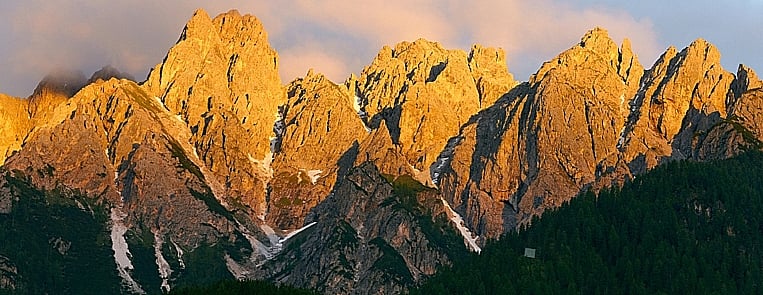
For travelers who love to be outdoors, these hills are only the overture: the Orobie valleys behind the city climb to alpine lakes, high pastures, and panoramic ridgelines, and the walking, from gentle vineyard strolls to full mountain days, belongs in any active trip through Italy. We match trails to travelers precisely, arrange local walking guides, and position picnic or rifugio lunches where the views do the talking.

Which Day Trips Pair Naturally with Bergamo?

Lake Iseo is the classic, under an hour away: a morning boat to Monte Isola, the car-free island rising from the middle of the lake, lunch by the water, and an afternoon among the Franciacorta wine estates on the way home. The Val Brembana climbs north to San Pellegrino Terme, the Liberty-era spa town whose casino and grand hotel facades recall the Belle Époque and whose thermal baths have been elegantly revived; beyond it, the valley heads keep villages, dairies, and trailheads for the high Orobie.

History lovers ride the plain to Colleoni’s frescoed castle at Malpaga or to Crespi d’Adda, the UNESCO-listed company town preserved whole beside its cotton mill on the Adda river. Milan sits forty minutes west for the Duomo, the Last Supper by arrangement, and the fashion streets, and Lake Como’s silk city and lakeside villas make an easy loop. Even Verona and Lake Garda lie within comfortable reach along the eastward line.

A private driver turns each of these into an effortless arc from your hotel door and back for dinner in the lanes, and choosing the right two or three matters more than attempting them all. Families in particular find Bergamo an ideal base, with funiculars, castles, boats, and cheese-making mornings that hold every generation’s attention on a family vacation to Italy designed around them.

What Do Evenings in Bergamo Look Like?

Evening is when the Città Alta belongs most completely to itself. The day visitors descend, the lamps come on along the Corsarola, and the aperitivo hour fills the small piazzas with conversation, local wine, and generous plates. An evening stroll to the bastions, spritz in hand while the plain below turns to a carpet of lights, costs nothing and outranks most ticketed experiences in Italy.

Dinner follows at the unhurried Bergamasque pace, casoncelli and grilled meats in a beamed trattoria, or a contemporary tasting menu in a vaulted room, and then the town rewards one last walk: Piazza Vecchia nearly empty, the fountain murmuring, the Campanone striking its hundred strokes at ten. In season, the Teatro Donizetti and the upper town’s historic theaters add opera, concerts, and the November festival’s premieres to the evening’s possibilities.

We compose evenings as deliberately as days: a San Vigilio sunset by funicular, a reserved table timed after the walls walk, performance seats secured months ahead, and a driver waiting when the night ends. In a city this beautiful after dark, the hours between aperitivo and midnight are not the margin of the itinerary. They are the point of it.

Ready to Begin Planning Your Bergamo Vacation?

Bergamo deserves more than a template. Since 2003, Trips 2 Italy has designed private Italian vacations one traveler at a time, hand selecting every experience based on what you tell us rather than fitting you into a predefined package. Our Italian-born team plans Bergamo with the knowledge of people who call Italy home, from the Venetian walls of the Città Alta to the vineyards of Valcalepio and the high valleys of the Orobie Alps, and we remain at your side throughout your trip with 24/7 assistance. Tell us how you imagine Bergamo, and we will craft the itinerary that matches it.

Explore Our Bergamo Vacation Itineraries

Frequently Asked Questions About Things to Do in Bergamo

Explore Piazza Vecchia and the Basilica di Santa Maria Maggiore with the Colleoni Chapel, walk the UNESCO-listed Venetian walls, ride the 1887 funicular to the Città Alta and the second line up to San Vigilio, visit the Accademia Carrara’s masterpieces, and end the day with an aperitivo on the bastions as the plain lights up below.

Yes. The Venetian walls carry a gentle, mostly level promenade of several miles past bastions, gates, and continuous views over the plain and hills. It is free, open at all hours, and at its most beautiful in the early morning and at sunset from the bastions near the marble Porta San Giacomo.

A full day covers the piazzas, the basilica and Colleoni Chapel, the Campanone tower, and a walls circuit at a relaxed pace, but an overnight inside the walls is the real recommendation: evenings and early mornings, when the lanes are quiet and lamplit, show the upper town at its most magical.

Lake Iseo and Monte Isola with the Franciacorta wine estates, San Pellegrino Terme and the Val Brembana, Colleoni’s castle at Malpaga, the UNESCO company town of Crespi d’Adda, Milan, and Lake Como all lie within an hour or so. Trips 2 Italy arranges each as a private-driver day composed around your interests.

Wonderfully so. Funicular rides, tower climbs, castle ruins at San Vigilio, boats on Lake Iseo, and cheese-making mornings in mountain dairies keep every generation engaged, and the upper town’s compact, traffic-light lanes make exploring easy with children. We design family itineraries so history arrives as adventure.

Yes. Trips 2 Italy provides private historian and art guides for the upper town, the walls, and the Accademia Carrara, secure seats for the Teatro Donizetti and the November opera festival, and arrange every transfer, funicular-timed arrival, and day trip so the logistics disappear into the trip.