Palermo History Guide

HOME » POPULAR ITALIAN DESTINATIONS » PALERMO TRAVEL GUIDE » PALERMO HISTORY GUIDE

Palermo Travel Guide        Culture        History        Food and Wine        Things to Do        Plan My Trip

About this guide: This guide to the history of Palermo was written by the Italian-born travel specialists at Trips 2 Italy, a custom tour operator that has designed hand-crafted Italian vacations since 2003. Every recommendation below reflects the same first-hand knowledge our team draws on when we build a private Palermo itinerary around a traveler’s interests, dates, and pace. Read it for your research, then let us translate it into a trip designed entirely around you.

How Did Palermo Begin?

Palermo is one of the oldest continuously inhabited cities in Europe. Phoenician traders founded it in the eighth century BC on a natural harbor between two rivers, calling it Ziz, and it grew into one of the principal Carthaginian strongholds in Sicily. The Greeks, who never ruled it, gave it the name that stuck: Panormos, the all-harbor, in tribute to its magnificent anchorage.

Rome took the city during the First Punic War in 254 BC, and Panormus prospered quietly through the imperial centuries as a port and provincial town. The deeper Roman legacy in this corner of Sicily lies in the countryside and in the island’s grain trade, while Palermo’s own great chapters were still to come.

With the empire’s fall came Vandal and Ostrogoth interludes and then two Byzantine centuries, when Sicily looked east to Constantinople and Greek rite and language deepened their roots. Palermo remained a secondary city through all of it, a harbor waiting for the turn of history that would make it a capital.

For travelers, these earliest layers surface in the archaeological museum’s collections and in the city’s very shape, and they set up the story every Palermo itinerary tells: how a Phoenician trading post became, twice in its history, one of the most brilliant capitals in the Mediterranean world.

What Did Arab Rule Give Palermo?

In 831 AD, after a long siege, Palermo fell to Arab forces from North Africa, and its first golden age began. As capital of the Emirate of Sicily, the city exploded into one of the great metropolises of the Islamic Mediterranean, a rival to Cordoba and Cairo, celebrated by travelers for its hundreds of mosques, its gardens, and its markets.

The Arabs re-engineered the city’s world. They brought sophisticated irrigation to the plain behind Palermo, planting the citrus, sugarcane, mulberries, and palms that created the Conca d’Oro, and they introduced crops and techniques that still define Sicilian cooking: durum wheat pasta, rice, almonds, pistachios, saffron, cane sugar, and the frying traditions behind the city’s street food.

They also drew the map travelers still walk. The souk pattern of the markets, the dense lanes of the Albergheria and the Capo, the name of the Kalsa, from al-Khalisa, the emir’s fortified quarter, and dozens of other place names all date from these two centuries. The abbanniata, the vendors’ sung call, is their living echo.

Almost no Arab building survives intact, which makes the era’s persistence in the city’s food, plan, language, and temperament all the more remarkable. Our historian guides excel at making this invisible city visible, reading the Arab centuries out of street names, market stalls, and the pages of medieval travelers.

How Did the Normans Make Palermo the Most Brilliant Court in Europe?

In 1072, the Norman brothers Robert Guiscard and Count Roger took Palermo, and rather than erasing what they found, they built upon it. Their genius was synthesis: Norman rule, Byzantine art, Arab administration and craftsmanship, all serving a new kingdom. In 1130, Roger II was crowned King of Sicily in Palermo’s cathedral, and the city became the capital of one of the wealthiest and most sophisticated states in Europe.

Roger’s court conducted business in Latin, Greek, and Arabic. His royal workshops produced silks and the famous coronation mantle embroidered by Arab craftsmen, his geographer al-Idrisi compiled the most advanced world atlas of the age, and his builders raised the Palatine Chapel, Byzantine gold above Arab ceilings within a Latin plan, the perfect artifact of his multicultural kingdom.

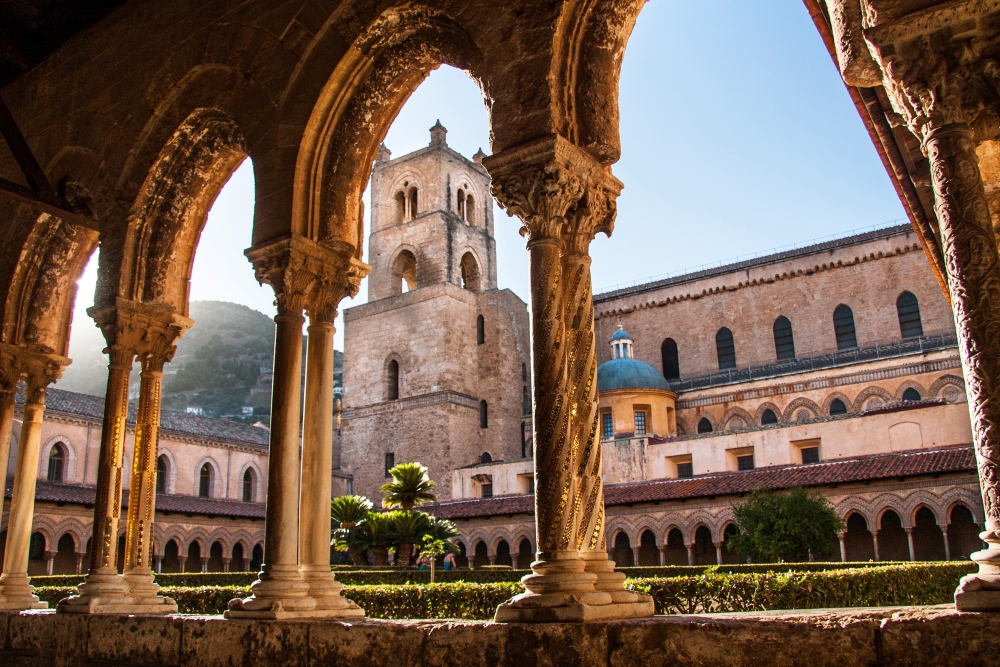
His successors continued the vision: William II built Monreale’s overwhelming mosaic cathedral from 1174, the pleasure palaces of the Zisa and the Cuba rose in the royal parks, and the kingdom passed by marriage to the Hohenstaufen, giving Sicily Frederick II, the emperor called stupor mundi, the wonder of the world, who was raised in Palermo’s streets and lies buried in its cathedral beside his Norman forebears.

This is the era that defines Palermo for travelers, and we sequence it deliberately: the Palatine Chapel and Royal Palace, the cathedral and its royal tombs, the Martorana and San Cataldo, and Monreale as the finale, with historians who make a twelfth-century court feel present in the room.

What Happened to Palermo After Its Medieval Golden Age?

The brilliance dimmed after Frederick II’s death in 1250. Angevin French rule proved brief and bitterly resented, and in 1282 Palermo lit the fuse of one of medieval Europe’s most famous uprisings: the Sicilian Vespers, which began outside the church of Santo Spirito at the hour of evening prayer and swept the French from the island within weeks.

There followed five centuries under the crowns of Aragon and then Spain, with Sicily governed by viceroys from Palermo. Political weight moved elsewhere, but the city continued to build magnificently: Catalan Gothic palaces in the Kalsa, and then the great baroque remaking of the center, when the crossing of the Cassaro and the new Via Maqueda was crowned by the Quattro Canti in the early seventeenth century.

The Spanish centuries also fixed the city’s social theater: the aristocratic palaces with their painted ballrooms, the confraternities whose oratories Giacomo Serpotta filled with stucco between the 1680s and 1720s, and the religious festivals, above all the cult of Santa Rosalia after the plague of 1624, that still organize the Palermitan year.

Travelers meet these centuries everywhere in the old city’s fabric, and a well-told walking day connects them: from the Vespers’ church to the Quattro Canti, through palace courtyards to an oratory where the baroque imagination runs wild across the walls.

How Did the Belle Epoque and the Modern Era Shape Palermo?

Palermo entered united Italy in 1860, when Garibaldi’s Thousand took the city in one of the Risorgimento’s decisive episodes, and the decades that followed brought a second flowering. The Florio dynasty, merchant princes of shipping, tuna, and Marsala wine, made the city a capital of the European Belle Epoque, and architect Ernesto Basile made it a capital of the Liberty style, Italy’s Art Nouveau.

The era’s monuments still define the modern city: the Teatro Massimo, begun by Giovan Battista Filippo Basile and completed by his son Ernesto in 1897 as Italy’s largest opera house, the elegant kiosks and villas of the new avenues, and the seaside resort of Mondello, laid out in those years with its Liberty bathing pavilion standing over the water.

It was an era of glamour with a distinctly Sicilian accent: royal visitors and the celebrities of Europe wintered in the city’s grand hotels, the Targa Florio, the world’s oldest great motor race, roared through the mountains behind the city from 1906, and Palermo’s salons briefly rivaled any in Europe for brilliance.

The twentieth century tested the city severely, from emigration to the Allied bombing of 1943 that scarred the historic center, followed by decades when Palermo’s story was written in hardship and, from the 1990s, in a determined civic revival. The restored Teatro Massimo, the repopulated markets, and the UNESCO inscription of 2015 all belong to that renaissance.

We tell the modern chapters honestly and hopefully, through the places where the revival is visible: restored palaces and oratories, the reborn waterfront, and neighborhoods where a new generation has reopened workshops and courtyards to the city.

Which Places Bring Palermo's History to Life Today?

Begin at the Palazzo dei Normanni, seat of power for a thousand years and home of the Palatine Chapel, then walk the Cassaro to the cathedral, where the porphyry tombs of Roger II and Frederick II hold the kingdom’s founders. The Martorana and San Cataldo compress the Norman synthesis into one small piazza, and the Zisa palace preserves the summer architecture of the kings, complete with its cooling fountain hall.

For the deeper layers, the Regional Archaeological Museum holds the sculpted metopes of Selinunte, among the finest Greek sculpture in the west, while Palazzo Abatellis in the Kalsa presents the island’s medieval and Renaissance masterpieces, including the haunting Triumph of Death fresco and Antonello da Messina’s Annunciata, one of the most beloved paintings in Italy.

Quieter witnesses reward the curious: the Admiral’s Bridge, the twelfth-century span that carried Roger II’s road across the river and still stands in its garden, the church of Santo Spirito where the Vespers began, and San Giovanni degli Eremiti’s red domes above a cloister garden that distills the whole Norman synthesis into a single quiet courtyard.

The Spanish and Belle Epoque centuries live at the Quattro Canti, in Serpotta’s oratories, along the Liberty avenues, and at the Teatro Massimo, while Monreale and Cefalu extend the Norman story into the hills and along the coast. Sequence matters as much as selection, and we compose history-focused days chronologically where interests allow, so three millennia arrive as a story rather than a shuffle.

How Is Palermo Preserving Its Heritage?

In 2015, UNESCO inscribed Arab-Norman Palermo and the cathedrals of Cefalu and Monreale on the World Heritage list, recognizing nine monuments as an ensemble without parallel: the Royal Palace and Palatine Chapel, the cathedral, the Martorana, San Cataldo, San Giovanni degli Eremiti, the Zisa, the Admiral’s Bridge, and the two great cathedrals beyond the city. The inscription crowned decades of patient restoration.

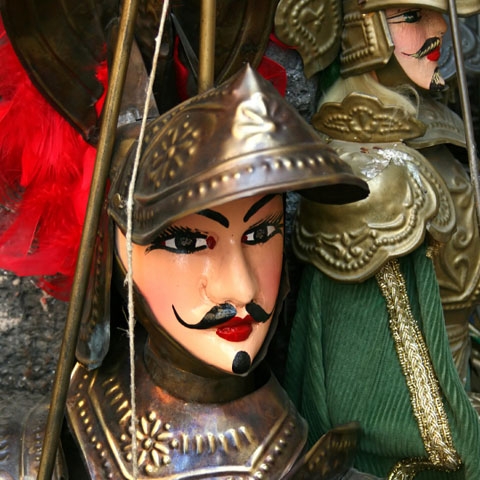
The revival extends far beyond the famous nine. Aristocratic palaces have reopened their painted ballrooms, the oratories have been returned to their white brilliance, the historic markets have been reinforced as living commerce rather than folklore, and craft workshops, from puppet carvers to gilders, are supported as heritage in daily use.

Behind the reopened doors works a dense ecosystem of mosaic conservators, stucco restorers, archivists, and scholars, many trained in the campaigns that returned the Palatine Chapel and the oratories to brilliance. Their laboratories and worksites are among the most fascinating rooms in the city, and their pride in the work is contagious.

For travelers, this means Palermo’s past is more accessible and better presented than at any time in living memory, with the people of the preservation world often generous hosts. We arrange encounters with restorers, custodians, and scholars where access allows, as part of our cultural tours of Italy, because meeting the hands that keep this city alive is one of Palermo’s quiet privileges.

Ready to Begin Planning Your Palermo Vacation?

Palermo deserves more than a template. Since 2003, Trips 2 Italy has designed private Italian vacations one traveler at a time, hand selecting every experience based on what you tell us rather than fitting you into a predefined package. Our Italian-born team plans Palermo with the knowledge of people who call Italy home, from the golden mosaics of the Palatine Chapel to the market lanes of Ballaro and the curve of the beach at Mondello, and we remain at your side throughout your trip with 24/7 assistance. Tell us how you imagine Palermo, and we will craft the itinerary that matches it.

Explore Our Palermo Vacation Itineraries

Frequently Asked Questions About the History of Palermo

Phoenician traders founded the city in the eighth century BC on its great natural harbor, naming it Ziz. The Greeks called it Panormos, the all-harbor, Rome took it in 254 BC, and its two golden ages came later, under the Arab emirs from 831 and the Norman kings after 1072.

Because the Norman kings fused Latin, Byzantine, and Arab civilization into a single brilliant court. Roger II was crowned King of Sicily in Palermo in 1130, his court worked in three languages, and monuments like the Palatine Chapel and Monreale’s cathedral preserve that synthesis in golden mosaic, something that existed nowhere else in medieval Europe.

An uprising that began in Palermo at evening prayer in 1282 outside the church of Santo Spirito and swept Angevin French rule from Sicily within weeks. It reshaped Mediterranean politics for a century and remains one of the most famous revolts of the Middle Ages, and its church still stands in the city.

In Palermo Cathedral, where porphyry tombs hold King Roger II and the emperor Frederick II among other royalty, and in Monreale, where William I and William II lie in the cathedral their dynasty built. Trips 2 Italy pairs these visits with historians who bring the Norman kingdom vividly to life.

The 2015 World Heritage inscription unites nine monuments: the Royal Palace and Palatine Chapel, Palermo Cathedral, the Martorana, San Cataldo, San Giovanni degli Eremiti, the Zisa palace, the Admiral’s Bridge, and the cathedrals of Monreale and Cefalu. We design itineraries that sequence the ensemble so the story builds monument by monument.

Yes, and it transforms the city. Trips 2 Italy arranges private historians and art historians who read Palermo’s three millennia fluently, from Phoenician harbor to Norman court to Belle Epoque capital, with timed access to the great monuments and, where relationships allow, doors that open beyond the standard visit.