Palermo Culture Guide

HOME » POPULAR ITALIAN DESTINATIONS » PALERMO TRAVEL GUIDE » PALERMO CULTURE GUIDE

Palermo Travel Guide        Culture        History        Food and Wine        Things to Do        Plan My Trip

About this guide: This guide to the culture of Palermo was written by the Italian-born travel specialists at Trips 2 Italy, a custom tour operator that has designed hand-crafted Italian vacations since 2003. Every recommendation below reflects the same first-hand knowledge our team draws on when we build a private Palermo itinerary around a traveler’s interests, dates, and pace. Read it for your research, then let us translate it into a trip designed entirely around you.

What Defines the Culture of Palermo?

Palermo’s culture is the art of absorption. For nearly three thousand years, the capital of the Sicily region has taken in Phoenicians, Greeks, Romans, Byzantines, Arabs, Normans, and Spaniards, and rather than discarding each layer, it fused them. The result is a city where a single morning’s walk passes Arabic street plans, Byzantine gold, Catalan Gothic palaces, and Spanish baroque theater.

That fusion is not a museum label; it is audible and edible. The vendors’ sung cries in the markets, the abbanniata, descend from the souks. The city’s beloved sweets carry Arab almonds and citrus, its churches carry Greek domes and Latin naves, and its dialect carries words from every ruler it outlasted. Palermitans move through this inheritance with the ease of people who have never known anything else.

There is also a distinctly Palermitan temperament: theatrical, hospitable, ironic, and deeply attached to ritual, from the evening passeggiata to the ferocious loyalty each family holds for its own pastry shop and its own market stall. Visitors feel it within hours of arriving.

Culture here is not a subject to visit but a life still being lived, and the itineraries we design are built to place travelers inside it: at the market at opening hour, in the oratories with a storyteller who knows the stucco by heart, and at the festival table when the city celebrates.

Why Are Palermo's Mosaics Among the Great Artistic Treasures of Europe?

In the twelfth century, the Norman kings of Sicily commissioned Byzantine master mosaicists to sheathe their chapels and cathedrals in gold, and Palermo keeps the astonishing results. The Palatine Chapel, the royal chapel inside the Palazzo dei Normanni, is the jewel: every surface glitters with biblical scenes above a carved and painted wooden ceiling of Arab craftsmanship, a fusion of three artistic worlds under one roof.

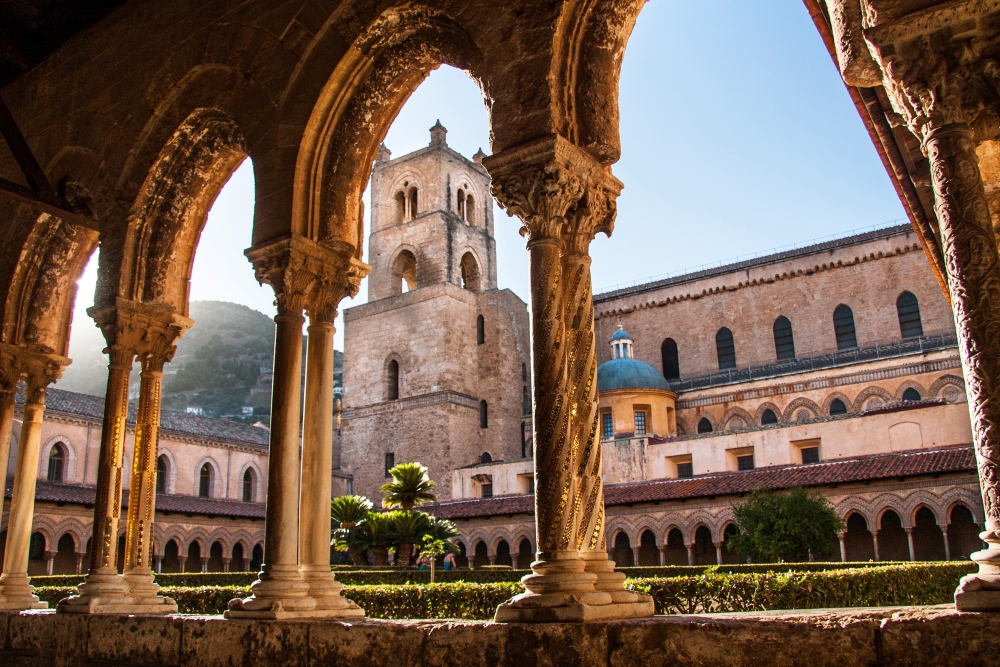
A short drive into the hills above the city, the cathedral of Monreale magnifies the same vision to overwhelming scale. Built by King William II from 1174, its nave carries one of the largest mosaic cycles in existence, crowned by the immense Christ Pantocrator of the apse, while the adjoining cloister surrounds a garden with hundreds of paired columns, each capital carved differently.

In the city center, the church of the Martorana adds its own luminous mosaics, including the famous panel of King Roger II crowned by Christ, beside the red domes of San Cataldo. Seen together, these interiors document a court where Latin, Greek, and Arabic were all working languages, something that existed nowhere else in medieval Europe.

The ensemble extends along the coast to Cefalu, whose cathedral apse holds a Christ Pantocrator many scholars consider the most moving of them all, gentler and more human than his counterparts. Travelers with a passion for the mosaics can follow the whole golden triangle, Palermo, Monreale, and Cefalu, across two or three unhurried days.

The difference between seeing these rooms and understanding them is the storyteller. We pair travelers with art historians who unfold the iconography panel by panel, schedule visits for the quietest hours, and sequence the Arab-Norman monuments so the story builds from the chapel to Monreale’s overwhelming finale.

How Does Palermo's Architecture Layer a Dozen Civilizations?

Palermo’s skyline tells its whole biography. The bulbous red domes of San Giovanni degli Eremiti and San Cataldo preserve the geometry of Arab builders working for Norman patrons. The cathedral is a textbook in a single building: Norman apses, a Catalan Gothic porch, an eighteenth-century dome, all wrapped around the tombs of emperors and kings.

The Spanish centuries gave the city its baroque theater. The Quattro Canti, the octagonal crossroads at the heart of the old city, stages four matching facades of fountains, saints, and kings, while the nearby Fontana Pretoria fills an entire piazza with a Florentine extravaganza of marble gods that scandalized its neighbors into calling it the fountain of shame.

The most intimate baroque treasures hide behind plain doors. In the oratories of Santa Cita and the Rosario di San Domenico, the sculptor Giacomo Serpotta spun stucco into lace between the 1680s and the 1720s: swirling allegories, garlands, and his signature putti tumbling across the walls in pure white. These small rooms rank among the supreme achievements of European decorative art, and many travelers have them nearly to themselves.

We build architecture-focused days with specialists who read all of these layers fluently, and we arrange after-hours and special access where relationships allow, so travelers meet the city’s masterpieces at the pace they deserve rather than the pace of the day’s schedule.

What Role Does Music Play in Palermo, From Opera to Puppets?

Palermo takes its music seriously enough to have built the largest opera house in Italy. The Teatro Massimo, inaugurated in 1897 after two decades of construction, crowns the historic center with its great neoclassical portico and dome, and its season of opera, ballet, and concerts runs through the year. An evening in its gilded hall, or a daytime visit through its rehearsal rooms and royal box, belongs in any cultural itinerary.

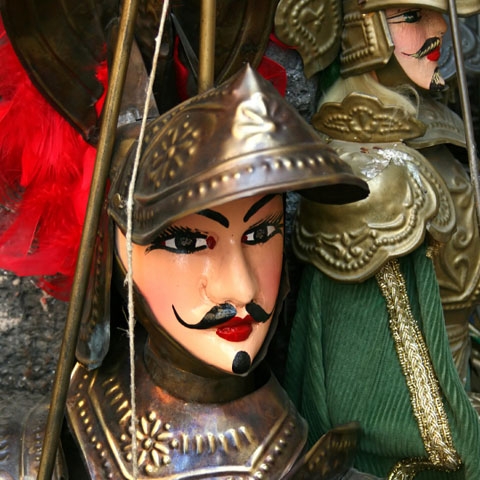
At the opposite end of the scale thrives the opera dei pupi, the Sicilian puppet theater recognized by UNESCO as a masterpiece of humanity’s oral heritage. In small family-run theaters, armored knights of Charlemagne’s court clash in choreographed battles handed down through generations of puppeteer dynasties, and the workshops where the pupi are carved and painted still operate in the old city.

Between those poles, music fills the calendar: sacred music in Norman churches, jazz and chamber seasons in restored palaces and cloisters, and the brass bands and drums of the festival year. We fold performances into itineraries as part of our entertainment and festival experiences in Italy, securing seats and timing visits so the music becomes a reason to travel rather than a lucky accident.

Why Are the Markets the Living Theater of Palermo?

Ballaro, the Capo, and the Vucciria are not attractions added to Palermo; they are Palermo, trading on the same lanes for roughly a thousand years. Ballaro, the oldest and largest, unrolls through the Albergheria in a river of swordfish, citrus, spice stalls, and vegetables still dusted with the Conca d’Oro’s soil, all announced by the abbanniata, the vendors’ half-sung cries that descend directly from the Arab souk.

Each market keeps its own personality. The Capo winds theatrical and dense behind the Teatro Massimo, its lanes canopied with awnings and hung with peppers and herbs. The Vucciria, once the city’s fish market and the subject of Renato Guttuso’s most famous painting, has mellowed into a place of evening gathering where the old stalls share space with conviviality that runs late into the night.

For travelers, the markets are the city’s most honest cultural document: how Palermo eats, argues, celebrates, and conducts its daily opera. They are also the gateway to its kitchen, from street food eaten standing to the produce that defines the day’s cooking.

This is where our way of working shows its value. We arrange market walks with local cooks who shop these stalls daily, tastings guided by people the vendors know by name, and mornings that end in a kitchen where the basket becomes lunch. A market visited alone is a spectacle; visited with the right companion, it becomes a friendship with the city.

Which Festivals Shape the Palermo Year?

The Festino di Santa Rosalia rules the calendar. Each July, Palermo honors the patron saint credited with delivering the city from plague in 1624 with one of the Mediterranean’s great festivals: a monumental triumphal cart bearing the saint’s image processes from the Royal Palace down the Cassaro to the sea, through crowds of hundreds of thousands, ending in fireworks over the harbor. The night is equal parts devotion, theater, and feast.

The devotion continues in September with the pilgrimage to Santa Rosalia’s sanctuary, a grotto church high on Monte Pellegrino, where the faithful ascend the mountain paths as they have for four centuries. Holy Week brings processions through the old quarters, and the feast days of each neighborhood’s own saints keep the festival rhythm alive through the year.

The secular calendar answers with its own riches: the opera and ballet season at the Teatro Massimo, open-air concerts in cloisters and palace courtyards through the summer, and food festivals that celebrate the catch, the citrus, and the pastry arts in their seasons. Few months pass in Palermo without a public reason to celebrate.

Festivals here are neighborhood affairs before they are public events, organized around parishes, confraternities, and market streets, which is why they reward travelers who experience them with local guidance. We track the festival calendar year-round, plan vantage points and timing for the great occasions, and route itineraries through the smaller feasts that never reach guidebooks but stay with travelers forever.

What Is Daily Life Like in Palermo?

The Palermitan day begins at the bar and the market. Espresso is taken standing amid conversation, the morning’s shopping is conducted as a social art, and by mid-morning the old city hums with deliveries, arguments, and the smell of frying panelle. Lunch is serious and unhurried, and the afternoon obeys the Mediterranean logic of shade and patience.

Evening is Palermo’s masterpiece. The passeggiata fills Via Maqueda and the Cassaro with families, students, and elegantly dressed grandparents, the street food counters light their burners, and the piazzas become open-air salons until late. On summer weekends the city decamps to Mondello, where the beach and the Liberty-era bathing pavilion host the same social theater with sea air.

Every Palermitan carries a private map of allegiances: the bar with the correct granita, the friggitoria whose panelle are beyond debate, the pastry counter trusted with the Sunday tray. These loyalties are inherited, defended, and passed down, and being introduced to someone’s map is among the warmest welcomes the city offers.

Faith, family, and food remain the pillars, each observed with a devotion that outsiders quickly find contagious: the street shrines dressed with fresh flowers, the Sunday table that cannot be rushed, the pastry box carried like a diplomatic gift. Our Italian cultural tours are composed of exactly these textures, arranged through relationships built over two decades, so travelers step inside the city’s rhythms rather than observe them from the outside.

Ready to Begin Planning Your Palermo Vacation?

Palermo deserves more than a template. Since 2003, Trips 2 Italy has designed private Italian vacations one traveler at a time, hand selecting every experience based on what you tell us rather than fitting you into a predefined package. Our Italian-born team plans Palermo with the knowledge of people who call Italy home, from the golden mosaics of the Palatine Chapel to the market lanes of Ballaro and the curve of the beach at Mondello, and we remain at your side throughout your trip with 24/7 assistance. Tell us how you imagine Palermo, and we will craft the itinerary that matches it.

Explore Our Palermo Vacation Itineraries

Frequently Asked Questions About Palermo's Culture

The Arab-Norman monuments recognized by UNESCO, above all the Palatine Chapel and Monreale’s mosaics, the baroque stucco oratories of Giacomo Serpotta, the Teatro Massimo opera house, the Sicilian puppet theater, the historic street markets, and the Festino di Santa Rosalia each July.

It is the fusion created in twelfth-century Sicily when Norman kings employed Byzantine mosaicists and Arab craftsmen together: Latin church plans sheathed in Byzantine gold beneath Arab ceilings and domes. Palermo, Monreale, and Cefalu preserve its masterpieces, and Trips 2 Italy pairs travelers with art historians who bring the whole story to life.

Yes. Italy’s largest opera house stages opera, ballet, and concerts through the year, and daytime guided visits open its auditorium, royal box, and rooftop terraces when performances allow. We secure performance seats and arrange visits as part of custom Palermo itineraries, timed to the season’s calendar.

The traditional Sicilian puppet theater, recognized by UNESCO, in which carved and armored marionettes enact the chivalric epics of Charlemagne’s knights. Family dynasties of puppeteers still perform in intimate theaters in Palermo, and workshop visits reveal how the pupi are carved, painted, and dressed.

Emphatically yes. In the oratories of Santa Cita and the Rosario di San Domenico, Giacomo Serpotta turned stucco into some of Europe’s most virtuosic baroque sculpture, and the small rooms are often nearly private. Trips 2 Italy arranges guided visits, with special access where relationships allow.

The festival culminates each year on the night of July 14 into July 15, when the triumphal cart of the city’s patron saint processes from the Royal Palace to the sea amid music and fireworks. Experiencing it well requires vantage points and timing arranged in advance, which is exactly what we plan for travelers who build their trip around it.