
Italian Peninsula and Sicily 17 Day Escorted Tour | Vacation Packages for 2025 – 2026
Explore Rome, Florence, Venice and Sicily as art, history and breathtaking landscapes create the ultimate Italian journey. Starting from $6,404 per person.
Padova Travel Guide Culture History Food and Wine Things to Do Plan My Trip
About this guide: This Padova travel guide was written by the Italian-born travel specialists at Trips 2 Italy, a custom tour operator that has designed hand-crafted Italian vacations since 2003. Every recommendation below reflects the same first-hand knowledge our team draws on when we build a private Padova itinerary around a traveler’s interests, dates, and pace. Read it for your research, then let us translate it into a trip designed entirely around you.
Padova, known in English as Padua, holds two of the most extraordinary rooms in Italy within a few minutes’ walk of each other: the Scrovegni Chapel, where Giotto painted the fresco cycle that changed Western art, and the Basilica of Saint Anthony, one of Christendom’s great pilgrimage churches. Around them spreads a lively arcaded city of medieval squares, daily markets, and one of the oldest universities in the world, founded in 1222 and still setting the city’s youthful rhythm.
The city anchors the western approach to Venice in the heart of the Veneto region, less than half an hour from the lagoon by rail, with Verona, Vicenza, and the Prosecco hills all within easy reach. Yet Padova is no mere waypoint. It kept its own character through centuries of Venetian rule, and travelers who give it real time discover a city that feels deeply lived in rather than staged.
Padova rewards many kinds of travelers: art lovers standing before Giotto’s blue heaven, pilgrims and history readers at the tomb of Saint Anthony, garden enthusiasts in the world’s oldest academic botanical garden, and food lovers in market squares that have traded daily for eight centuries. Our specialists have planned each of those journeys many times, and this guide distills what that experience has taught us.
Use it to shape your thinking, then let us shape the trip. Every Padova itinerary we design is composed from what you tell us, hand selected experience by experience, never assembled from a predefined package.
Padova sits on the Veneto plain along the Bacchiglione river, roughly twenty five miles west of Venice, with the Brenta river passing just to its north on the way to the lagoon. The historic center is compact and ringed by long stretches of sixteenth century Venetian walls, and its streets are famously arcaded, which means the city can be explored comfortably in nearly any weather under miles of covered porticoes.
To the southwest rise the Euganean Hills, a cluster of green volcanic cones that supply the city with wine, olive oil, and one of Europe’s oldest thermal traditions at the spa towns of Abano Terme and Montegrotto Terme. The hills give Padova something few plain cities enjoy: a genuine countryside of vineyards, hermitages, and walled villages beginning twenty minutes from the center.
The climate follows the rhythm of the Po valley. Summers are warm and animated, with long evenings that fill the piazzas; winters are cool and occasionally misty, a mood that suits the frescoed chapels and cafe interiors; and spring and autumn bring mild, luminous days that are ideal for walking the arcades and the hills alike. There is no season in which Padova does not repay a visit, only different versions of the city to meet.
Water shaped the city as surely as stone. Medieval Padova was laced with navigable canals connecting it to Venice and the sea, and though many were covered in the modern era, their traces survive in the curving streets, the surviving stretches of riverside walls, and the gates where barges once paid their tolls. Understanding that watery geography explains why a landlocked plain city grew so rich, and why its history has always flowed toward the lagoon.
Spring and autumn are the connoisseur’s seasons. From April through June the botanical garden and the Euganean Hills are at their greenest, cafe tables spread across the squares, and the university’s graduation rituals fill the streets with laurel wreaths and celebration. September and October answer with the grape harvest in the hills, softer light on the fresco cycles, and comfortable days for unhurried walking.
June brings the feast of Saint Anthony on the thirteenth, when pilgrims from around the world converge on the basilica and the city processes its most beloved citizen’s relics through the streets. It is one of the great religious festivals of Italy, moving even for travelers of no particular faith. Summer also draws open air concerts and long aperitivo evenings, while winter offers quiet galleries, thermal pools steaming in the cool air, and Christmas markets under the arcades.
When we plan a Padova itinerary, your dates become an instrument. We reserve Scrovegni Chapel entries for the hours that suit your day, align hill excursions with harvest or wildflower season, and time the city’s devotional and market life so you meet it at its most authentic. The season you travel should shape the trip you take, and designing that alignment is precisely our work.
A focused first visit wants two full days: one for the Scrovegni Chapel, the Eremitani museums, and the market squares around the Palazzo della Ragione, and one for the Basilica of Saint Anthony, the university’s historic seat at Palazzo Bo, the botanical garden, and Prato della Valle. That pace lets the two great artistic and spiritual poles of the city each breathe rather than compete.
A third day opens the countryside: the Euganean Hills with their vineyards and the poet Petrarch’s village of Arqua Petrarca, a thermal afternoon in Abano Terme, or a cruise along the Brenta canal past the Palladian and Baroque villas that Venetian nobles built for their summers. Many travelers also base themselves in Padova for the week, letting Venice, Vicenza, and Verona take turns as day trips from a calmer, arcaded home.
Because every Trips 2 Italy itinerary is built by hand, we weigh Padova against the other movements of your Italian journey and give it the space it deserves. Some travelers meet the city in a rich single day between Venice and Verona; others settle in and let the region unfold around it. Both are done well only by design.
Whatever the length, the ordering matters. The Scrovegni Chapel admits visitors on a fixed schedule, the basilica has quiet hours worth protecting, and the markets end by early afternoon, so a Padova day rewards choreography. We arrange the timed entries first and compose the walking, the meals, and the pauses around them, which is why our two days here feel fuller than an improvised three.
The Scrovegni Chapel stands first. Giotto’s fresco cycle of 1303 to 1305, told in three tiers beneath a star-filled vault, is one of the pivotal works of European art, and it anchors a UNESCO World Heritage listing that gathers eight of the city’s fourteenth century fresco cycles under the title of Padova Urbs Picta, the painted city. The nearby Eremitani civic museums and the frescoed Palazzo della Ragione, its vast medieval hall floating above the market squares, continue the story.
To the south rises the Basilica of Saint Anthony, il Santo to every Padovan, a massive pilgrimage church of Byzantine domes and minaret-like towers begun in 1232. Inside are the saint’s tomb and reliquaries, bronzes by Donatello on the high altar, and outside his equestrian Gattamelata, a landmark of Renaissance sculpture. Minutes away spread the botanical garden of 1545 and Prato della Valle, an elliptical square ringed by a statue-lined canal and among the largest in Europe.
Between these poles lies the daily city: Piazza delle Erbe and Piazza della Frutta with their morning markets, the university quarter around Palazzo Bo where Galileo taught, the historic Caffe Pedrocchi, and the old Jewish ghetto’s narrow lanes. Padova is walked, not toured, and its arcades make the walking a pleasure in every season.
Beyond the walls, two landscapes complete the picture. The Euganean Hills gather vineyards, thermal spas, castles, and Petrarch’s village into a countryside that rewards a full day, and the Brenta canal carries the villas of the Venetian nobility east toward the lagoon. A well-composed Padova stay usually claims at least one of them, and choosing which, and in what season, is one of the first conversations we have with travelers.
Padova’s historic center is compact, flat, and generously arcaded, which makes it one of the easiest walking cities in northern Italy. The principal sights form a comfortable north to south line from the Scrovegni Chapel through the market squares to the basilica and Prato della Valle, and a modern tram line traces much of the same route for travelers who prefer to save their steps.
Arrivals and excursions are where thoughtful arrangements matter. We arrange private transfers from Venice Marco Polo airport, from the Venice water landings, and between the cities of the Veneto, so that luggage, timing, and connections disappear from your attention. Rail links are excellent, with Venice under thirty minutes and Verona under an hour, and we sequence itineraries so trains serve the distances they serve best.
For the Euganean Hills, the Brenta villas, and the walled towns to the south, a private driver transforms the day: vineyard lanes and hilltop hermitages become scenery rather than navigation, and every tasting can be enjoyed. Our team designs each transfer in advance and remains available around the clock, because in a region this rich, logistics should be invisible and the days should simply unfold.
Padova sits at one of the great crossroads of northern Italy. Venice is under thirty minutes east, Vicenza fifteen minutes west, Verona under an hour, and the routes to Bologna and the south run directly through it. That geography makes the city both a superb day chapter in a Venice-based journey and, for travelers who prefer calmer evenings, an elegant base from which the whole Veneto takes turns visiting you.
The occasion shapes the composition. For travelers drawn to art and ideas, Padova joins Venice and Vicenza in a journey through the Veneto’s painting, architecture, and university heritage as part of our cultural tours of Italy. For those who plan around the table, the market squares and the Euganean vineyards fold naturally into an Italian wine and culinary journey. And for those composing something larger, Padova becomes a graceful movement in a custom trip to Italy designed entirely from what you tell us.
This guide is one of five we have written on the city. Continue with our Padova culture guide, Padova history guide, Padova food and wine guide, and Padova things to do guide, or widen the lens with our Veneto travel guide to see the region around the city.
Padova deserves more than a template. Since 2003, Trips 2 Italy has designed private Italian vacations one traveler at a time, hand selecting every experience based on what you tell us rather than fitting you into a predefined package. Our Italian-born team plans Padova with the knowledge of people who call Italy home, from Giotto’s frescoed chapel to the thermal hills beyond the city walls, and we remain at your side throughout your trip with 24/7 assistance. Tell us how you imagine Padova, and we will craft the itinerary that matches it.
Explore Rome, Florence, Venice and Sicily as art, history and breathtaking landscapes create the ultimate Italian journey. Starting from $6,404 per person.
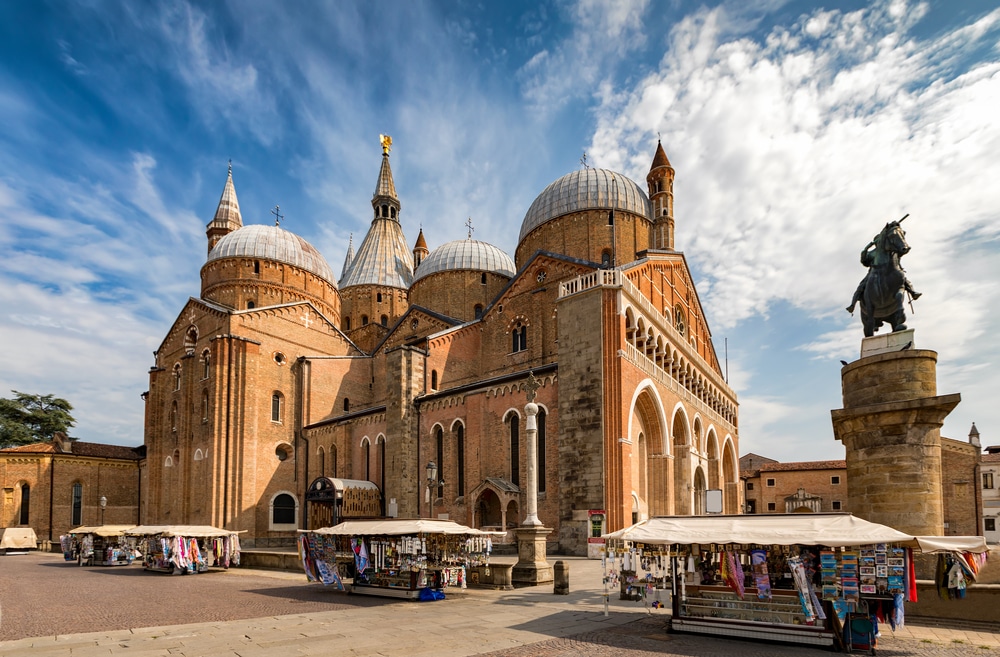
Experience Florence, Padua and Venice as art, canals and timeless beauty welcome you to Italy’s most enchanting cities. Starting from $1080 per person.
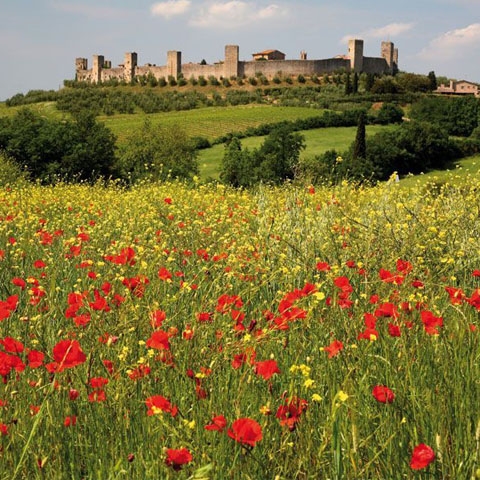
Experience Rome, Florence, Venice and Tuscany as art, history and rolling landscapes create the ultimate Italian journey. Starting from $898 per person.
Spring and autumn offer the finest balance: mild walking weather, the botanical garden and Euganean Hills in full color, and softer light on the fresco cycles. June brings the feast of Saint Anthony on the thirteenth, one of Italy’s great pilgrimage festivals, and winter offers quiet museums and steaming thermal pools nearby. The specialists at Trips 2 Italy align your dates with what the city does best in each season.
Two full days cover the essentials well: the Scrovegni Chapel, the market squares, and the Palazzo della Ragione on one day, and the Basilica of Saint Anthony, the university, the botanical garden, and Prato della Valle on the other. A third day opens the Euganean Hills or the Brenta canal villas, and many travelers use Padova as a calm base for the whole Veneto.
Padova rewards travelers on its own terms: Giotto’s Scrovegni Chapel, one of the world’s great pilgrimage basilicas, Europe’s oldest academic botanical garden, and a living market and cafe culture beneath miles of arcades. It sits under thirty minutes from Venice by rail, and Trips 2 Italy often pairs the two so each city shows its own character.
Yes. Entry is by timed reservation, with visitors passing through a climate-controlled waiting room before a set period among the frescoes, and slots in high season are claimed well ahead. We reserve chapel entries as one of the first fixed points of any Padova itinerary and build the rest of the day gracefully around them.
The Euganean Hills with Arqua Petrarca and the thermal towns of Abano and Montegrotto, the Brenta canal with its Venetian villas, and the cities of Venice, Vicenza, and Verona all lie within easy reach. A private driver turns the countryside routes into scenery, and we sequence each excursion so it complements rather than repeats the city days.
Excellent. Rail connections put Venice under thirty minutes away and Verona under an hour, while the Euganean Hills begin twenty minutes from the center. Trips 2 Italy designs Veneto itineraries that use Padova’s calmer evenings, arcaded streets, and superb table as the anchor for a week of contrasting day journeys.