
Italian Peninsula and Sicily 17 Day Escorted Tour | Vacation Packages for 2025 – 2026
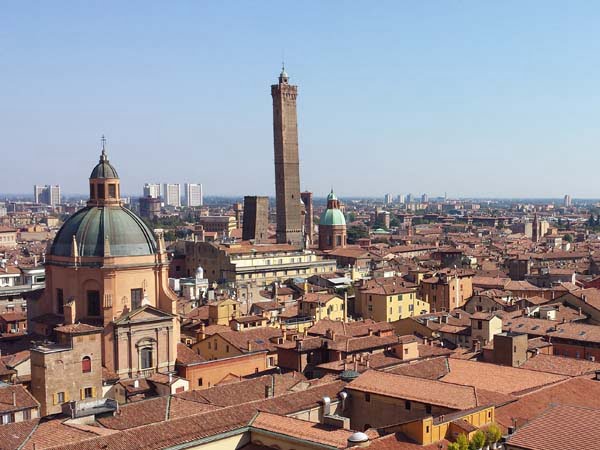
Explore Rome, Florence, Venice and Sicily as art, history and breathtaking landscapes create the ultimate Italian journey. Starting from $6,404 per person.
HOME » POPULAR ITALIAN DESTINATIONS » PADOVA TRAVEL GUIDE » PADOVA THINGS TO DO GUIDE
Padova Travel Guide Culture History Food and Wine Things to Do Plan My Trip
About this guide: This guide to things to do in Padova was written by the Italian-born travel specialists at Trips 2 Italy, a custom tour operator that has designed hand-crafted Italian vacations since 2003. Every recommendation below reflects the same first-hand knowledge our team draws on when we build a private Padova itinerary around a traveler’s interests, dates, and pace. Read it for your research, then let us translate it into a trip designed entirely around you.
Three landmarks form the essential triangle. The Scrovegni Chapel holds Giotto’s fresco cycle of 1303 to 1305, the room where Western painting learned emotion and space, and it is seen by timed reservation in small groups. The Basilica of Saint Anthony gathers the saint’s tomb, Donatello’s bronzes, and eight centuries of pilgrimage under its cluster of domes. Between them, the Palazzo della Ragione floats its vast frescoed hall above market squares that have traded daily since the Middle Ages.
Around the triangle spreads the texture that makes Padova beloved: miles of arcaded streets, the university quarter around Palazzo Bo, the historic Caffe Pedrocchi, the statue-ringed ellipse of Prato della Valle, and the botanical garden planted in 1545. The city sits at the heart of the Veneto, under thirty minutes from Venice, which makes its riches remarkably easy to reach and remarkably easy to underestimate.
This is where planning shows its value. Chapel slots, basilica quiet hours, and guided university visits all run on schedules, and the difference between a day that flows and a day spent queuing is arrangement. We reserve each entry in advance, pair the landmarks with the right specialists, and sequence the walking so the city unfolds as a story rather than a checklist.
The visit is a ritual in itself. Because the frescoes are fragile, visitors first wait in a climate-controlled chamber while the air stabilizes, watching a short film on the chapel’s history, and then enter in a small group for a set time among the paintings. The discipline heightens the encounter: when the doors open, the blue of Giotto’s vault and the three tiers of scenes arrive all at once, and the minutes inside are undistracted.
Giotto painted the chapel for Enrico Scrovegni around 1303 to 1305, telling the lives of the Virgin and of Christ through to a Last Judgment on the entrance wall, with the Kiss of Judas and the Lamentation among the most influential images in European art. The surrounding gardens preserve the outline of the Roman arena beside the chapel, and the adjacent Eremitani civic museums carry the city’s story from the ancient Veneti through the Renaissance.
We treat the chapel as the fixed star of a Padova day: entries reserved well ahead at the hour that suits your rhythm, a private art historian who unfolds the cycle scene by scene, and the museums, the baptistery, or the other Urbs Picta fresco sites sequenced around it in the order that lets the century build. Evening slots, when available, are among the most atmospheric ways to meet Giotto at all.
Prato della Valle is the city’s great exhale: an elliptical square among the largest in Europe, laid out in 1775 around a canal-ringed green island and lined with seventy eight statues of Padova’s illustrious figures. Padovans jog, stroll, and picnic here, a vast weekly market fills it on Saturdays, and the domes of the Santo and the basilica of Santa Giustina rise at its edges. It is the finest place in the city to feel Padova living its ordinary life grandly.
The market squares reward a slower eye. Piazza delle Erbe and Piazza della Frutta trade every morning beneath the Palazzo della Ragione, whose upper hall, one of Europe’s largest medieval interiors, holds an astrological fresco cycle and a monumental wooden horse; the covered corridors below shelter food merchants centuries old. A few steps away, Piazza dei Signori collects the evening crowd beneath one of the world’s oldest working astronomical clocks.
Fold in the quieter set pieces: the cathedral’s baptistery with its dizzying frescoed dome, the lanes of the old ghetto, the neoclassical rooms of the Caffe Pedrocchi, and the river walks along the old walls. Padova’s arcades make wandering a pleasure in any weather, and our walking routes are drawn so that each square arrives at its best hour, from market bustle to aperitivo glow.
Give the wandering at least one unscripted hour. Padova is a city of small revelations, a frescoed oratory behind an unmarked door, a courtyard of the university humming between lectures, a canal glimpse where the medieval water city resurfaces, and the arcades reward travelers who let the plan breathe. We build that slack into every itinerary deliberately, because the memory travelers keep is often the hour nobody scheduled.
Palazzo Bo, the university’s historic seat, opens to visitors on guided tours that count among the most surprising experiences in the Veneto. The route passes the courtyard armored in student coats of arms, the hall where Galileo’s worn wooden lectern survives from his eighteen years of teaching, and finally the Anatomical Theatre of 1594, six carved wooden tiers spiraling above the dissection table, the oldest permanent theatre of its kind in the world.
Ten minutes south, the Orto Botanico of 1545 is the world’s oldest academic botanical garden still in its original location, a UNESCO World Heritage Site whose circular walled heart still follows its Renaissance design. Goethe studied a palm planted here in 1585 that still grows in its own greenhouse, and the modern Garden of Biodiversity extends the collection through soaring climate-zone conservatories, a living argument that science can be beautiful.
Together they tell the story of Padova as Europe’s laboratory, and they enchant travelers far beyond the scholarly. We arrange the guided entries and pair them, for those who wish, with specialists in the history of science or botany, then close the day nearby at Prato della Valle or the Santo. Families find these two stops among the easiest places in Italy to make curiosity contagious.
The Euganean Hills begin twenty minutes from the arcades: a protected regional park of green volcanic cones threaded with vineyard lanes, chestnut woods, castles, and hermitages. Arqua Petrarca, the stone village where the poet Petrarch chose to end his days, keeps his house, his tomb, and terraces of olives and jujube trees, and it ranks among the most beautiful villages in Italy. Este and Monselice add castles and Venetian gardens at the hills’ southern rim, and Montagnana raises some of Europe’s most complete medieval walls a little beyond.
The hills are also Italy’s oldest spa country. The thermal towns of Abano Terme and Montegrotto Terme have drawn bathers since Roman times to mineral waters that rise hot from deep underground, and their modern spas continue the tradition with thermal pools, mud therapies, and wellness rituals. An afternoon in the warm water, with the hills turning gold beyond the pool, is a restorative counterpoint to fresco-filled mornings.
Monastic quiet waits among the cones as well. The abbey of Praglia, where Benedictine monks still restore ancient books and keep their centuries-old rhythm of work and prayer, receives visitors for guided tours of its cloisters, and the hermitage crowning Monte Rua keeps its silence above the vineyards. These pauses give an Euganean day its depth, balancing the castles and cellars with something older and stiller.
With a private driver, the hills compose into a perfect day: a village morning in Arqua Petrarca, a vineyard lunch and tasting at a family estate, a castle or abbey in the afternoon, and a thermal soak before returning to the city. Walkers and cyclists find superb marked routes among the cones, which we fold into itineraries as part of our active trips in Italy, matched carefully to ability and appetite.
Between Padova and the Venetian lagoon, the Brenta canal winds past the summer villas of the old Venetian nobility, a corridor so lined with palaces that it was called an extension of the Grand Canal. Grandest of all is Villa Pisani at Stra, with its one hundred rooms, Tiepolo’s ceiling fresco of the Pisani family’s glory, vast gardens, and one of Europe’s most famous hedge mazes. Downstream, Palladio’s Villa Foscari, called La Malcontenta, rises from the water with the serene geometry that changed Western architecture.
The classic way to travel the corridor is by boat, gliding downstream through the old locks and swing bridges as villas succeed one another along the banks, retracing the route of the burchiello, the elegant barge that once carried Venetian society to its summer residences. The journey works beautifully in either direction, Padova toward Venice or the reverse, and it turns a simple transfer between two cities into one of the Veneto’s signature days.
We compose Brenta days to taste: a full cruise with guided villa visits, a private driver linking two or three villas with a riverside lunch, or a garden-focused itinerary for travelers who love the landscape art of the Veneto. Timed with the villas’ seasonal openings and finished with an evening arrival in Venice or a quiet return to Padova’s arcades, it is a day of pure eighteenth century theater.
Padovan evenings begin with the spritz. As the light angles across the market squares, the counters and tables fill, small plates circulate, and the city conducts its nightly parliament of students, professors, and families. Dinner follows in the osterie and refined rooms under the arcades, and the after-dinner passeggiata drifts through Piazza dei Signori and along the illuminated Prato della Valle. Concerts fill the churches and the Palazzo della Ragione through the season, and the basilica by night is unforgettable.
The wider Veneto takes turns as day trips. Venice waits under thirty minutes east, best entered with a plan and left before the day crowds peak; Vicenza, fifteen minutes west, is Palladio’s own city of palaces and the Teatro Olimpico; Verona pairs its Roman arena with romantic lanes under an hour away; and the walled wine town of Bassano del Grappa, the Prosecco hills, and even the Dolomites’ southern gateways lie within reach of a well-planned day.
For families, Padova’s mix of markets, mazes, science, and gelato makes the city an easy delight, and we shape days so art arrives as adventure within a family vacation to Italy. However the pieces combine, we sequence each excursion, reserve each entry, and arrange each transfer as part of a custom trip to Italy composed entirely around you, with our team available around the clock throughout.
Padova deserves more than a template. Since 2003, Trips 2 Italy has designed private Italian vacations one traveler at a time, hand selecting every experience based on what you tell us rather than fitting you into a predefined package. Our Italian-born team plans Padova with the knowledge of people who call Italy home, from Giotto’s frescoed chapel to the thermal hills beyond the city walls, and we remain at your side throughout your trip with 24/7 assistance. Tell us how you imagine Padova, and we will craft the itinerary that matches it.
Explore Rome, Florence, Venice and Sicily as art, history and breathtaking landscapes create the ultimate Italian journey. Starting from $6,404 per person.
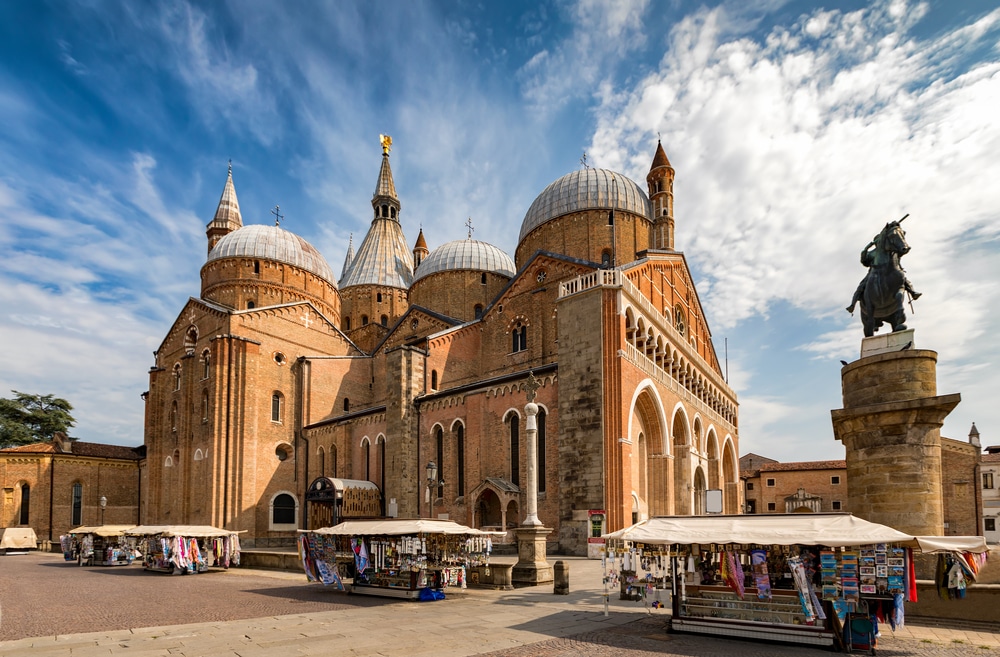
Experience Florence, Padua and Venice as art, canals and timeless beauty welcome you to Italy’s most enchanting cities. Starting from $1080 per person.
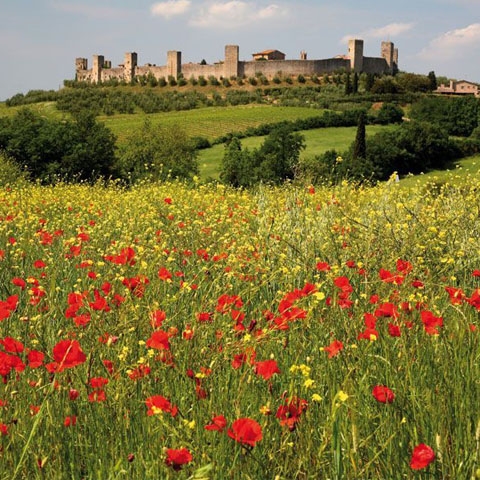
Experience Rome, Florence, Venice and Tuscany as art, history and rolling landscapes create the ultimate Italian journey. Starting from $898 per person.
The Scrovegni Chapel, where Giotto painted the fresco cycle that redirected Western art, is the city’s essential encounter, closely followed by the Basilica of Saint Anthony and the market squares beneath the Palazzo della Ragione. Chapel entry is by timed reservation in small groups, and Trips 2 Italy reserves slots and private art historians as the fixed points of every Padova itinerary.
Padova sits roughly twenty five miles west of Venice, under thirty minutes by rail, and the two cities also connect by the Brenta canal, whose villa-lined waters can be cruised in either direction. Many travelers base in Padova’s calmer arcades and visit Venice as a day trip, a rhythm we design frequently.
Yes, on guided tours of Palazzo Bo, the university’s historic seat, which also include Galileo’s lectern and the coat-of-arms courtyard. The wooden theatre of 1594 is the oldest permanent anatomical theatre in the world, and we arrange the guided entries as part of a university and botanical garden morning.
The Euganean thermal towns of Abano Terme and Montegrotto Terme have drawn bathers since Roman times, and their warm mineral pools and mud therapies make a restorative counterpoint to fresco-filled city mornings. We fold thermal afternoons into Euganean Hills days with a private driver, often paired with Arqua Petrarca and a vineyard lunch.
The Brenta canal between Padova and Venice is lined with the summer villas of the Venetian nobility, including Villa Pisani at Stra with its Tiepolo ceiling and famous maze and Palladio’s La Malcontenta. Boats retrace the route of the historic burchiello barge through the old locks, and guided villa visits along the way turn the transfer between the two cities into one of the Veneto’s signature days.
Very. The hedge maze at Villa Pisani, the Anatomical Theatre’s theatrical science, the botanical garden’s conservatories, market mornings, gelato under the arcades, and the open green of Prato della Valle keep every generation engaged. We compose family itineraries so history and art arrive as adventure rather than obligation.