
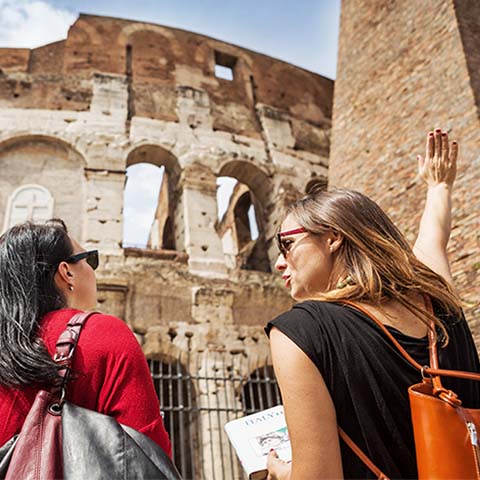
Rome, Venice and Florence Your Way 8 Days / 7 Nights
See Italy’s three iconic cities your way on an 8-day guided journey. Explore the Colosseum, the Vatican, and Florence’s cathedrals, then glide through Venice by gondola. Private driver, premium
HOME » POPULAR ITALIAN DESTINATIONS » ITALIAN TRAVEL GUIDES BY REGION » VENETO TRAVEL GUIDE » VENETO HISTORY GUIDE
About this guide: This guide to the history of Veneto was written by the Italian-born travel specialists at Trips 2 Italy, a custom tour operator that has designed hand-crafted Italian vacations since 2003. Every recommendation below reflects the same first-hand knowledge our team draws on when we build a private Veneto itinerary around a traveler’s interests, dates, and pace. Read it for your research, then let us translate it into a trip designed entirely around you.
The region is named for its first known people. The ancient Veneti settled the plain by the early Iron Age, famed among classical writers for breeding horses and for trading amber down routes that reached the Baltic. Rome absorbed them as allies rather than conquests, and under the empire the land flourished: Verona rose at the crossing of great roads and built its amphitheater in the first century AD, while Patavium, today’s Padova, was counted among the wealthiest cities of the Roman world and gave Rome the historian Livy.
Rome’s fall struck this borderland hard. Attila’s Huns destroyed Aquileia in 452 and Lombard invaders followed a century later, and tradition holds that refugees from the burning cities fled into the lagoon’s islands, founding the settlements that would become Venice. The traditional founding date, 421, is legend rather than record, but the deeper truth stands: Venice was born from the mainland’s catastrophe, built by people who traded solid ground for safety among the tides.
That origin explains much of what followed. A city with no fields and no quarries had to live by the sea, by salt, by ships, and by cunning, and the lagoon’s shallow waters, unnavigable to those who did not know the channels, kept every invader out. For eleven centuries no foreign army entered Venice, a record no other great European city can claim, and the story of how fugitives became an empire is the story this whole region tells.
The deep past remains wonderfully visitable. Verona’s amphitheater, gates, and buried theater still organize the modern city, Torcello’s cathedral marks where lagoon civilization began, and museum collections in Este and Padova preserve the horse bronzes and inscribed offerings of the ancient Veneti. Walking these places with a guide who can people them again is one of the most atmospheric historical experiences in northern Italy.
Venice elected its first doge around 697 and spent the next centuries turning geography into destiny. Nominally tied to Byzantium, the young republic traded between East and West, and in 828 its merchants carried the relics of Saint Mark home from Alexandria, giving the city its patron, its winged lion, and its golden basilica. By the eleventh century Venetian fleets ruled the Adriatic; by the thirteenth, after the Fourth Crusade turned aside to Constantinople in 1204, Venice commanded an empire of islands and ports stretching to Crete and beyond.
The republic’s genius was organization. The Arsenale, the state shipyard founded in 1104, could fit out galleys with assembly-line speed centuries before the phrase existed, and the city’s merchant houses, Marco Polo’s among them, pushed Venetian trade as far as China. At home, an intricate constitution of councils and elected doges kept any single family from seizing power, earning Venice its name as the Most Serene Republic, La Serenissima.
The wealth of that trade is still the city’s face. The Basilica of Saint Mark glitters with mosaics and treasures gathered from the East, the Doge’s Palace layers pink marble over Gothic arcades beside it, and the palaces along the Grand Canal were built as warehouses and showrooms for a commerce that spanned the known world. Walking these rooms with a historian who can animate the republic’s rise is one of the great narrative experiences in travel, and it is how we most often open a Veneto history itinerary.
In the early fifteenth century Venice turned from the sea to the land, and within a generation Padova, Vicenza, Verona, and Treviso had passed under the banner of Saint Mark. The republic governed its terraferma with a light and practical hand, leaving local councils in place, planting the winged lion on gates and columns, and knitting the cities to the capital with roads, canals, and law. Much of what travelers admire across Veneto today, from city walls to waterways, dates from these centuries of Venetian order.
The union survived its great test. In 1509 the League of Cambrai, an alliance of nearly every power in Europe, crushed the Venetian army and stripped the republic of its mainland almost overnight. Yet the cities returned to Saint Mark within a few years, many by their own choice, and the restored dominion held for another three centuries, a loyalty that says much about how Venice governed.
Peace transformed the countryside. Patrician families turned from galleys to agriculture, and the villa civilization bloomed: Palladio and his successors raised graceful houses across the plain and along the Brenta canal, working farms dressed as temples, where the harvest was managed and the summer was celebrated. The University of Padua, under Venice’s protection, became one of Europe’s freest centers of learning, where Galileo taught for eighteen years and where the anatomical theater of 1595, the oldest in the world, still stands.
The sixteenth century found Veneto at the summit of European civilization. Titian, Tintoretto, and Veronese were painting in Venice, Palladio was rebuilding Vicenza and inventing the modern villa, and the city’s presses led the world: Aldus Manutius printed the Greek and Latin classics in editions scholars still admire and helped invent italic type and the portable book. Venice was also Europe’s music room, its churches and confraternities commissioning works that pointed toward the age of Vivaldi.
It was a golden age with iron edges. Venice fought the Ottoman Empire across the Mediterranean for two centuries, losing Cyprus but leading the alliance that won the sea battle of Lepanto in 1571, and the plague struck the city repeatedly. The great churches of the Redentore and the Salute both stand as thanksgivings for deliverance from epidemics, and their festivals still mark the Venetian year.
For travelers, this century is everywhere: in the Scuola Grande di San Rocco, where Tintoretto worked for a quarter century, in Veronese’s feast scenes at the Accademia, in Palladio’s churches of San Giorgio Maggiore and the Redentore gleaming across the water, and in the theaters and libraries of Vicenza and Venice. We sequence golden-age itineraries so the paintings, buildings, and music arrive as one story rather than a shuffle of masterpieces.
The eighteenth century was Venice’s brilliant twilight. The empire had shrunk, but the city perfected the arts of pleasure: Carnival stretched for months, Goldoni filled the theaters with comedies, Canaletto painted the regattas, and Tiepolo’s ceilings carried Venetian painting to its last blaze. Then, in 1797, Napoleon ended the thousand-year republic with a treaty and a signature, and the last doge set aside the ducal cap without a battle.
There followed the region’s hardest century. Austria ruled Veneto for most of the years between 1815 and 1866, and Venice’s heroic revolution of 1848, led by Daniele Manin, held out under siege and bombardment for more than a year before surrendering with honor. In 1866, after a plebiscite, Veneto joined the young Kingdom of Italy, and the region began the slow recovery that emigration, industry, and time would complete.
The First World War wrote its final chapter of sacrifice across these hills. After the retreat from Caporetto in 1917, the Italian line held along the Piave river and the slopes of Monte Grappa, within sight of Venice, and the war ended a year later with the battle named for a Veneto town, Vittorio Veneto. The ossuaries and trench lines in the mountains remain among Italy’s most moving places, and we include them, with expert guides, for travelers drawn to this history.
Venice itself is the great archive. The Doge’s Palace opens the republic’s government chamber by chamber, from the golden staircases to the prisons across the Bridge of Sighs, and the basilica beside it compresses a thousand years of eastern trade into one glittering interior. The Arsenale’s walls and gateways still announce the industrial power behind the empire, and the Rialto markets occupy the same banks where the republic’s merchants set the price of pepper for Europe.
The terraferma keeps its own layers. Verona holds its Roman arena, theater, and gates alongside the castle and bridges of its medieval Scaliger lords. Padova offers Giotto’s chapel, the university’s ancient courtyards, and the anatomical theater where modern medicine took shape. Vicenza preserves the republic’s confident afternoon in Palladio’s palaces, and Villa Pisani on the Brenta shows the villa civilization at its most theatrical.
Sequence matters as much as selection. We compose history itineraries chronologically where the traveler’s interests allow, from Roman Verona through the republic’s rise and golden age to the villa centuries and the mountain battlefields, so that two and a half millennia arrive as a story rather than a list. Our historian guides are chosen for exactly that narrative gift.
Veneto holds one of the densest concentrations of UNESCO World Heritage anywhere: Venice and its lagoon, the city of Verona, Vicenza and the Palladian villas, Padova’s botanical garden of 1545 and its fourteenth-century fresco cycles, the Prosecco hills of Conegliano and Valdobbiadene, and the Dolomites themselves. Each listing stands for a larger ecosystem of restoration workshops, archives, and civic pride that treats maintenance of beauty as ordinary public duty.
The lagoon poses preservation’s hardest questions, and Venice has answered with engineering and law: the MOSE barrier system now rises from the seabed to shield the city from exceptional tides, cruise traffic has been turned away from the historic basin, and restoration laboratories work continuously on stones, canvases, and mosaics. On the mainland, the villas are kept alive by families and foundations who open their frescoed rooms to visitors, and the mountain communities maintain the trenches and refuges of the Great War as places of memory.
For travelers, this means the past is unusually intact and unusually welcoming. We arrange encounters with the preservation world itself where access allows, from restoration studios in Venice to villa archives on the Brenta, as part of our cultural tours and visits to architectural and historical sites across Italy. History in Veneto is a working enterprise, and meeting its custodians is one of the region’s quiet privileges.
Veneto deserves more than a template. Since 2003, Trips 2 Italy has designed private Italian vacations one traveler at a time, hand selecting every experience based on what you tell us rather than fitting you into a predefined package. Our Italian-born team plans Veneto with the knowledge of people who call Italy home, from the canals of Venice to the Valpolicella cellars and the pale peaks of the Dolomites, and we remain at your side throughout your trip with 24/7 assistance. Tell us how you imagine Veneto, and we will craft the itinerary that matches it.
See Italy’s three iconic cities your way on an 8-day guided journey. Explore the Colosseum, the Vatican, and Florence’s cathedrals, then glide through Venice by gondola. Private driver, premium
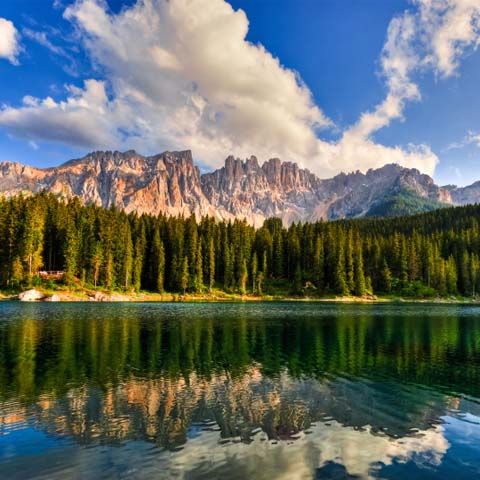
From the peaks of the Dolomites to the shores of the Italian Riviera, an escorted 16-day journey through Northern Italy: Cortina, Venice, Verona, Lakes Garda, Como and Maggiore, Milan,
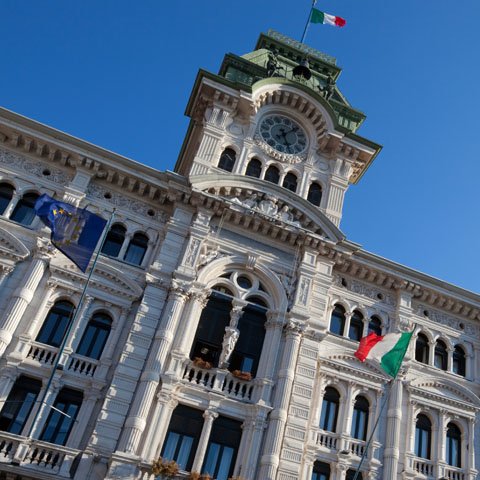
Skip the packed summer hotspots and enjoy a Northern Italy family summer itinerary that feels relaxed, local, and full of together time. Italy Beyond the Crowds is a land-only
Roughly eleven hundred years, from the election of the first doge around 697 to Napoleon’s dissolution of the republic in 1797. For most of that time Venice was a great maritime power, and no foreign army ever entered the lagoon city during the republic’s life, a record without parallel among Europe’s great capitals.
The lion of Saint Mark was the emblem of the Venetian Republic, adopted after the saint’s relics were brought to Venice in 828. When the republic extended its rule across the mainland in the fifteenth century, the lion was raised on gates, columns, and town halls from Verona to Treviso, and it remains the region’s proudest symbol.
Yes. The amphitheater was built in the first century AD, before Rome’s Colosseum, and it is among the best preserved in existence. It has hosted the world’s leading open-air opera festival every summer since 1913, so travelers can experience a working Roman building rather than a ruin.
Padova was one of the richest cities of the Roman world, the birthplace of the historian Livy, and later home to one of Europe’s oldest universities, founded in 1222, where Galileo taught for eighteen years. Giotto’s Scrovegni Chapel frescoes of around 1305 and the anatomical theater of 1595 make it one of Italy’s most important historical cities.
Venice and its lagoon, the city of Verona, Vicenza and the Palladian villas, Padova’s botanical garden and its fourteenth-century fresco cycles, the Prosecco hills of Conegliano and Valdobbiadene, and the Veneto Dolomites. Trips 2 Italy can weave several of these into a single unhurried itinerary with expert guides.
Yes. The Piave river line, Monte Grappa with its summit ossuary, and the Asiago plateau preserve trenches, forts, and memorials from the campaigns of 1917 and 1918. Trips 2 Italy arranges these days with historian guides and private drivers, and they pair movingly with the mountain scenery of the Dolomites.