|
||||||||||||||||||||||||||||||||||||||||||||||||||||||||||
Current Region: Sicily
Abruzzo - L'Aquila Aosta Valley - Aosta Apulia - Brindisi - Alberobello Basilicata - Matera - Potenza Calabria - Reggio Calabria Campania - Capri - Naples - Sorrento And Amalfi Coast Emilia Romagna - Bologna - Modena - Parma - Ravenna - Reggio Emilia Friuli Venezia Giulia - Gorizia - Trieste Lazio - Pontine Isles - Rome Liguria - Cinque Terre - Genoa - Portofino - Rapallo Lombardy - Bergamo - Como - Lake Como - Mantua - Milan - Pavia Marche - Ascoli Piceno - Urbino Molise - Campobasso Piedmont - Alba - Asti - Casale Monferrato - Lake Maggiore - Turin - Vercelli Sardinia - Cagliari Sicily - Catania - Palermo - Taormina Trentino Alto Adige - Bolzano - Trento Tuscany - Arezzo - Florence - Lucca - Montalcino - Montepulciano - Pisa - San Gimignano - Siena - Volterra Umbria - Assisi - Gubbio - Perugia - Spoleto - Orvieto Veneto - Lake Garda - Padua - Treviso - Venice - Verona - Vicenza |
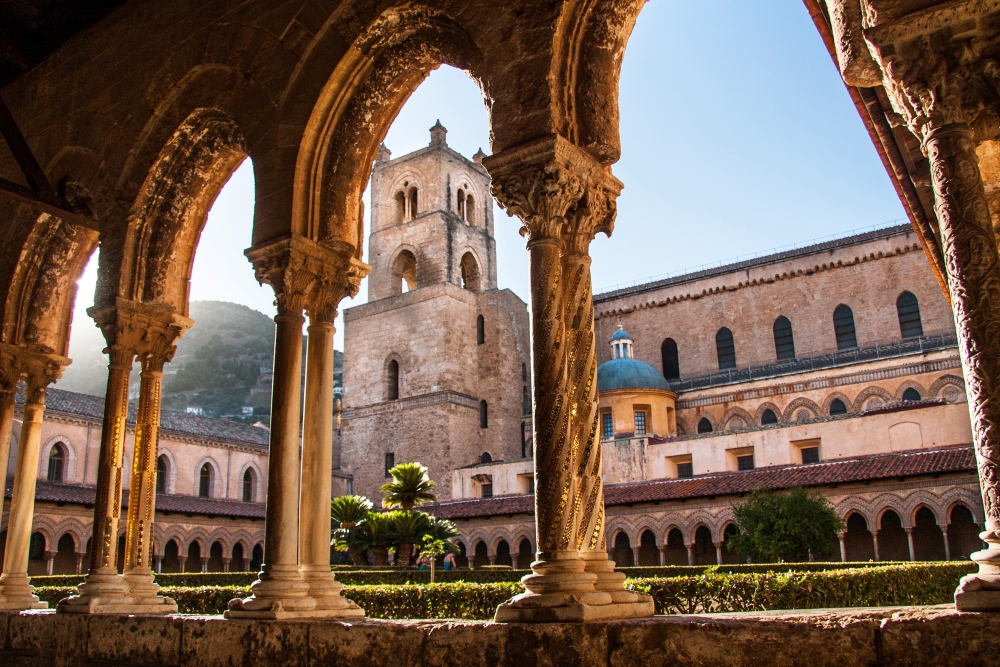
The people of Sicily (Sicilia) regard themselves as significantly different from the rest of Italy, especially in the matters of ethnicity, culture, and language. Sicily (Sicilia)’s diverse heritage can be traced across a span of 2,000 years during which time it has been dominated by many different rulers: from the Greeks and Romans, to the Byzantines and Arabs, the Normans and the Spanish. This combination has made Sicily (Sicilia) and its people unique, and these mixed roots are reflected in their dialect, cuisine, and architecture. Sicily (Sicil's plentiful architecture provides a visual demonstration of its diversity. You can discover Greek temples and amphitheaters, Roman settlements, unique Norman-Arab churches and palaces (whose style is somewhat similar to Moorish but with Byzantine Greek elements), Byzantine (Orthodox) churches, early Gothic churches, fortified medieval castles, Catalonian Gothic palaces, Baroque churches and mansions, and even a Chinese Revival villa built in the first years of the nineteenth century. Foundations of Phoenician buildings have been discovered beneath some of the Roman structures of Old Palermo, the hilltop temple at Cefalù is thought to be Sicanian, and the museum at Termini Imerese houses the stone Arabic inscriptions of 9th-century Saracen palaces.
There’s plenty to do and see in Sicily (Sicilia)—sailing the coastline and inlets and the islands, fishing and diving in the crystal-clear waters of the coast and of the islands, hiking along the Madonie and Peloritani mountains or up Mount Etna (and in the winter, Mount Etna is also the place to go for downhill and cross-country skiing). You can visit the magnificent beaches, particularly at Taormina and the Golfo di Castellammare by Capo San Vito, which is part of a huge nature preserve. Or do what Sicilians enjoy doing—take a passeggiata (stroll) to shop, enjoy a pastry or café, or just meet friends in the main piazzas and streets.
|
© 2002-2012 Trips 2 Italy, LLC | All rights Reserved | Sicily Italy Trip & Tours Planning Guide |