
A Taste of Piedmont Tour | Vacation Packages for 2025 – 2026
Experience Turin as royal palaces, grand piazzas and chocolate cafés reveal the elegance and history of Italy’s first capital. Starting from $1,644 per person.
HOME » POPULAR ITALIAN DESTINATIONS » TURIN TRAVEL GUIDE » TURIN HISTORY GUIDE
About this guide: This guide to the history of Turin was written by the Italian-born travel specialists at Trips 2 Italy, a custom tour operator that has designed hand-crafted Italian vacations since 2003. Every recommendation below reflects the same first-hand knowledge our team draws on when we build a private Turin itinerary around a traveler’s interests, dates, and pace. Read it for your research, then let us translate it into a trip designed entirely around you.
Turin began as a Roman soldier’s town. Augusta Taurinorum was founded around 28 BC as a colony guarding the road to the Alpine passes, laid out in the disciplined grid that legionary surveyors stamped on the empire’s frontiers. Remarkably, that grid never disappeared: the streets of central Turin still follow the Roman plan, and travelers walking the Quadrilatero Romano quarter today are pacing out blocks drawn two thousand years ago.
The Porta Palatina makes the origin tangible. This brick gate with its twin sixteen-sided towers is among the best-preserved Roman city gates in the world, standing a short walk from the cathedral beside the excavated remains of the Roman theater. Together with the collections of the city’s archaeological museum, they anchor the first chapter of any history-minded visit.
The name itself preserves an older layer still: the Taurini were the Celtic-Ligurian people who held these lands before Rome, and whose bull became the city’s enduring emblem. Turin’s position at the meeting of river and mountain road, the reason both peoples settled here, would shape everything that followed, making the city the doorway between Italy and France for the next twenty centuries, and the natural stronghold of the Piedmont region around it.
Turin’s transformation began in 1563, when Duke Emanuele Filiberto of Savoy moved his dynasty’s capital from Chambery, across the Alps, to Turin. The Savoys were an ancient alpine house with ambitions far larger than their territory, and they set about building a capital worthy of those ambitions: new walls, straight avenues, uniform facades, and at the center a Royal Palace from which the dynasty would rule for three centuries.
The dukes understood architecture as statecraft. Successive generations extended the city in planned stages, each addition announced by a new square and a new church, until Turin had become the most rationally designed capital in Italy. The Chapel of the Holy Shroud, raised by Guarino Guarini to house the dynasty’s most sacred relic, fused faith and prestige in a single spiraling dome, and the royal collections of paintings, armor, and antiquities grew into the museums travelers visit today.
Around the capital the dynasty built its crown of delights, the ring of residences that UNESCO now protects as a single World Heritage ensemble: the vast palace and gardens of the Venaria Reale, the hunting lodge of Stupinigi, the castle of Rivoli, and more than a dozen others. Visited together, they read as a single argument in stone: that this small alpine duchy intended to be taken seriously among the powers of Europe.
The city the Savoys built also learned to defend itself. In 1706 Turin withstood a long French siege, saved in legend by the miner Pietro Micca, who detonated a charge in the tunnels beneath the citadel at the cost of his own life. The underground galleries where he fought can still be visited today, and the siege’s deliverance is the very reason Superga’s basilica crowns the hill, built to honor a vow made in the darkest week of the war.
By the nineteenth century the Kingdom of Sardinia, ruled from Turin, had become the most modern and constitutional state in Italy, and the natural engine of the Risorgimento, the movement to unify the peninsula. From the city’s cafes and newspapers, statesmen led by Count Camillo di Cavour, a Torinese aristocrat of formidable political genius, maneuvered diplomacy and war until the impossible became inevitable.
In March 1861, in Turin’s Palazzo Carignano, the first Italian parliament proclaimed Vittorio Emanuele II King of Italy, and the city that had been capital of an alpine duchy became the first capital of the new nation. The palaces, squares, and cafes where that drama unfolded still stand within a few minutes’ walk of each other, and the Museo del Risorgimento inside Palazzo Carignano tells the story in the very rooms where it happened.
The capital moved to Florence in 1865 and finally to Rome, a transfer Turin absorbed with characteristic discipline. Rather than fading, the city redirected its ambitions from politics to industry and ideas, a pivot that would define its next century. For travelers who care about how modern Italy came to exist, no city explains it more directly, and we design Risorgimento itineraries that walk the story building by building with historians who bring its personalities to life.
The century between the 1660s and the 1760s was Turin’s great building age. Guarino Guarini, a mathematician-priest whose domes seem to defy their own geometry, gave the city San Lorenzo and the Chapel of the Holy Shroud. A generation later Filippo Juvarra, the most sought-after architect in Europe, arrived at the invitation of the newly royal House of Savoy and produced a run of masterpieces rarely matched by a single hand in a single city.
Juvarra’s basilica of Superga, raised on its hilltop after a battlefield vow made during the siege of 1706, crowned the skyline and became the dynasty’s pantheon, its crypt holding the tombs of kings. His hunting lodge at Stupinigi spread its wings like a dancer across the plain, and his facade for Palazzo Madama turned a medieval castle into one of the most graceful frontispieces in Europe. The dukes had become kings, first of Sicily and then of Sardinia, and their capital dressed for the part.
That baroque city remains astonishingly intact. The arcaded avenues, the uniform squares, the churches and palaces of the golden age still form the fabric of central Turin, not as isolated monuments but as a complete urban ensemble. Walking it with a specialist who can read the architecture’s ambitions is one of the great historical experiences in northern Italy, and one we arrange with guides chosen for exactly that narrative gift.
After the capital departed, Turin reinvented itself as Italy’s workshop. The automobile industry founded here in 1899 grew into the engine of the national economy, and the Lingotto factory of 1923, with its celebrated test track on the roof, became a monument of industrial architecture famous worldwide. Cinema, radio, and publishing all put down early roots in the city, and Turin’s engineers, designers, and typographers shaped how twentieth-century Italy moved, read, and saw itself.
The century tested the city hard. Turin endured heavy bombing in the Second World War and stood at the center of the Resistance in the north, a chapter its museums treat with sober pride. The postwar boom then drew hundreds of thousands of workers from southern Italy, transforming the city’s size and culture and making Turin one of the great stories of internal migration in modern Europe.
The recent decades brought another reinvention. The 2006 Winter Olympics renewed the city’s face, the Lingotto became a cultural and exhibition complex, and the industrial districts turned toward design, food culture, and contemporary art. Today’s Turin wears its layers openly, royal capital, industrial powerhouse, and cultural city at once, and reading those layers together is what makes visiting it so rewarding.
Start at Piazza Castello, where the whole story stands in one square: the Roman-medieval-baroque layers of Palazzo Madama, the Royal Palace with its armory and the Chapel of the Holy Shroud, and the church of San Lorenzo built into the square’s corner. A short walk north, the Porta Palatina and the Roman theater hold the ancient chapter, while Palazzo Carignano keeps the rooms where united Italy was proclaimed.
The cathedral of San Giovanni Battista houses the Shroud of Turin, the linen bearing the image of a crucified man that has drawn pilgrims for centuries. The relic itself is displayed only on rare occasions announced by the Church, and the cathedral presents its story with reverence; we treat it the same way, arranging visits that respect both the faith surrounding the Shroud and the traveler’s wish to understand it.
Beyond the center, the crown of Savoy residences turns history into a series of splendid excursions: the Venaria Reale with Juvarra’s luminous Great Gallery, Stupinigi’s rococo theater of a ballroom, Superga’s dome and royal tombs above the city, and Rivoli’s castle now filled with contemporary art. We compose history-focused itineraries that sequence these places chronologically, so two thousand years arrive as a story rather than a shuffle.
The industrial chapter has its monuments too. The Lingotto’s rooftop test track, where new automobiles once circled above the factory floor, is now a garden promenade with mountain views, and the National Automobile Museum nearby traces the century in which Turin put Italy on wheels through one of the most stylish museum displays in the country. Few cities let travelers walk from pharaohs to kings to motor cars in a single day; Turin does.
Turin’s preservation triumph is the Residences of the Royal House of Savoy, inscribed by UNESCO in 1997 as a single ensemble of more than a dozen palaces, lodges, and castles. The restoration of the Venaria Reale, reopened in 2007 after one of the largest heritage projects Europe has attempted, returned a near-derelict palace complex to full splendor and set a standard for how royal heritage can be revived at scale.
The same care runs through the city’s institutions. The Egyptian Museum completed a celebrated renewal that rehung the world’s second greatest Egyptian collection with modern scholarship, the Chapel of the Holy Shroud reopened in 2018 after a painstaking restoration following the fire of 1997, and the historic cafes, arcades, and market halls are maintained not as relics but as working parts of daily life.
For travelers, this means Turin’s past is unusually intact and unusually welcoming. We arrange encounters with that preservation world where access allows, from palace curators to restoration specialists, as part of our cultural tours across Italy. History in Turin is a working enterprise rather than a display case, and meeting its custodians is one of the city’s quiet privileges.
Turin deserves more than a template. Since 2003, Trips 2 Italy has designed private Italian vacations one traveler at a time, hand selecting every experience based on what you tell us rather than fitting you into a predefined package. Our Italian-born team plans Turin with the knowledge of people who call Italy home, from the royal galleries of the Savoy palaces to the wine hills of the Langhe an hour beyond the city, and we remain at your side throughout your trip with 24/7 assistance. Tell us how you imagine Turin, and we will craft the itinerary that matches it.
Experience Turin as royal palaces, grand piazzas and chocolate cafés reveal the elegance and history of Italy’s first capital. Starting from $1,644 per person.
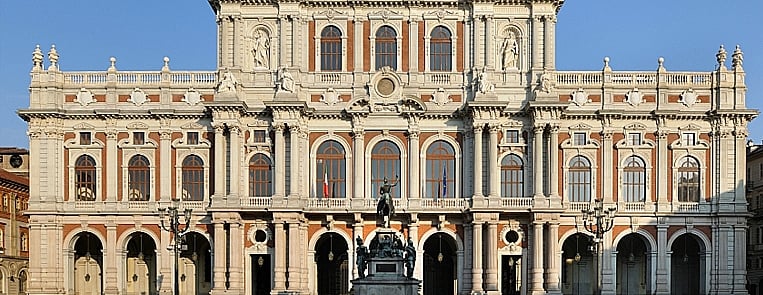
The elegance of Turin combined with the charm of the hills which surround it, are an invitation to those who love art and culture on yet to be discovered
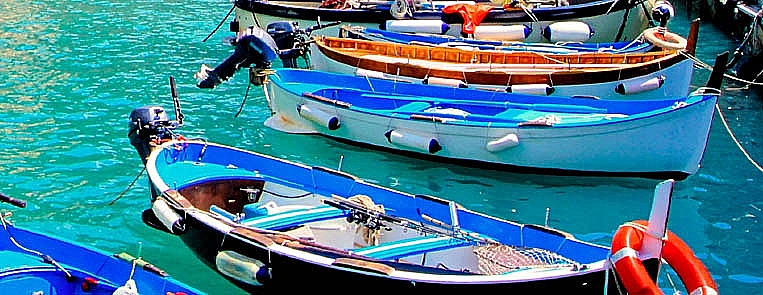
Discover the breathtaking sights of the Italian Riviera and venture through the Italian Alps surrounding Aosta Valley and Piedmont.
Yes. When the Italian peninsula was unified in March 1861, the first national parliament met in Turin’s Palazzo Carignano and proclaimed Vittorio Emanuele II King of Italy, making Turin the new nation’s first capital until 1865. The Museo del Risorgimento inside the palace tells the story in the rooms where it happened, and we arrange historian-led visits that bring the era to life.
The House of Savoy was the alpine dynasty that ruled from Turin for three centuries, becoming dukes, then kings of Sardinia, and finally kings of unified Italy. Their legacy defines the city: the Royal Palace, the ring of residences protected by UNESCO including the Venaria Reale and Stupinigi, and the art collections that fill Turin’s museums today.
Turin was founded around 28 BC as the Roman colony of Augusta Taurinorum, and its center still follows the original Roman street grid. The Porta Palatina, one of the best-preserved Roman city gates anywhere, stands beside the remains of the Roman theater a short walk from the cathedral, anchoring the ancient chapter of any historical visit.
The Shroud is kept in the cathedral of San Giovanni Battista and is displayed publicly only on rare occasions announced by the Church. At all other times visitors can see its chapel, the restored Guarini masterpiece above the cathedral, and the excellent museum dedicated to its history. Trips 2 Italy arranges visits that treat the relic and the faith surrounding it with full respect.
The Venaria Reale is the grandest of the Savoy residences, a vast baroque palace and garden complex just outside Turin, centered on Filippo Juvarra’s luminous Great Gallery. Reopened in 2007 after one of Europe’s largest restoration projects, it ranks among the continent’s great royal palaces, and we arrange guided visits often paired with the gardens and the adjoining park.
Turin led the Risorgimento that unified Italy, served as the nation’s first capital, and then became its industrial engine, founding the automobile industry in 1899 and shaping Italian cinema, publishing, and design. The city later hosted the 2006 Winter Olympics, and its museums trace each of these chapters within a few minutes’ walk of one another.