
A Taste of Piedmont Tour | Vacation Packages for 2025 – 2026
Experience Turin as royal palaces, grand piazzas and chocolate cafés reveal the elegance and history of Italy’s first capital. Starting from $1,644 per person.
HOME » POPULAR ITALIAN DESTINATIONS » TURIN TRAVEL GUIDE » TURIN FOOD AND WINE GUIDE
Turin Travel Guide Culture History Food and Wine Things to Do Plan My Trip
About this guide: This guide to the food and wine of Turin was written by the Italian-born travel specialists at Trips 2 Italy, a custom tour operator that has designed hand-crafted Italian vacations since 2003. Every recommendation below reflects the same first-hand knowledge our team draws on when we build a private Turin itinerary around a traveler’s interests, dates, and pace. Read it for your research, then let us translate it into a trip designed entirely around you.
Turin eats like the capital it was. Piedmontese cooking is a cuisine of depth and patience, built on slow braises, hand-rolled pasta, alpine butter and cheeses, and the aromatics of the hills, and in Turin it acquired a courtly polish: dishes refined in royal kitchens, served in rooms designed for lingering, and paired with the great red wines of the Piedmont region around the city.
The foundations are distinctive. Butter and hazelnuts stand where southern Italy puts olive oil and almonds, rice from the plains east of the city underwrites a serious risotto tradition, and the white truffle of Alba arrives each autumn as the region’s crowning glory, shaved at the table over the simplest possible dishes so nothing distracts from its perfume.
This is also a city of inventions. The grissino, the thin crisp breadstick found on every Italian table, was born in Turin, as were gianduja chocolate and vermouth, and the aperitivo ritual that now defines the Italian evening was codified in the city’s cafes. Eating well here rewards a little fluency, and every culinary itinerary we design comes with it: what to order where and why, and which season carries which dish.
The region’s food philosophy also changed the world beyond it. The slow food movement was born in Piedmont in the 1980s, in defense of exactly the traditions this cuisine embodies, and Turin now hosts its great biennial gathering of artisan producers. That spirit, the conviction that food should carry its landscape and its history to the table, is not a slogan here. It is simply how the city has always eaten, and travelers taste it in their first plate of plin.
The aperitivo is Turin’s signature ceremony. Vermouth was created here in 1786, wine infused with wormwood, herbs, and spices from the alpine valleys, and the city built an entire social institution around the glass: the early evening hour when bars and historic cafes fill, small plates appear alongside the drinks, and the day is formally handed over to conversation.
Done properly, the ritual has a geography. The gilded nineteenth-century cafes around Piazza San Carlo and Piazza Castello serve the classic version with silver trays and white jackets, the Quadrilatero Romano gives it a younger voice in candlelit wine bars, and San Salvario carries it late into the evening. Each neighborhood pours the same tradition with a different accent, and moving among them is one of the pleasures of a Turin stay.
We build aperitivo culture into itineraries deliberately: guided vermouth tastings that trace the craft from botanicals to blending, evenings that pair the ritual with the passeggiata under the arcades, and reservations in the rooms where the tradition was born. It is the easiest way for a traveler to live an hour of the city exactly as the city lives it.
Begin with the pastas. Agnolotti del plin, tiny pinched parcels of roasted meat, are the region’s pride, traditionally served with butter and sage or the roasting juices, and tajarin, golden hand-cut noodles rich with egg yolk, exist above all to carry shaved truffle or a slow ragu. Both are still made by hand, and watching a sfoglina pinch the plin is a lesson in why.
The antipasti parade is famously long: vitello tonnato, thin veal under a silken tuna-caper sauce, has become a signature of the city’s tables; carne cruda, hand-chopped raw veal dressed simply, shows the quality of Piedmontese beef; and in autumn bagna cauda, the warm anchovy and garlic bath for vegetables, turns dinner into a communal rite. The great braises follow, above all brasato al Barolo, beef surrendered slowly to the region’s noblest wine, and bollito misto with its ceremony of sauces.
Cheese closes the savory chapter with authority. Castelmagno from the mountain valleys, tomini fresh and aged, and robiola in its many forms come to the table with honey and cugna, the grape-must preserve, and the alpine pastures behind them are close enough to visit. This is a cuisine built for long evenings, and we design dining itineraries that give it the unhurried table it assumes.
Two courtly survivals deserve a word. The fritto misto alla piemontese is a festive parade of small fried morsels, savory and sweet together, that once crowned farmhouse celebrations, while finanziera, the old dish of the financial quarter, turns humble cuts into a velvety braise once served to bankers and kings alike. Both still appear on traditional menus around the city, and ordering them well is part of the fluency our dining guidance provides.
Porta Palazzo. The market on Piazza della Repubblica is among the largest open-air markets in Europe, a daily city of stalls where alpine cheeses, autumn mushrooms, plain-grown rice, and produce from the surrounding provinces pile up in extravagant order. Morning here is Turin at its most alive, and a market walk with a local cook turns the spectacle into an education.
Around the market and across the center, the food city continues in specialist shops that have held their corners for generations: chocolatiers hand-wrapping gianduiotti, historic delicatessens building vitello tonnato to order, coffee roasters perfuming whole blocks, and the pasticcerie whose windows are small museums of meringue and chestnut. The covered galleries and arcaded streets make grazing between them a pleasure in any weather.
For travelers who want to go deeper, we arrange hands-on mornings: market shopping followed by a cooking session dedicated to plin and tajarin, tastings that move from cheese counter to chocolate workshop, and encounters with the producers themselves. Turin’s food culture is a working world rather than a display, and entering it with the right companion is the difference between seeing it and tasting it.
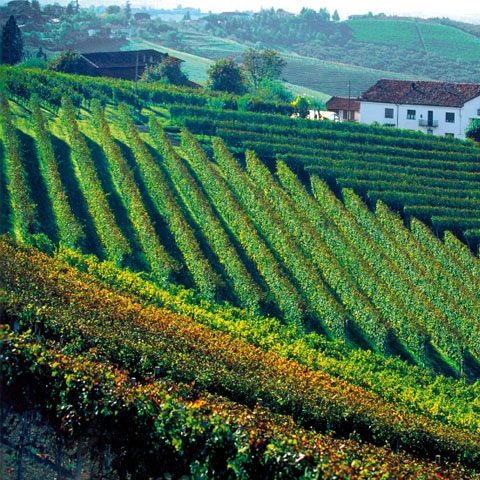
An hour south of the city, the Langhe hills produce Italy’s most majestic reds. Barolo and Barbaresco, both born of the nebbiolo grape, age into wines of extraordinary perfume and longevity, and the vineyard landscape that produces them is protected by UNESCO as a World Heritage Site. Around them grow barbera and dolcetto for the daily table, and the Roero across the river adds its own nebbiolo and the white arneis.
The Monferrato hills to the southeast complete the picture with barbera at its richest and the sparkling and sweet wines of Asti, where moscato reaches its most charming form. Closer still, the alpine valleys keep small heroic vineyards, and the region’s vermouth tradition draws its base from these same hills, so the city’s cellar culture and its countryside are one continuous story.
A wine day from Turin is easily arranged and endlessly rewarding: two or three family estates thoughtfully sequenced, a long lunch among the vines, and cellars where the winemaker pours. With a private driver handling the ridge roads, every glass can be enjoyed and the landscape becomes scenery rather than navigation. It is the single most requested excursion in our Turin itineraries, and the one we take the most care composing.
Chocolate rules the sweet city. Gianduja, the hazelnut-chocolate marriage invented here, takes its purest form in the gianduiotto, the little gold-wrapped ingot that remains Turin’s emblem, and the bicerin, the layered glass of espresso, hot chocolate, and cream served since the eighteenth century, is the city’s most beloved ritual. Hot chocolate here is a serious, spoon-standing affair, best taken slowly in a gilded room.
The repertoire runs deeper: bonet, the dark chocolate and amaretti pudding of the countryside; marron glace, the candied chestnuts the city elevated to an art; hazelnut cakes from the Langhe; and the elegant pastry counters that treat afternoon merenda as an institution. The historic cafes formalized it in the Merenda Reale, the royal afternoon service of chocolate and pastries that travelers can still take today.
Legend adds one more invention to the list: zabaione, the warm whipped custard of egg yolk and sweet wine, is claimed by Turin, where the patron saint of pastry cooks is honored in a church near Piazza San Carlo. Taken warm with a plate of small pastries in a historic room, it closes an afternoon as gracefully as any dessert in Italy.
Fine dining completes the picture, from celebrated contemporary rooms that reinterpret Piedmontese tradition to estate tables in the wine hills, and we reserve the rooms suited to each evening of an itinerary. Every culinary journey we design is composed around your dates and the season’s calendar as part of our wine tasting and food tours in Italy, from truffle autumns to spring gardens, so the city’s table meets you at its best.
A Trips 2 Italy culinary itinerary begins with how you love food, not with a fixed menu of activities. For some travelers that means the hunt: following a trifolau and his dog through the autumn woods around Alba, then watching the morning’s white truffle shaved over tajarin at lunch. For others it means the bench: a chocolate atelier with a master chocolatier, or a cooking session where plin are pinched by hand and eaten an hour later.
Because our team is Italian-born and has worked this region since 2003, the settings are authentic rather than staged: family wine estates in the Langhe, market mornings at Porta Palazzo with a cook who shops there daily, vermouth cellars where the botanicals are explained jar by jar, and historic cafes where the bicerin arrives as it has for three centuries.
The composition matters as much as the components. We sequence tastings so palates build rather than tire, alternate city tables with countryside ones, and time the journey to the season’s calendar, truffles and harvest in autumn, cheeses and gardens in spring. Tell us how you imagine eating in Turin, and we will build the days around the table.
Turin deserves more than a template. Since 2003, Trips 2 Italy has designed private Italian vacations one traveler at a time, hand selecting every experience based on what you tell us rather than fitting you into a predefined package. Our Italian-born team plans Turin with the knowledge of people who call Italy home, from the royal galleries of the Savoy palaces to the wine hills of the Langhe an hour beyond the city, and we remain at your side throughout your trip with 24/7 assistance. Tell us how you imagine Turin, and we will craft the itinerary that matches it.
Experience Turin as royal palaces, grand piazzas and chocolate cafés reveal the elegance and history of Italy’s first capital. Starting from $1,644 per person.
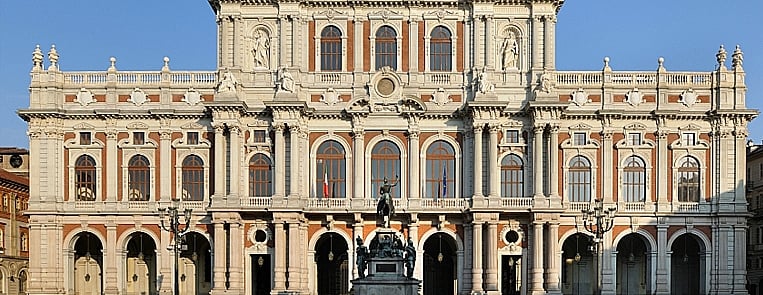
The elegance of Turin combined with the charm of the hills which surround it, are an invitation to those who love art and culture on yet to be discovered
Discover the breathtaking sights of the Italian Riviera and venture through the Italian Alps surrounding Aosta Valley and Piedmont.
Turin is celebrated for agnolotti del plin and tajarin pasta, vitello tonnato, bagna cauda, brasato al Barolo, and the white truffles of nearby Alba, along with its inventions: grissini breadsticks, gianduja chocolate, the bicerin, and vermouth. The city’s historic cafes and the Porta Palazzo market keep these traditions alive as daily practice rather than museum pieces.
The bicerin is Turin’s signature drink: a small glass layered with espresso, thick hot chocolate, and cold cream, served unstirred so the layers arrive in sequence. It has been the city’s morning and afternoon ritual since the eighteenth century, and taking one slowly in a historic cafe is among the essential Turin experiences.
Barolo and Barbaresco, the nebbiolo-based giants of the Langhe hills an hour south, lead the list, joined by barbera, dolcetto, arneis from the Roero, and the moscato of Asti. Turin is also the birthplace of vermouth, which deserves a tasting in its own right. Trips 2 Italy arranges estate visits with producers we know personally, sequenced with a private driver.
Yes. The white truffle country around Alba lies about an hour from the city, and from roughly October to December we arrange morning hunts with a trifolau and his dog, followed by truffle-focused lunches and a visit to Alba’s celebrated truffle fair in season. It is one of the great culinary experiences in all of Italy.
Turin is arguably Italy’s chocolate capital. The city invented gianduja, perfected the gianduiotto, and pours a hot chocolate thick enough to hold the spoon. We arrange visits to artisan chocolate workshops, guided tastings across the historic chocolatiers, and the traditional Merenda Reale chocolate service in the gilded cafes.
Pair two or three city days, built around the market, the cafes, and the city’s tables, with countryside days in the Langhe and Monferrato among the estates. The specialists at Trips 2 Italy compose the whole journey by hand around your dates and tastes, with private drivers, producer visits, and reservations arranged in advance and supported throughout the trip.