Lake Maggiore History Guide

HOME » POPULAR ITALIAN DESTINATIONS » LAKE MAGGIORE TRAVEL GUIDE » LAKE MAGGIORE HISTORY GUIDE

Lake Maggiore Travel Guide        Culture        History        Food and Wine        Things to Do        Plan My Trip

About this guide: This guide to the history of Lake Maggiore was written by the Italian-born travel specialists at Trips 2 Italy, a custom tour operator that has designed hand-crafted Italian vacations since 2003. Every recommendation below reflects the same first-hand knowledge our team draws on when we build a private Lake Maggiore itinerary around a traveler’s interests, dates, and pace. Read it for your research, then let us translate it into a trip designed entirely around you.

How Did Lake Maggiore Begin?

The lake itself is the work of ice. Glaciers flowing down from the Alps over successive ice ages carved the long, deep basin that now holds Lake Maggiore, and when the ice withdrew, water filled a trench that plunges more than a thousand feet at its deepest. The mountains the glaciers left behind still frame every view on the upper lake.

People followed early. Prehistoric communities settled the shores and left traces from pile dwellings to rock carvings, and by Roman times the lake was a known and named place: Verbanus Lacus, from which the modern shore city of Verbania takes its name. Roman roads and boat traffic tied the lake into the networks of Mediolanum, today’s Milan, and the towns at its southern end grew as staging points between the plain and the Alpine passes.

That role as a threshold between Italy and the lands beyond the Alps became the lake’s historical destiny. Sitting at the edge of what is now Piedmont, commanding routes toward the Simplon Pass, Lake Maggiore spent two thousand years as a corridor for trade, armies, pilgrims, and eventually travelers, and nearly everything in its story flows from that geography.

For travelers, the deep past is not an abstraction here. The lake’s museums keep prehistoric and Roman finds from the shore settlements, place names preserve their Latin roots, and the water routes the Romans used are the same ones a private boat follows today. Few landscapes let you read so many millennia in a single view from the deck.

What Was Lake Maggiore's Medieval Story?

The Middle Ages fortified the lake. Control of its waters and passes was worth fighting for, and the powers of Lombardy contested it for centuries, from local lords to the Visconti of Milan. The Rocca di Angera, rising on its spur above the southern basin, preserves that age intact, its frescoed halls celebrating a thirteenth century Visconti victory in one of the earliest secular fresco cycles in Italy.

Mid-lake, the ruined castles of Cannero still stand on their rocky islets just offshore, remnants of strongholds that once sheltered a notorious clan of brigand lords before Milanese forces reduced them. Their silhouettes at dusk remain one of the upper lake’s most romantic sights, best appreciated from the water.

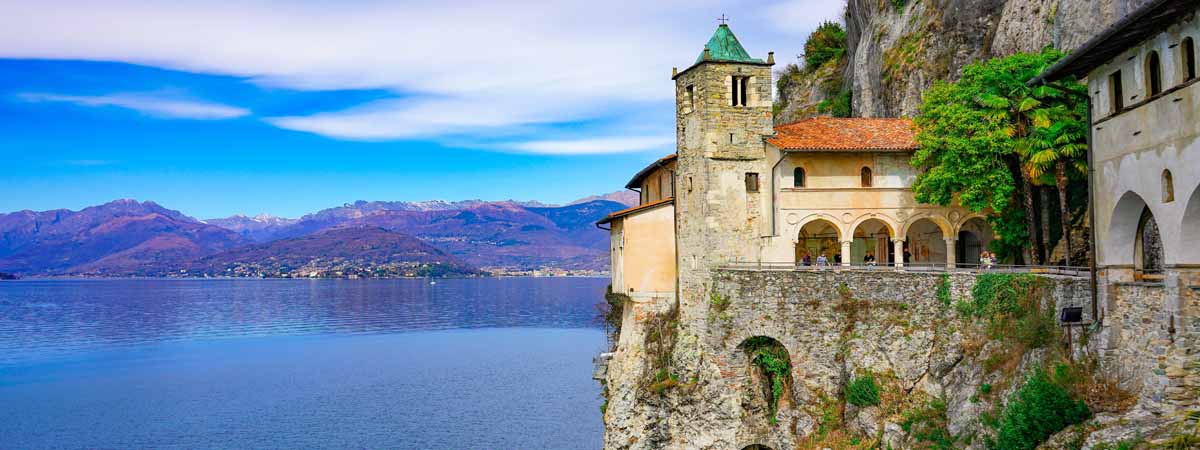
Faith built as durably as war. The hermitage of Santa Caterina del Sasso began in the twelfth century, when a local merchant survived a storm on the lake and withdrew to a cave in the cliff in gratitude. The monastery that grew around his hermitage, suspended between rock and water and layered with frescoes, remains the most atmospheric medieval site on the lake, and arriving by boat, as pilgrims once did, is still the finest way to meet it.

How Did the Borromeo Family Come to Rule the Lake?

In the fifteenth century, a family of bankers from the Milanese orbit began acquiring rights, lands, and castles around the lake, and the Borromeo name attached itself to Lake Maggiore so thoroughly that its islands still carry it. Shrewd finance, church influence, and loyalty to Milan’s rulers built a domain that functioned almost as a small lake state, with Angera’s fortress as its anchor.

The family produced one of the towering figures of the Catholic Reformation. Carlo Borromeo, born in the castle at Arona in 1538, became archbishop of Milan and a relentless reformer, famed for his austerity and his personal ministry during plague years. Canonized within decades of his death, he was honored on the lake with the Sancarlone, a colossal copper and iron statue completed in 1698 above Arona, which visitors can still climb by internal stairs to look out through its eyes.

The Borromeo grip on the lake proved remarkably durable, evolving from feudal power into cultural patronage, and the family remains present on the lake to this day. Few places in Italy allow travelers to follow a single family’s thread across six centuries so vividly, and we design history-focused days that walk that thread from fortress to island palace.

What Was the Golden Age of the Borromean Islands?

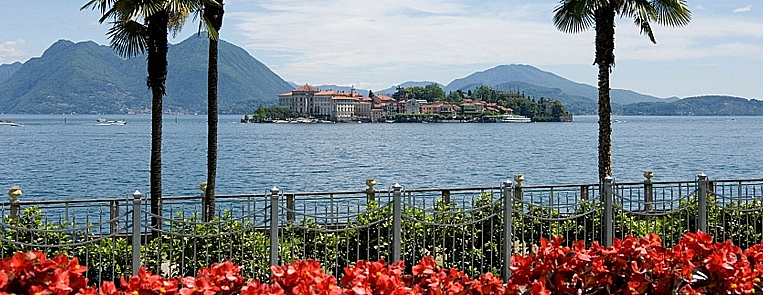
The seventeenth century turned the lake into a stage. Beginning in 1632, Carlo III Borromeo and his successors transformed the rocky islet of Isola Bella into a baroque spectacle dedicated to his wife Isabella, from whom the island takes its name. Architects, engineers, and gardeners labored for decades, shipping soil across the water to raise ten terraced garden levels crowned with statues, obelisks, and a unicorn rearing above them all.

The ambition behind the project was theatrical in the most literal sense: the island was conceived to resemble a great ship anchored in the lake, its garden terraces rising like a stern toward the sky. Festivities matched the setting, with concerts, receptions, and illuminated evenings that made the island famous across the courts of Europe long before modern travel existed.

The palace grew alongside the gardens, its salons filled with paintings and tapestries, its lower floor carved into the famous shell-lined grotto rooms where the family escaped the summer heat. Isola Madre matured in a different key, its orchards and gardens evolving toward the botanical, its villa collecting the marionette theaters that entertained generations of the household.

The islands quickly became one of Europe’s celebrated sights, a required wonder on the Grand Tour, praised by travelers and philosophers and visited by the powerful. Napoleon and Josephine stayed at Isola Bella in 1797, and the palace preserves the rooms that received them. The golden age fixed the lake’s identity permanently: a place where art, water, and landscape compose a single work.

How Did the Belle Epoque Transform Lake Maggiore?

The nineteenth century brought the travelers, and engineering brought them in style. Steamboat service began on the lake in 1826, the railway reached the shore in the decades that followed, and in 1906 the Simplon Tunnel opened through the Alps, placing Lake Maggiore directly on the storied route between Paris and Milan. Stresa blossomed into one of Europe’s fashionable resorts, its waterfront lined with grand hotels, gardens, and villas built for an international clientele of aristocrats, industrialists, and artists.

Writers fixed the lake in literature. Stendhal and Flaubert praised it, and Ernest Hemingway, who had recuperated in the region during the First World War, set part of A Farewell to Arms on these waters, sending his characters rowing up the lake toward Switzerland by night. The lake’s blend of glamour and refuge made it a natural setting for both romance and escape.

History returned in 1935, when the leaders of Italy, Britain, and France met on Isola Bella for the Stresa Conference, a final attempt to hold the European order together before the Second World War. The belle epoque world faded with the wars, but its architecture, promenades, and unhurried graces survived on the lake remarkably intact, and they remain the frame of every visit today.

Retracing that gilded era is one of the lake’s pleasures. An evening walk along the Stresa waterfront, an aperitivo beneath period facades, or a crossing on one of the lake’s historic-style vessels recovers its atmosphere without effort, and our guides carry the anecdotes, from royal guests to literary residents, that bring the promenade’s ghosts agreeably back to life.

Which Places Bring Lake Maggiore's History to Life Today?

The islands are the great archive. Isola Bella’s palace walks travelers through the baroque centuries room by room, from the Napoleonic bedchamber to the shell grottoes, with the terraced gardens as the era’s living masterpiece. Isola Madre preserves the domestic side of the same story, and Isola dei Pescatori shows what the lake’s ordinary life looked like across all of those centuries.

On the shores, the Rocca di Angera commands the south with its medieval halls and frescoes, the Sancarlone rises above Arona for those willing to climb a colossus from within, and Santa Caterina del Sasso holds its cliff on the eastern shore, reached by stairway or, far better, by water. Stresa’s waterfront itself is a monument, an open-air museum of the belle epoque best absorbed on an evening walk.

The fortress at Angera deserves a particular word. Its frescoed medieval halls are joined by a celebrated museum of dolls and toys assembled by the Borromeo family, one of the finest of its kind in Europe, which makes the castle an unexpected delight for families as well as historians, and its ramparts frame the whole southern lake.

Sequence turns these sites into a story. We compose history-focused itineraries that move chronologically where interests allow, from medieval cliff and fortress to baroque island to nineteenth century promenade, with private boats stitching the chapters together and guides chosen for their narrative gift. Three thousand years arrive as one unfolding tale rather than a shuffle of tickets.

How Is Lake Maggiore's Heritage Preserved Today?

The lake’s greatest monuments remain in devoted hands. The Borromeo properties, from Isola Bella and Isola Madre to the Rocca di Angera, are maintained by the family’s own cultural stewardship, their restorations ongoing and their collections curated with scholarly care. Villa Taranto’s gardens are kept by a dedicated foundation that continues its founder’s botanical mission, and the hermitage of Santa Caterina del Sasso has been carefully restored and returned to religious life.

Preservation extends to the living landscape. The gardens require an unbroken chain of horticultural knowledge passed between generations of gardeners, the fishing families of Isola dei Pescatori sustain a working tradition centuries old, and the belle epoque fabric of Stresa’s waterfront is protected as the identity of the town. On the lake, heritage is less a museum practice than a continuing occupation.

For travelers, this means the past is unusually intact and unusually welcoming. We arrange visits that meet the preservation world where access allows, from garden directors to palace curators, as part of our cultural tours across Italy. Meeting the custodians of the lake’s memory is one of its quiet privileges, and it deepens every view across the water.

Ready to Begin Planning Your Lake Maggiore Vacation?

Lake Maggiore deserves more than a template. Since 2003, Trips 2 Italy has designed private Italian vacations one traveler at a time, hand selecting every experience based on what you tell us rather than fitting you into a predefined package. Our Italian-born team plans Lake Maggiore with the knowledge of people who call Italy home, from the terraced gardens of the Borromean Islands to the belle epoque promenade of Stresa, and we remain at your side throughout your trip with 24/7 assistance. Tell us how you imagine Lake Maggiore, and we will craft the itinerary that matches it.

Explore Our Lake Maggiore Vacation Itineraries

Frequently Asked Questions About the History of Lake Maggiore

The lake fills a basin carved by Alpine glaciers over successive ice ages, which explains its great depth and its long, narrow shape reaching from the Lombard plain into Switzerland. The Romans knew it as Verbanus Lacus, the name preserved today in the shore city of Verbania.

The Borromeo family, who began transforming the rocky islet in 1632 under Carlo III and named it for his wife Isabella. Successive generations raised the baroque palace and its ten terraced garden levels, and the family maintains the island to this day. Napoleon and Josephine stayed in the palace in 1797.

Born in the castle at Arona on the lake in 1538, Carlo Borromeo became archbishop of Milan and one of the great reformers of the Catholic Reformation, celebrated for his austerity and his ministry during plague years. The colossal Sancarlone statue above Arona, completed in 1698, honors him and can be climbed by internal stairs.

The hermitage began in the twelfth century, when a merchant who survived a storm on the lake withdrew in gratitude to a cave in the cliff above the water. The monastery that grew around his refuge, frescoed and suspended against the rock, remains the lake’s most atmospheric medieval site, and Trips 2 Italy arranges visits by private boat, the way pilgrims once arrived.

In April 1935, the leaders of Italy, Britain, and France met on Isola Bella in a final effort to preserve the European order before the Second World War. The meeting placed the lake briefly at the center of world diplomacy and remains a landmark of its modern history.

Chronologically and by water. Trips 2 Italy composes history-focused itineraries that move from the medieval hermitage and the Rocca di Angera to the baroque islands and the belle epoque waterfront of Stresa, with private boats connecting the chapters and expert guides chosen for their storytelling.