A Taste of Lake Maggiore Tour | Vacation Packages for 2025 – 2026
Experience Lake Maggiore, the Borromean Islands and Villa Taranto as gardens, lakeside towns and scenic journeys create a magical Italian escape. Starting from $1000 per person.
HOME » POPULAR ITALIAN DESTINATIONS » LAKE MAGGIORE TRAVEL GUIDE » LAKE MAGGIORE CULTURE GUIDE
About this guide: This guide to the culture of Lake Maggiore was written by the Italian-born travel specialists at Trips 2 Italy, a custom tour operator that has designed hand-crafted Italian vacations since 2003. Every recommendation below reflects the same first-hand knowledge our team draws on when we build a private Lake Maggiore itinerary around a traveler’s interests, dates, and pace. Read it for your research, then let us translate it into a trip designed entirely around you.
Lake Maggiore’s culture grew from an unusual marriage: aristocratic vision and working lake life sharing the same water. For four centuries the Borromeo family shaped the lake’s identity, raising palaces and gardens on its islands and filling them with art, while fishing villages, granite quarries, and market towns carried on the daily labor that fed and built the region.
The lake’s position added a cosmopolitan layer. Sitting on the historic route between Italy and northern Europe, at the edge of Piedmont and within reach of Milan, it absorbed influences from both sides of the Alps. When the belle epoque brought Europe’s travelers to its shores, the lake answered with grand hotels, formal promenades, and a tradition of hospitality that remains its signature art.
The third thread is botanical. Generations of garden makers, from baroque designers to a Scottish captain with an encyclopedic ambition, treated the lake’s mild climate as a canvas, and gardening here rose to the level of high culture. The result is a place where a palace gallery, a camellia in bloom, and a fisherman mending nets belong to the same cultural landscape, and where travelers can move between all three in a single day.
Experiencing that culture well is a matter of pace and introductions rather than tickets. The lake reveals itself to travelers who linger on the islands after the day boats leave, who walk the promenade at the local hour, and who meet the gardeners, boatmen, and families who keep its traditions working. Our itineraries are designed around exactly those encounters, arranged through relationships our team has cultivated for two decades.
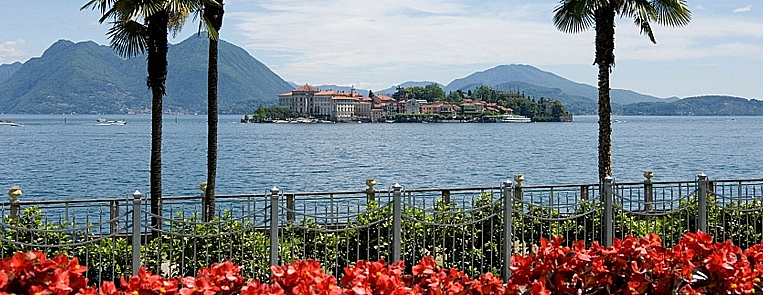
The Borromeo were to Lake Maggiore what the great patron dynasties were to Italy’s cities: bankers and churchmen who translated wealth into beauty on a scale that still defines the place. From the seventeenth century onward they transformed Isola Bella from a rocky islet into a baroque vision, a palace of grand salons above ten terraces of gardens crowned with statuary and white peacocks.
Inside the palace, the family’s collections unfold room by room: paintings, tapestries woven with gold and silver thread, and the celebrated grotto rooms on the lower floor, their walls and vaults lined entirely with shells, pebbles, and pale stucco to create cool marine chambers unlike anything else in Italy. Isola Madre holds the quieter side of the inheritance, a sixteenth century villa furnished with the family’s collection of marionette theaters and puppet stages.
The dynasty also gave the church one of its towering figures. San Carlo Borromeo, born at Arona on the lake’s southern shore, became a leading reformer of his age, and the colossal copper statue raised to him above his birthplace can be climbed from within.
What distinguishes the Borromeo legacy from most aristocratic inheritances is that it remains alive and in the family’s care. The palaces are still furnished, the gardens still tended by resident horticulturists, and the collections still growing, so a visit feels less like touring a museum than being received at a great house. Walking these places with a guide who can animate the family’s story turns the lake into one continuous gallery, and arranging that storytelling is work we take particular care with.
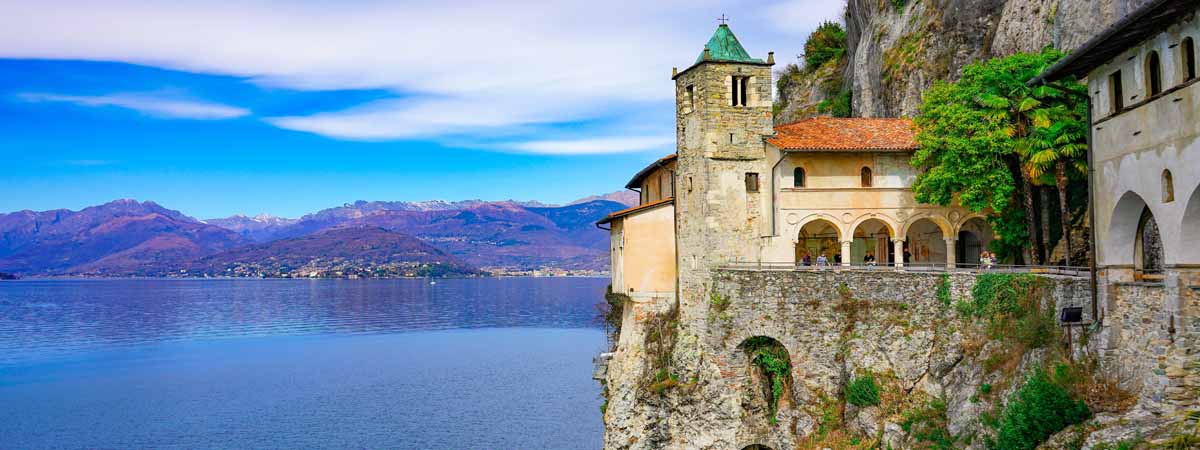
The lake’s architecture reads like a layered chronicle. The hermitage of Santa Caterina del Sasso, clinging to a sheer cliff above the water since the Middle Ages, speaks for the age of faith, its frescoed chapels reached by stone stairs or by boat. The Rocca di Angera, the Borromeo fortress commanding the southern basin, preserves the medieval lake of watchtowers and rival lords.
The baroque centuries answer from the islands, where the Isola Bella palace and its garden terraces form one of the most complete aristocratic ensembles of the era. Then comes the belle epoque, when the arrival of the Simplon rail route through the Alps placed the lake on Europe’s grandest itineraries, and Stresa dressed its waterfront in ornate hotels, villas, and gardens built for a leisured international clientele.
The villages contribute their own vernacular chapter: stone houses climbing from tiny harbors, arcaded lanes in Cannobio, the fishermen’s cottages of Isola dei Pescatori with their long balconies built for drying nets, and the pink Baveno granite that traveled from local quarries into monuments across the world. Reading these humbler buildings alongside the palaces gives the lake’s architecture its full human range.
What makes the ensemble special is its setting: every era built to face the water, so the lake itself curates the architecture into a single panorama best read from the deck of a boat. We design architecture-focused days exactly that way, pairing shoreline cruises with interior visits and specialists who read the buildings fluently.
Music has been part of the lake’s hospitality since the belle epoque, when hotel salons and villa terraces filled with evening performances for traveling Europe. That tradition matured into the Stresa Festival, one of Italy’s respected classical music gatherings, which each summer brings orchestras and soloists to lakeside venues, island settings, and historic halls around the shore.
The settings are half the magic. A chamber concert in a frescoed hall, or an evening performance reached by boat as the light fades on the water, turns listening into an experience of place, and the lake’s acoustic intimacy suits exactly the kind of refined programming the festival favors.
The lake has earned its place in musical biography as well. Composers and performers passing between Milan and northern Europe made it a resting place for generations, guests of the great hotels included celebrated conductors and singers, and the tradition of music as part of hospitality never lapsed. Even today, an evening on the lake often comes scored, whether by a festival orchestra or a pianist in a villa salon.
Beyond the festival season, the towns keep their own musical calendars of church concerts, waterfront bandstands, and summer series. We fold performances into itineraries as part of our entertainment and festival experiences in Italy, securing seats and timing lake days around the evenings so the music becomes a centerpiece rather than a lucky accident.
Isola dei Pescatori keeps the lake’s oldest profession alive: a village of narrow lanes and low houses where fishing families still take boats out for lavarello and perch, and where the morning catch still shapes the day. Spending unhurried time there, beyond the midday hours, is one of the most authentic experiences the lake offers.
The shore towns carry their own trades. Baveno’s pink granite has been quarried for centuries and travels the world in columns and facades, while the hills above Stresa preserve a wonderfully specific heritage: the umbrella makers of the Vergante district, whose story is told in a dedicated museum at Gignese. Verbania’s gardening tradition, refined over generations of villa horticulture, remains a living profession that keeps the lake’s great gardens in bloom.
We arrange encounters with these working worlds where relationships allow: mornings with fishermen, visits with the gardeners who tend historic collections, and workshop time with local craftspeople. Meeting the hands that keep the lake’s traditions alive turns scenery into culture, and it is the kind of access our Italian-born team has spent two decades earning.
Spring is the lake’s great festival, and the flowers are the performers. Camellia shows open the season in Verbania, entire promenades and villa gardens come into bloom, and Villa Taranto stages its celebrated tulip weeks, when tens of thousands of bulbs flower in choreographed waves. Garden lovers cross continents for these weeks, and timing a visit to the peak of the bloom is a planning art in itself.
Summer layers festivity onto the season: the Stresa Festival’s concerts, patronal feasts in the lake towns with processions and fireworks over the water, and the evening rituals of a resort coast in full life. On Isola dei Pescatori, the Assumption feast in mid August culminates in a luminous procession of boats carrying the Madonna across the dark lake, one of the most moving sights of the year.
Autumn turns the calendar toward the harvest, with chestnut festivals in the hills and wine celebrations in the Piedmont country to the south, while winter brings quiet lakeside markets and clear-aired walks. Even the weekly markets carry a festive charge, above all the Sunday market of Cannobio, which spreads along the waterfront and draws visitors from both sides of the border.
We track this calendar year round and build itineraries so travelers arrive when the lake is celebrating something worth crossing an ocean for. A trip timed to the tulip weeks, a festival concert, or the island procession in August carries a memory no general-purpose visit can match, and composing that timing is one of the quiet crafts of our planning.
Daily life on the lake follows the water. Mornings begin with espresso at a waterfront bar and the first ferries tracing their routes between the towns, market days fill the lakeside squares with produce, cheese, and flowers, and the light on the islands sets the day’s tempo more surely than any clock.
The evening brings the passeggiata, the unhurried social walk along the promenade that remains the region’s true theater. In Stresa it unfolds beneath ornate facades and flowerbeds, in Verbania along a more local waterfront where families and neighbors greet each other, and in the upper lake villages at a pace that has hardly changed in a century.
Because the lake never surrendered its working life to tourism, travelers can step into these rhythms rather than observe them: a market morning with a local cook, an aperitivo hour among neighbors, a ferry ride taken simply for the crossing. Our Italian cultural tours are composed of exactly these hours, arranged through relationships and timed to the life of the place.
Lake Maggiore deserves more than a template. Since 2003, Trips 2 Italy has designed private Italian vacations one traveler at a time, hand selecting every experience based on what you tell us rather than fitting you into a predefined package. Our Italian-born team plans Lake Maggiore with the knowledge of people who call Italy home, from the terraced gardens of the Borromean Islands to the belle epoque promenade of Stresa, and we remain at your side throughout your trip with 24/7 assistance. Tell us how you imagine Lake Maggiore, and we will craft the itinerary that matches it.

Experience Lake Maggiore, the Borromean Islands and Villa Taranto as gardens, lakeside towns and scenic journeys create a magical Italian escape. Starting from $1000 per person.

The majesty of the surrounding Italian Alps, noble villas and magnificent views, experience the Italian Lake region that since ancient times has attracted royalty, artists and poets.

The majesty of the Italian Alps, charming Villas and picturesque sights, are all breathtaking landscapes on this enchanting tour along Italy’s northern Lakes and Alps.
The lake is celebrated for the Borromean Islands and the baroque palace and terraced gardens of Isola Bella, for the botanical mastery of Villa Taranto, for its belle epoque resort heritage centered on Stresa, and for living traditions that range from the fishing families of Isola dei Pescatori to the summer concerts of the Stresa Festival.
A dynasty of Milanese bankers and churchmen who shaped Lake Maggiore from the fifteenth century onward, raising the palace and gardens of Isola Bella, the villa and botanical collections of Isola Madre, and the fortress of Angera. San Carlo Borromeo, the great church reformer honored by the colossal statue at Arona, was born on the lake’s southern shore.
It is Lake Maggiore’s summer classical music festival, which brings orchestras, chamber ensembles, and celebrated soloists to lakeside and island venues around the shore. Trips 2 Italy times itineraries around its calendar and secures seats so a concert evening on the water becomes a centerpiece of the trip.
Yes. Isola dei Pescatori remains a genuinely inhabited fishing village, and the lake’s catch still reaches its tables daily. We arrange unhurried island time beyond the busiest hours, along with encounters with the working lake, from fishermen’s mornings to visits with the gardeners who keep the great villa collections alive.
The season opens in March with camellias, builds through April and May with azaleas, rhododendrons, and Villa Taranto’s famous tulip weeks, and continues in waves through summer and into autumn. Trips 2 Italy times garden itineraries to the peak of the bloom, which shifts slightly each year with the weather.
Very much so. Puppet theater collections on Isola Madre, white peacocks in the gardens, boat crossings, a climbable colossal statue at Arona, and a mountain cable car give every generation something to love, and we compose family itineraries so art and heritage arrive as adventure rather than obligation.