Best of Italy’s Lake District and Dolomites Semi Escorted Tour
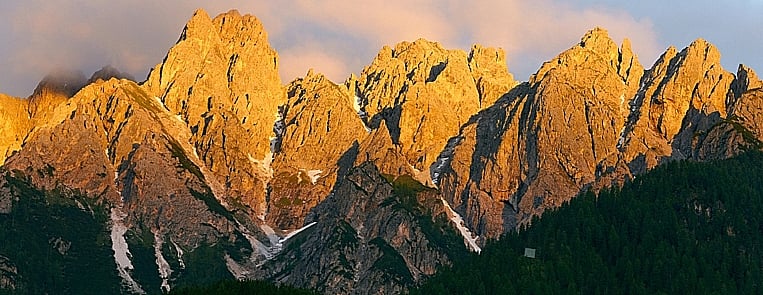
The majesty of the Italian Alps, charming Villas and picturesque sights, are all breathtaking landscapes on this enchanting tour along Italy’s northern Lakes and Alps.
Bolzano Travel Guide Culture History Food and Wine Things to Do Plan My Trip
About this guide: This Bolzano travel guide was written by the Italian-born travel specialists at Trips 2 Italy, a custom tour operator that has designed hand-crafted Italian vacations since 2003. Every recommendation below reflects the same first-hand knowledge our team draws on when we build a private Bolzano itinerary around a traveler’s interests, dates, and pace. Read it for your research, then let us translate it into a trip designed entirely around you.
Bolzano is the city where Italy and the Alpine world meet in a single piazza. As the capital of South Tyrol, the northern province of the Trentino Alto Adige region, it lives fluently in two languages: street signs read Via dei Portici and Laubengasse in the same breath, espresso and strudel share the same cafe tables, and a Gothic cathedral with a glittering tiled roof looks up at vineyards climbing toward Dolomite stone. No other Italian city carries this double identity so gracefully.
The city’s calling cards are remarkable in their range. The South Tyrol Museum of Archaeology guards Otzi the Iceman, a 5,300 year old mummy discovered in the glacier ice of the nearby Alps and one of the most important archaeological finds ever made. The arcaded merchant street of Via dei Portici has traded continuously since the Middle Ages, the fruit market fills its square every morning, and castles ring the city on every wooded ridge.
Then there is the setting. Bolzano sits in a sun-filled basin where three valleys converge, with vineyards inside the city limits and the pale towers of the Dolomites, a UNESCO World Heritage landscape, rising within an hour’s reach. Few cities anywhere offer world-class archaeology, medieval streets, serious wine, and high mountains in the same compact day.
Our specialists have planned journeys through this corner of Italy since 2003, and this guide distills what we have learned. Use it to shape your thinking, then let us shape the trip itself, hand selecting every experience from what you tell us rather than assembling a predefined package.
Bolzano lies at roughly 860 feet above sea level in a broad basin where the Talvera and Isarco rivers meet the Adige, the great valley corridor that carries travelers between Verona and the Brenner Pass. The city floor is Mediterranean in feel, planted with vines, apple orchards, palms, and cypresses, while porphyry and limestone slopes rise steeply on every side toward the Renon plateau, the heights of San Genesio, and the wooded ridge of the Colle.
That bowl-shaped geography produces a climate that surprises first-time visitors. Sheltered from northern winds, Bolzano records some of the warmest summer temperatures in the Alpine region, which is precisely why Schiava and Lagrein grapes ripen on hillsides five minutes from the cathedral. Autumn arrives golden and clear, winter is crisp and often sunny, and the surrounding plateaus offer cool air within a short cable car ride whenever the valley warms.
For travelers, the practical meaning is choice. In a single day you can walk arcaded streets in shirtsleeves, ride to alpine meadows at 4,000 feet, and return for dinner among the vineyards. When we design a Bolzano itinerary, we use this vertical geography deliberately, pairing valley mornings with mountain afternoons so each day holds two climates and two landscapes.
The Adige valley floor around the city is also one of Europe’s great orchards, its apple rows running mile after mile between the vineyard slopes, and the contrast between cultivated valley and wild rock above gives every view its particular South Tyrolean character. Photographers should note the light: mornings favor the vineyard hill of Santa Maddalena, while late afternoon sets the porphyry cliffs glowing above the western rooftops.
Every season argues its own case. Late November through Epiphany belongs to the Christmas market on Piazza Walther, the original of Italy’s great Advent markets and still its benchmark, when wooden chalets, spiced wine, and choir music fill the square beneath the cathedral spire. Winter also puts the Dolomite ski country within easy reach for travelers who want mountain days without leaving a city base.
Autumn may be the connoisseur’s season. The grape harvest animates the wine villages, the larch forests turn gold, and Torggelen, the beloved South Tyrolean ritual of walking between farmhouses for new wine, roasted chestnuts, and hearty food, fills October and November weekends. Spring brings blossom to a million apple trees in the valley and the flower market to the city center, while summer offers long, warm days built for high alpine excursions.
When we plan your dates, the calendar becomes an instrument. We reserve Christmas market stays months ahead, time wine country days to the harvest, and schedule Dolomite excursions for the clearest seasonal light. Tell us what you want Bolzano to feel like, and we will tell you when it feels that way.
Two full days cover the essential city: a morning with Otzi at the South Tyrol Museum of Archaeology, the cathedral and Piazza Walther, the arcades and the fruit market, a walk along the Talvera meadows to Runkelstein Castle, and an evening among the Santa Maddalena vineyards. It is a compact, walkable center that rewards unhurried attention rather than a checklist pace.
Bolzano’s deeper value, though, is as a base. Add a day for the Renon plateau and its earth pyramids, a day for the wine road south past Lago di Caldaro to Tramin, and a day or two for the Dolomites, Val Gardena, or the Alpe di Siusi, and the city anchors a week without a single wasted transfer. Many of our travelers split the time between a city stay and a countryside or mountain stay for two distinct experiences.
Because every Trips 2 Italy itinerary is built by hand, we weigh Bolzano against the rest of your Italian journey, your pace, and your interests, then give it the days it deserves. For mountain lovers and wine travelers, that is usually more days than they first expected.
A useful rule from two decades of planning: give Bolzano one more night than the sightseeing strictly requires. The city’s pleasures, the market at opening hour, the promenades at dusk, the wine bars under the arcades, live in the margins of the day, and travelers who pass through on a single night consistently tell us afterward that they wished they had stayed longer.
Piazza Walther is the city’s parlor, a generous square named for the medieval poet Walther von der Vogelweide, whose marble monument has watched over it since 1889. The Gothic cathedral rises at its edge, its roof a mosaic of green and gold glazed tiles and its filigree sandstone spire, completed in 1519, the city’s signature silhouette. A few steps north, the Via dei Portici runs straight and narrow beneath medieval arcades, still the main shopping street eight centuries after the prince-bishops laid it out.
Where the arcades end, Piazza delle Erbe opens into the daily theater of the fruit market, and lanes fan out toward the Museum of Archaeology and the riverside. Across the Talvera stream lies Gries, once a separate spa village, now a leafy quarter of vineyards and a Benedictine abbey, where the powerful Lagrein grape has been cultivated for centuries.
Framing it all are the green edges: the Talvera meadows, a ribbon of parkland and promenades running north toward the medieval bulk of Runkelstein Castle, and the vine-covered hill of Santa Maddalena rising directly above the rooftops. We sequence these neighborhoods so the city unfolds as a story, from Gothic square to market to riverbank, rather than a scatter of sights.
Two smaller landmarks reward the curious: the Church of the Dominicans, whose chapel frescoes carried Giotto’s revolution across the Alps, and the Mercantile Palace on the arcades, where the merchant court that governed the city’s famous trade fairs once sat in its painted hall. Both stand within five minutes of Piazza Walther, proof of how much history this compact center compresses.
The historic center is entirely walkable, and much of daily life moves by bicycle along the riverside paths. The city’s most charming transport, though, goes upward: the Renon cable car glides from a station near the train station to the plateau village of Soprabolzano in about twelve minutes, where a narrow-gauge railway from 1907 continues across the meadows to Collalbo. The nearby Colle cable car descends from the ridge that received the world’s first aerial passenger lift in 1908.
For everything beyond the center, we arrange private drivers who know these valleys intimately: the wine road villages south of the city, the high passes of the Dolomites, and the farmhouses where Torggelen tables are set in autumn. A driver transforms wine country in particular, letting every tasting be enjoyed while the switchback roads become scenery rather than navigation.
Arrivals are equally simple in our hands. Bolzano sits on the main rail line between Verona and Innsbruck, and we arrange private transfers from Verona, Venice, Milan, or Munich airports, timed to your flights and supported around the clock. In a landscape this vertical, thoughtful logistics are the difference between seeing the mountains and being carried into them.
Bolzano connects beautifully to the classic Italian journey. Verona lies about ninety minutes south by rail, which places Venice, Lake Garda, and Milan all within easy reach, and the Brenner corridor links the city north toward Innsbruck and Munich for travelers beginning or ending beyond the Alps. The city works equally well as the alpine chapter of a grand tour or as the heart of a dedicated mountain and wine journey.
The occasion shapes the composition. For couples, we pair Bolzano’s vineyard evenings and Dolomite panoramas into an Italian honeymoon with genuine drama. For travelers with children, cable cars, castles, and the Iceman make history feel like adventure on a family vacation to Italy. And for those composing something larger, Bolzano becomes a movement in a custom trip to Italy designed entirely from what you tell us.
This guide is one of five we have written on the city. Continue with our Bolzano culture guide, Bolzano history guide, Bolzano food and wine guide, and Bolzano things to do guide, or widen the lens with our Trentino Alto Adige travel guide to see the region around the capital.
Bolzano deserves more than a template. Since 2003, Trips 2 Italy has designed private Italian vacations one traveler at a time, hand selecting every experience based on what you tell us rather than fitting you into a predefined package. Our Italian-born team plans Bolzano with the knowledge of people who call Italy home, from the arcades of Via dei Portici to the vineyards of Santa Maddalena and the Dolomite valleys beyond, and we remain at your side throughout your trip with 24/7 assistance. Tell us how you imagine Bolzano, and we will craft the itinerary that matches it.
The majesty of the Italian Alps, charming Villas and picturesque sights, are all breathtaking landscapes on this enchanting tour along Italy’s northern Lakes and Alps.
Breathtaking landscapes and enchanting Alpine villages surround the scenery in this fantastic tour along the majestic peaks of the Dolomites.
Both, by design. South Tyrol is officially bilingual, so every street, menu, and museum label appears in Italian and German, and many residents move between the languages without a thought. Within Bolzano city, Italian is the majority mother tongue, while the surrounding valleys are predominantly German speaking. For travelers the effect is simply a richer experience, and English is widely spoken in hotels, museums, and wine estates.
Late November through early January for the famous Christmas market, October and November for the grape harvest and Torggelen season, spring for apple blossom and mild walking weather, and summer for Dolomite excursions from a warm valley base. The specialists at Trips 2 Italy align your dates with what the city and its mountains do best in each season.
Two days cover the essential city, including the Iceman, the cathedral, the arcades, and the vineyard walks. Bolzano truly shines as a base, however, and three to five days allow the Renon plateau, the wine road toward Lago di Caldaro and Tramin, and a full day in the Dolomites without changing hotels.
Easily. Val Gardena, the Alpe di Siusi, and the Catinaccio massif, known in German as the Rosengarten, all sit within roughly an hour of the city, making Bolzano one of the finest bases for the western Dolomites. Trips 2 Italy arranges private drivers, mountain guides, and cable car itineraries so a Dolomite day unfolds without a single logistical worry.
The Christmas market on Piazza Walther traditionally opens in late November and runs through Epiphany on January 6. Established in 1990, it was the first of Italy’s great Advent markets and remains the country’s most celebrated, with wooden chalets, regional crafts, and mulled wine beneath the cathedral spire. Accommodation for market season should be reserved months in advance.
Many travelers come for exactly that reason and leave enchanted by everything else. The South Tyrol Museum of Archaeology presents the 5,300 year old Iceman, his clothing, and his tools with remarkable depth, and the visit pairs naturally with the arcades, the fruit market, and an afternoon in the vineyards, making Bolzano a deeply rewarding stop rather than a single-sight detour.