Best of Italy’s Lake District and Dolomites Semi Escorted Tour
The majesty of the Italian Alps, charming Villas and picturesque sights, are all breathtaking landscapes on this enchanting tour along Italy’s northern Lakes and Alps.
HOME » POPULAR ITALIAN DESTINATIONS » BOLZANO TRAVEL GUIDE » BOLZANO THINGS TO DO GUIDE
Bolzano Travel Guide Culture History Food and Wine Things to Do Plan My Trip
About this guide: This guide to things to do in Bolzano was written by the Italian-born travel specialists at Trips 2 Italy, a custom tour operator that has designed hand-crafted Italian vacations since 2003. Every recommendation below reflects the same first-hand knowledge our team draws on when we build a private Bolzano itinerary around a traveler’s interests, dates, and pace. Read it for your research, then let us translate it into a trip designed entirely around you.
Begin with the Iceman. The South Tyrol Museum of Archaeology presents Otzi, the 5,300 year old mummy from the nearby glaciers, together with his axe, clothing, and the forensic story of his death, across three absorbing floors in the heart of the old town. It is the single most compelling museum hour in the Trentino Alto Adige region, and timed entry, arranged in advance, spares travelers the queues that form in every season.
From the museum, the medieval city unfolds on foot: the arcaded Via dei Portici with its pastel merchant houses and bay windows, the daily fruit market on Piazza delle Erbe, and Piazza Walther, where the Gothic cathedral raises its green and gold tiled roof and lace-carved spire over the cafe tables. Allow time to simply sit; this square rewards it.
This is where planning shows its value. We sequence the essentials for the hours when they are at their best, pair them with guides who move fluently between the city’s two cultures, and leave deliberate space for the unplanned, a market tasting, a courtyard concert, a glass of Santa Maddalena where the arcades end.
Around the essentials, the old town keeps rewarding detail: the Museion’s contemporary exhibitions in their glass cube beside the Talvera, the Dominican church’s Giotto-school chapel, and the morning ritual of coffee under the arcades. Bolzano’s center is barely a mile across, which means depth, not distance, is what a well-planned day buys here.
Three minutes from Piazza Walther, the Renon cable car lifts travelers out of the city and onto the sunlit plateau of the Ritten in about twelve minutes, vineyards and porphyry cliffs falling away beneath the cabins. At the top, in Soprabolzano, a narrow-gauge railway from 1907 trundles across meadows and past timbered farms to Collalbo, a ride so charming it feels borrowed from a storybook.
The plateau’s strangest treasure stands a short walk from the rails: the earth pyramids, towering spires of glacial clay each capped with a balancing boulder, among the finest examples of these formations in Europe. Trails link the viewpoints through larch woods, and the panorama across the valley to the Catinaccio and the Dolomites explains why Sigmund Freud chose the Renon for a celebrated summer holiday.
We compose the plateau as a half or full day: cable car up, railway across, an easy guided walk to the pyramids, and a long lunch on a farmhouse terrace with the Dolomites on the horizon. It is Bolzano’s signature excursion, gentle enough for every generation and beautiful enough for any anniversary.
Winter gives the plateau a second life: the little train runs through snow-dusted meadows, easy winter walks and sled runs replace the summer trails, and the villages light their own small Advent markets. Paired with the city’s Christmas market below, the Renon in December makes one of the gentlest, most atmospheric alpine days we arrange all year.
Runkelstein Castle comes first, a fortified manuscript on a crag above the Talvera, its rooms painted in the 1390s with the largest secular fresco cycle surviving from the Middle Ages: Tristan and Isolde, Arthurian knights, and the pleasures of courtly life. A riverside promenade leads there from the city center, one of the loveliest short walks in the region.
South of town, the ruined walls of Sigmundskron hold Messner Mountain Museum Firmian, where the great climber Reinhold Messner threads art, artifacts, and reflection on humanity’s relationship with the mountains through towers and ramparts above the valley. Between them, moated Mareccio Castle sits improbably among vineyards ten minutes from Piazza Walther, its towers framed by the Catinaccio.
Castle days are natural territory for our arrangements: private guides who unfold the frescoes and the mountaineering lore, drivers who link two or three sites without a wasted mile, and tables reserved at a vineyard estate between them. For travelers who love fortified places, we can extend the thread across the whole province, which counts hundreds of castles, among the densest concentrations in Europe.
Timing matters at both marquee castles: Runkelstein’s frescoes reward the soft light and quiet of early visits, while Firmian’s ramparts are at their most dramatic toward late afternoon, when the valley haze lifts and the Dolomites sharpen on the horizon. We schedule accordingly, a small art with an outsized effect on what you remember.
The Talvera meadows are the city’s open-air living room, a broad ribbon of lawns, bicycle paths, and promenades following the river beneath the vineyards. Locals walk, run, and picnic here year-round, and the route north to Runkelstein or across the bridge into Gries turns a transfer between sights into the day’s most pleasant half hour.
Above the rooftops, the old promenades climb the sunny slopes: the Guncina path winds up from Gries through Mediterranean gardens planted in the nineteenth century, the Sant’Osvaldo promenade traverses the vineyard hill of Santa Maddalena, and each delivers terrace views over the tiled roofs to the Dolomites. These walks, built for the spa guests of another era, remain blissfully uncrowded.
Higher still, cable cars rise to San Genesio’s high pastures, where haflinger horses graze against Dolomite backdrops, and to the Colle woods. We fold these gentle ascents into itineraries as breathing room between museum mornings and wine afternoons, because Bolzano is best experienced at the unhurried pace it keeps itself.
For a complete escape, San Genesio’s plateau above the western cliffs offers larch meadows, grazing haflinger horses, and farm inns where lunch stretches unhurried into the afternoon, all a short cable car ride from the city. It is the kind of place travelers remember as their own discovery, which is exactly how we like to plant it in an itinerary.
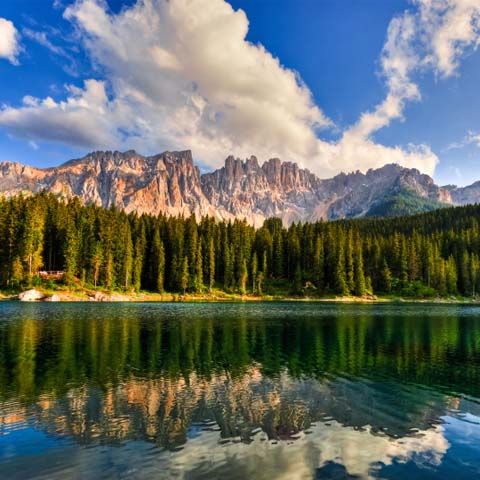
A day on the Alto Adige Wine Road is among the most rewarding excursions from the city. The route runs south through a landscape of vines, orchards, pastel manor houses, and onion-domed bell towers, past the warm lake of Caldaro, where Schiava vineyards run to the shore, to Tramin, the village that gave Gewurztraminer its name and still grows the grape at its aromatic best.
The tastings range from striking contemporary cellars, some of the most architecturally ambitious in Italy, to family estates where the visit ends at the kitchen table. Closer still, the Santa Maddalena hill and the Lagrein vineyards of Gries offer serious wine within the city itself, walkable from the cathedral through rows of vines.
We design wine days with a private driver and introductions arranged ahead: two or three cellars thoughtfully sequenced, a long lunch at a vineyard estate, a swim or lakeside pause at Caldaro in the warm months, and the return timed for an aperitivo under the arcades. Every glass can be enjoyed, and the wine road becomes pure scenery.
Cyclists can have the same day on two wheels: an e-bike route threads the wine villages at grape-row level, with the driver shadowing the ride so the afternoon can end at a cellar rather than a climb. In blossom season, when a million fruit trees flower along the valley floor, it is among the most beautiful easy rides in Italy.
Evenings in Bolzano begin under the arcades, where wine bars pour Lagrein and alpine whites alongside boards of speck and mountain cheese, and the passeggiata drifts between Piazza Walther and the market square. Summer adds concerts in castle courtyards and the Bolzano Festival Bozen’s orchestral season; autumn brings harvest festivals and Torggelen tables in the hills above town.
Winter transforms the city. From late November to Epiphany, the Christmas market fills Piazza Walther with wooden chalets, choir music, mulled wine, and the smell of gingerbread, while the surrounding streets hang with lights and neighboring villages stage their own smaller markets. It is Italy’s most famous Advent experience, and it pairs naturally with snowy excursions onto the Renon or into the Dolomites.
For travelers who want their evenings composed, we reserve concert seats, book the wood-paneled dining rooms suited to each night, and time market visits for the quieter hours. A custom trip to Italy built around Bolzano’s seasonal calendar, blossom, harvest, or Advent, gives the city its full theatrical range.
The shoulder seasons hold their own charms: the flower market and blossom walks of spring, and the long golden evenings of September when the harvest begins and vineyard suppers move outdoors. Whatever the season, we leave at least one Bolzano evening deliberately unplanned, because this is a city that rewards wandering.
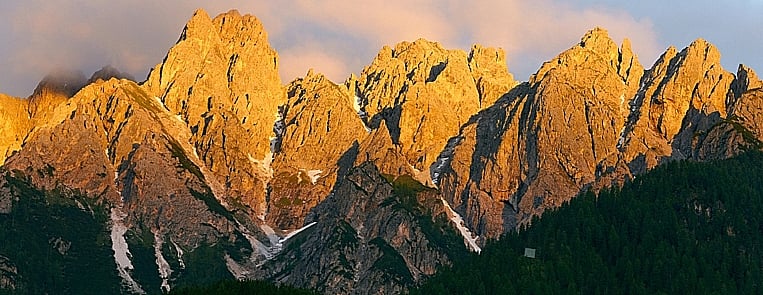
Bolzano is the classic gateway to the western Dolomites, the UNESCO-listed pale mountains that begin within sight of the city. Val Gardena lies about an hour away, a Ladin-speaking valley of woodcarving villages beneath the Sassolungo and the Sella massif, laced with cable cars that lift travelers effortlessly to ridgeline trails and rifugio terraces.
The Alpe di Siusi, Europe’s largest high-alpine meadow, spreads its flowered plateau beneath the jagged Sciliar, ideal for gentle walks with immense views, while the Catinaccio massif, the Rosengarten of German legend, blazes rose-pink at sunset in the phenomenon locals call enrosadira, tied to the myth of King Laurin’s enchanted garden. Each makes a complete, unforgettable day from a Bolzano base.
Two more directions round out the menu: Merano, the belle epoque spa town half an hour north with its botanical gardens and riverside promenades, and the Isarco valley toward the medieval town of Chiusa, where monastery vineyards have poured wine to travelers crossing the Alps for a thousand years. Bolzano’s gift is choice, and we compose each day so the choices never crowd one another.
We arrange these days end to end: private drivers over the passes, mountain guides matched to your walking level, cable car itineraries that maximize scenery and minimize effort, and mountain-hut lunches reserved ahead. Active travelers can extend into hiking or e-biking as part of our active trips in Italy, while families find the meadows and lifts perfectly suited to a family vacation to Italy with drama built in.
Bolzano deserves more than a template. Since 2003, Trips 2 Italy has designed private Italian vacations one traveler at a time, hand selecting every experience based on what you tell us rather than fitting you into a predefined package. Our Italian-born team plans Bolzano with the knowledge of people who call Italy home, from the arcades of Via dei Portici to the vineyards of Santa Maddalena and the Dolomite valleys beyond, and we remain at your side throughout your trip with 24/7 assistance. Tell us how you imagine Bolzano, and we will craft the itinerary that matches it.

The majesty of the Italian Alps, charming Villas and picturesque sights, are all breathtaking landscapes on this enchanting tour along Italy’s northern Lakes and Alps.

Breathtaking landscapes and enchanting Alpine villages surround the scenery in this fantastic tour along the majestic peaks of the Dolomites.
Visiting Otzi the Iceman at the South Tyrol Museum of Archaeology is the essential first experience, followed closely by the arcaded Via dei Portici, the fruit market, and Piazza Walther with its tile-roofed Gothic cathedral. Trips 2 Italy arranges timed museum entry and expert guides so the highlights unfold without queues or guesswork.
Absolutely. In about twelve minutes it lifts you from the city center to the sunlit Renon plateau, where a 1907 narrow-gauge railway, easy trails, farmhouse lunches, and the famous earth pyramids, clay spires capped with balancing boulders, fill a memorable half day with Dolomite panoramas throughout.
The classics are the Renon plateau, the Alto Adige Wine Road past Lago di Caldaro to Tramin, and the western Dolomites: Val Gardena, the Alpe di Siusi, and the Catinaccio massif, all within roughly an hour. Trips 2 Italy composes each as a seamless day with private driver, guide, and tables reserved ahead.
The Christmas market on Piazza Walther, Italy’s most celebrated, runs from late November through January 6 with craft chalets, mulled wine, and choir music beneath the cathedral. Pair it with the Renon plateau in winter light, a Torggelen-style farmhouse dinner, and the smaller markets of neighboring villages for the full Advent experience.
Yes. The Santa Maddalena and Gries vineyards are walkable from the center, and for the Wine Road we arrange private drivers with cellar introductions ahead, so tastings at Caldaro, Tramin, and the family estates between them unfold without navigation and every glass can be enjoyed.
Wonderfully so. Cable cars, the little Renon railway, earth pyramids, castles with knights’ frescoes, a mummy from the Copper Age, and easy alpine meadows keep every generation engaged. We design family itineraries so history and mountains arrive as adventure, with pacing and logistics matched to the youngest and oldest travelers alike.