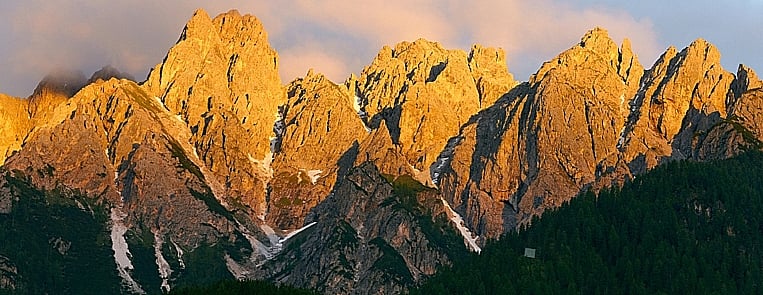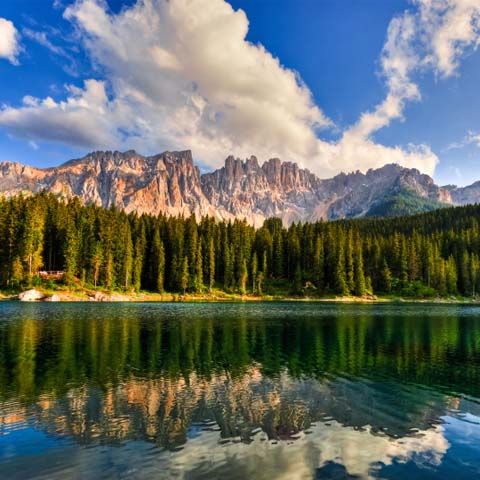
Best of Italy’s Lake District and Dolomites Semi Escorted Tour
The majesty of the Italian Alps, charming Villas and picturesque sights, are all breathtaking landscapes on this enchanting tour along Italy’s northern Lakes and Alps.
HOME » POPULAR ITALIAN DESTINATIONS » BOLZANO TRAVEL GUIDE » BOLZANO FOOD AND WINE GUIDE
Bolzano Travel Guide Culture History Food and Wine Things to Do Plan My Trip
About this guide: This guide to the food and wine of Bolzano was written by the Italian-born travel specialists at Trips 2 Italy, a custom tour operator that has designed hand-crafted Italian vacations since 2003. Every recommendation below reflects the same first-hand knowledge our team draws on when we build a private Bolzano itinerary around a traveler’s interests, dates, and pace. Read it for your research, then let us translate it into a trip designed entirely around you.
Bolzano eats at the exact point where the Alps meet Italy, and its table says so in every course. The mountain kitchen of Tyrol, dumplings, smoked pork, rye bread, and butter, sits beside the Italian kitchen of pasta, risotto, and olive oil, and the city refuses to choose between them. As the capital of South Tyrol within the Trentino Alto Adige region, it has spent eight centuries feeding merchants from both sides of the Brenner, and the habit shows.
The foundations are alpine and agricultural: dairy from high pastures, pork cured in mountain air and beechwood smoke, grains suited to short seasons, orchard fruit from the valley floor, and wild flavors, chestnuts, mushrooms, berries, gathered on the slopes. Onto that base the Italian centuries grafted espresso, aperitivo, and a southern seriousness about the ritual of eating well.
The result is one of Italy’s most distinctive regional tables, hearty without heaviness, precise without fuss. A traveler can lunch on schlutzkrofen in a wood-paneled stube and dine that evening on contemporary alpine cooking paired with the city’s own Lagrein, and both meals will taste unmistakably of this valley. Our culinary itineraries are designed to move between those registers deliberately.
Seasonality anchors everything. Spring means asparagus and dandelion greens, summer brings berries and lake fish, autumn piles the table with game, chestnuts, and new wine, and winter belongs to the smoked, the preserved, and the slow braised. We time culinary journeys to this calendar on purpose, because the difference between eating in Bolzano and eating with Bolzano is the season.
Begin with the dumplings. Canederli, bread dumplings the size of billiard balls, arrive flecked with speck or cheese, floating in clear broth or dressed with melted butter, and they are the region’s declaration of identity. Their refined cousins, schlutzkrofen, are half-moon ravioli of rye pasta filled with spinach and ricotta, finished with butter and chives, and no dish better captures the Tyrolean-Italian marriage.
The mains speak of mountain appetites: gulasch of slow-braised beef, a legacy of the Austrian centuries, served with dumplings or polenta; roast pork shank with sauerkraut; barley soup thick with root vegetables and smoked ham. In autumn the table turns celebratory, with game, chestnuts, and the roasted specialties that anchor Torggelen feasts in the farmhouses above the city.
The bread basket deserves its own paragraph. Schuttelbrot, the brittle rye flatbread scented with fennel and caraway, has been the valley’s keeping bread for centuries, and Vinschgerl rye rolls come paired with speck and mountain cheese as the classic merenda, the mid-afternoon snack that is South Tyrol’s answer to aperitivo. Eaten on a vineyard terrace with a glass of Schiava, it is one of travel’s perfect simple meals.
Do not overlook the cheeses. The high pastures around the city supply the market counters with everything from sharp alpine graukase to rich washed-rind wheels, and a proper merenda board sets them beside the speck with honey, butter, and schuttelbrot. A tasting guided by a dairy farmer or cheesemonger turns the board into a geography lesson, each wheel naming the pasture that made it.
Speck Alto Adige is the region’s signature cured meat and one of Italy’s protected treasures. Pork legs are dry-rubbed with salt, pepper, juniper, and mountain herbs, cold-smoked gently over beechwood, then aged in alpine air for months, a method born where the Mediterranean art of air-curing met the northern art of smoking. The result is rosy, delicately smoky, and utterly unlike any other Italian cured meat.
Speck is less an ingredient than a social institution. It appears hand-carved on wooden boards at every farmhouse table, diced into canederli, wrapped around breadsticks at the market, and sliced paper-thin in the city’s delicatessens, and the annual Speck Festival in the mountains celebrates it with the seriousness other regions reserve for truffles. Locals will tell you the correct thickness of a slice with complete conviction.
We build speck into culinary itineraries at the source: tastings with producers who explain the cure, cellar visits where thousands of legs age in mountain air, and merenda tables where speck, schuttelbrot, mountain cheese, and a glass of local wine compose the region’s most beloved hour. It is simple, it is profound, and it tastes best where it is made.
Every morning except Sunday, Piazza delle Erbe becomes the Obstmarkt, the fruit market that has provisioned Bolzano for centuries. Stalls bank up with apples from the valley’s vast orchards, berries and stone fruit in summer, forest mushrooms in autumn, mountain cheeses, speck, dark breads, strudel, and flowers, all arranged with the tidy pride that marks everything in this province.
The market is the best free theater in the city. Locals shop with wheeled baskets and strong opinions, vendors switch between Italian and German mid-transaction, and the surrounding bakeries and delicatessens keep the performance running along the arcades. South Tyrol grows roughly one of every two apples harvested in Italy, and the market is where that abundance meets its public.
We like to put travelers inside the scene rather than in front of it: a guided market walk with a local cook, tastings threaded stall by stall, and for food-focused itineraries, a hands-on session where the morning’s basket becomes lunch, canederli rolled by hand, strudel stretched until translucent. The market is where every Bolzano culinary journey properly begins.
The market also keeps the city’s sweet tooth honest: stalls and the surrounding bakeries sell strudel by the slice, krapfen in season, and the spiced breads of Advent in December. Arrive before mid-morning for the full theater, and come hungry, because grazing the stalls one tasting at a time is a legitimate, and thoroughly local, way to take breakfast.
Bolzano is that rarity, a city with serious vineyards inside its boundaries. On the hill of Santa Maddalena, vines produce the bright, cherry-scented Schiava blend that carries the hill’s name, while across the river in Gries the dark, velvety Lagrein has been cultivated since the Middle Ages, once tended by Benedictine monks. Few cities anywhere can pour two historic wines grown within sight of their cathedral.
South of the city runs the Alto Adige Wine Road, one of Italy’s most beautiful wine landscapes, threading villages of pastel manors and onion-domed churches between orchards and vines. At its heart lies Lago di Caldaro, a warm, swimmable lake ringed by Schiava vineyards, and further south the village of Tramin, which gave its name to the aromatic Gewurztraminer grape, grown here in its spiritual home.
The province’s whites now rank among Italy’s finest, Pinot Bianco, Sauvignon, Chardonnay, and Gewurztraminer raised on high, mineral slopes, and its cooperative cellars and family estates maintain standards that win national acclaim year after year. We arrange tastings at both, from architecturally striking modern cellars to family manors where the same door has welcomed wine buyers for centuries, always with a private driver so every glass can be enjoyed.
Wine here also climbs. Some of Europe’s highest quality vineyards terrace the slopes toward 3,000 feet, where cool nights fix the aromatics that make the province’s whites so prized, and a tasting often arrives with a panorama that competes with the glass. It is wine country in three dimensions, best explored with someone who knows which cellar door hides which view.
Apfelstrudel is the emblem, its flaky pastry wrapped around cinnamon-scented apples from the surrounding orchards, but the pastry case runs deep: buchteln, the jam-filled sweet rolls of the Austrian tradition; krapfen filled with apricot or poppy seed; kaiserschmarrn, the torn caramelized pancake of alpine huts; and at Christmas, zelten, the dense fruit-and-nut bread every family bakes to its own recipe.
The rituals matter as much as the recipes. Afternoon coffee and cake is observed with Viennese devotion, the merenda fills the gap between lunch and dinner with speck and wine, and autumn’s Torggelen turns eating into pilgrimage, walking between farmhouses for new wine, roasted chestnuts, and platters that arrive until the table protests. The Christmas market adds its own edible season of gingerbread, mulled wine, and fried apple fritters.
Fine dining thrives here too, and the province’s kitchens hold a remarkable concentration of critical acclaim, reinterpreting alpine ingredients with contemporary precision. We reserve the rooms suited to each evening and compose the whole journey, market mornings, farmhouse feasts, cellar tastings, celebratory dinners, as part of our wine tasting and food tours in Italy, timed to the season and built around your appetite.
A Trips 2 Italy culinary itinerary begins with how you love food, not with a fixed menu of activities. For some travelers that means hands-on: an Obstmarkt morning with a local cook, then a farmhouse kitchen where canederli and strudel are the homework. For others it means the cellar, vertical tastings of Lagrein with the winemaker, or the high road, a merenda of speck and mountain cheese on a terrace two thousand feet above the valley.
Because our team is Italian-born and has worked these valleys since 2003, the settings are authentic rather than staged: family wine manors on the Wine Road, dairies and speck producers who welcome guests by arrangement, stube dining rooms paneled in centuries-old pine, and Torggelen farmhouses that never appear in guidebooks. These are relationships, not listings.
The calendar shapes every journey: apple blossom and asparagus in spring, lake swims and vineyard dinners in summer, the vendemmia and Torggelen in autumn, and the Christmas market’s spiced season in winter. Tell us how you imagine eating in Bolzano, and we will build the days, and the tables, around it.
For travelers who wish to bring the table home, we arrange the practical pleasures too: shipping from cellars, market guidance on what travels well, and recipes written down so the canederli succeed in your own kitchen. A culinary journey should not end at the airport, and ours are designed so it does not.
Bolzano deserves more than a template. Since 2003, Trips 2 Italy has designed private Italian vacations one traveler at a time, hand selecting every experience based on what you tell us rather than fitting you into a predefined package. Our Italian-born team plans Bolzano with the knowledge of people who call Italy home, from the arcades of Via dei Portici to the vineyards of Santa Maddalena and the Dolomite valleys beyond, and we remain at your side throughout your trip with 24/7 assistance. Tell us how you imagine Bolzano, and we will craft the itinerary that matches it.

The majesty of the Italian Alps, charming Villas and picturesque sights, are all breathtaking landscapes on this enchanting tour along Italy’s northern Lakes and Alps.

Breathtaking landscapes and enchanting Alpine villages surround the scenery in this fantastic tour along the majestic peaks of the Dolomites.
Bolzano is celebrated for canederli bread dumplings, schlutzkrofen rye ravioli filled with spinach and ricotta, speck Alto Adige cured in mountain air, gulasch and roast pork shank, schuttelbrot rye flatbread, apple strudel from the valley’s vast orchards, and the autumn Torggelen feasts of new wine and roasted chestnuts.
Two historic reds grow within the city itself: Santa Maddalena, a bright Schiava blend from the hill above the rooftops, and dark, velvety Lagrein from the Gries quarter. The Alto Adige Wine Road south of the city adds Lago di Caldaro’s Schiava, Gewurztraminer from its namesake village of Tramin, and whites that rank among Italy’s finest.
Speck Alto Adige is the region’s protected cured ham, dry-rubbed with salt, juniper, and mountain herbs, gently smoked over beechwood, and aged for months in alpine air. It appears on farmhouse boards, in dumplings, and at every merenda. Trips 2 Italy arranges tastings with producers so travelers experience the cure, the cellar, and the correct slice at the source.
Torggelen is South Tyrol’s autumn ritual of walking between farmhouses and rustic taverns to taste the year’s new wine with roasted chestnuts, speck, dumplings, and farm platters, typically from late September through November. We arrange authentic Torggelen afternoons above Bolzano, complete with a private driver so the new wine can be enjoyed freely.
The Obstmarkt on Piazza delle Erbe is one of the city’s essential experiences, a daily market of apples, mountain cheese, speck, breads, strudel, and flowers that has provisioned Bolzano for centuries. Trips 2 Italy arranges market walks with local cooks, often paired with a hands-on cooking session where the morning’s shopping becomes lunch.
Yes, and the setting makes it memorable. We arrange private sessions in farmhouse and estate kitchens where travelers learn canederli, schlutzkrofen, and strudel from cooks who grew up making them, usually beginning with a market visit and ending with lunch and a glass of Santa Maddalena or Lagrein.