Best of Italy’s Lake District and Dolomites Semi Escorted Tour
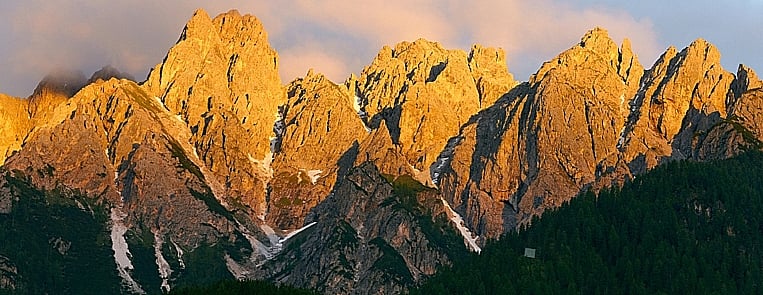
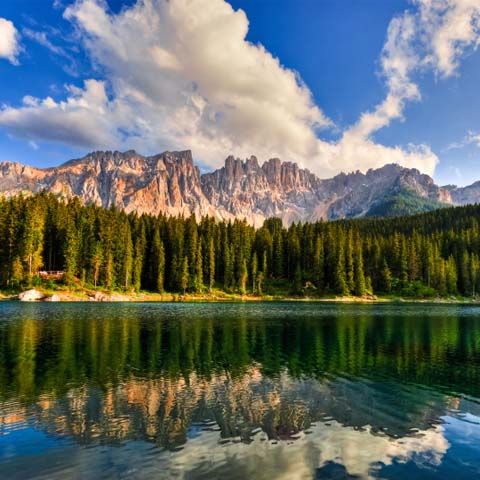
The majesty of the Italian Alps, charming Villas and picturesque sights, are all breathtaking landscapes on this enchanting tour along Italy’s northern Lakes and Alps.
HOME » POPULAR ITALIAN DESTINATIONS » BOLZANO TRAVEL GUIDE » BOLZANO CULTURE GUIDE
About this guide: This guide to the culture of Bolzano was written by the Italian-born travel specialists at Trips 2 Italy, a custom tour operator that has designed hand-crafted Italian vacations since 2003. Every recommendation below reflects the same first-hand knowledge our team draws on when we build a private Bolzano itinerary around a traveler’s interests, dates, and pace. Read it for your research, then let us translate it into a trip designed entirely around you.
Bolzano’s culture is the art of being two things at once. For most of its history the city belonged to the Tyrolean and Austrian world; since 1919 it has been Italian, and today it is the capital of the most autonomous province in the Trentino Alto Adige region. The result is not a compromise but a genuine third culture, one that takes coffee seriously in the Viennese manner and in the Italian manner, on the same street.
The Alpine inheritance shows in the timbered farmhouses on the slopes, the onion-domed church towers, the brass bands and rifle companies that march in traditional dress on feast days, and a deep, practical devotion to the mountains. The Italian inheritance shows in the evening passeggiata beneath the arcades, the design culture of the newer quarters, and the ease with which the city gathers in its piazzas.
Layered beneath both is something older still. Otzi the Iceman, kept in the city’s Museum of Archaeology, testifies to more than five millennia of human life in these valleys, and the Ladin people of the nearby Dolomite valleys preserve a Rhaeto-Romance language spoken since Roman times. Bolzano is a small city with an unusually long memory.
For travelers, this layering is the reward. We design cultural itineraries that move between the worlds deliberately: a Gothic cloister in the morning, a contemporary gallery after lunch, a farmhouse table in the evening, each one a different answer to the question of what Bolzano is.
Everything in Bolzano speaks twice. Streets are signed in Italian and German, schools teach in both languages, and the province’s institutions are carefully balanced between the two communities, with the small Ladin minority protected alongside them. Within the city, Italian speakers form the majority; ride the cable car ten minutes to the Renon plateau and German becomes the language of the farmyards and inns.
This is not a museum arrangement but a living, negotiated peace with a hard history behind it. The autonomy statutes of 1948 and especially 1972 transformed a once bitter ethnic conflict into one of Europe’s most studied models of minority protection, and the prosperity that followed is visible on every tidy street. Bolzano’s bilingualism is now its quiet superpower, opening the city equally to Italian and northern European visitors.
Travelers feel the doubleness in the best ways: menus that run from schlutzkrofen to tagliatelle, bakeries selling both strudel and cornetti, and conversations that slide between languages mid-sentence. Our guides, themselves at home in both cultures, decode this daily choreography so that what might pass unnoticed becomes one of the trip’s most fascinating threads.
The province’s third language completes the picture. In the Dolomite valleys east of the city, the Ladin communities keep a Rhaeto-Romance tongue descended directly from the Latin of Roman soldiers and settlers, protected in schools and public life and heard in place names across Val Gardena. Meeting it on a valley excursion adds a third, and far older, layer to an already layered journey.
The cathedral of Santa Maria Assunta sets the tone: Gothic sandstone, a roof of glazed tiles woven into green and gold diamonds, and a lace-carved spire finished in 1519 that remains the emblem of the city. Nearby, the Dominican church holds fourteenth-century frescoes of the Giotto school in its San Giovanni chapel, evidence of how early Italian painting traveled up the Adige valley into the Alps.
The city’s most extraordinary pictures, though, hang on castle walls. Runkelstein Castle, on its crag above the Talvera, preserves the largest surviving cycle of secular medieval frescoes in the world, commissioned by the Vintler brothers in the 1390s: knights and ladies, tournaments and dances, and the legend of Tristan and Isolde painted for pleasure rather than piety. It is one of the great windows into the imagination of the Middle Ages.
The architectural story runs unbroken to the present. The arcaded Via dei Portici keeps its medieval merchant houses with their bay windows and pastel facades, the Fascist era left the monumental Victory Monument and the rationalist quarter across the river, now unflinchingly interpreted in an acclaimed documentation center, and the Museion, a luminous glass cube on the Talvera, gives contemporary art a stage. We walk these layers with historians who make each one speak.
Gries, across the Talvera, keeps two quieter treasures: the Baroque abbey church of Muri-Gries, still tended by Benedictine monks who also make the quarter’s celebrated Lagrein, and the old parish church with its carved Gothic altar by Michael Pacher, among the finest in the Alps. They anchor an unhurried afternoon that ends among the vineyards, which is very much the Bolzano way of studying art history.
The South Tyrol Museum of Archaeology is the essential first hour. Otzi the Iceman, discovered in 1991 at a glacier saddle near the Similaun peak, lies in a climate-controlled chamber while three floors unfold his 5,300 year old world: the copper-bladed axe, the bearskin cap, the grass cloak, the sixty-one tattoos, and the forensic story of his violent death. It is among the most absorbing museums in Italy, and timed entry matters, which is where our arrangements earn their keep.
South of the city at Castel Firmiano, the fortress of Sigmundskron, mountaineer Reinhold Messner created the centerpiece of his Messner Mountain Museum circuit. Ramps and stairs thread the ruined walls past art and artifacts exploring humanity’s bond with the mountains, in a castle that also witnessed the great 1957 rally for South Tyrolean autonomy. The setting alone, between vineyards and porphyry cliffs, justifies the visit.
The city’s smaller collections complete the portrait: the Municipal Museum’s Gothic altarpieces, the Mercantile Museum inside the Baroque palace where the trade fair magistrate once ruled on merchant disputes, the Natural History Museum’s alpine dioramas, and the Museion’s rotating contemporary exhibitions. We compose museum mornings around your interests, paired with guides who turn display cases into narratives.
The Christmas market is the city’s most famous ritual, held on Piazza Walther since 1990 and modeled on the great Advent markets of the German-speaking world. For six weeks the square becomes a village of wooden chalets selling carved angels, felted wool, gingerbread, and mulled wine, with the cathedral’s glazed roof glowing above the lights. It is Italy’s benchmark Christmas market, and experiencing it well requires rooms reserved far ahead.
The rest of the year keeps its own rhythm. Spring brings the flower market, when the old town disappears under blooms around May Day celebrations. Summer fills courtyards and castles with concerts, including the Bolzano Festival Bozen season of orchestras and the celebrated Busoni piano competition. Autumn belongs to the harvest, to wine festivals in the surrounding villages, and to Torggelen walks between farmhouse tables.
Woven through them all are the Tyrolean traditions: brass bands in loden and feathered hats, the Schutzen rifle companies parading on feast days, and church processions that still follow the agricultural year. We time itineraries to these moments as part of our entertainment and festival experiences in Italy, so the calendar becomes a reason to travel rather than an accident.
Sacred music keeps its own calendar. The cathedral and the churches of Gries maintain choir and organ traditions, and Advent fills the city with concerts that pair naturally with the market’s lights. December travelers should let us reserve seats early, because these performances fill with locals first, which is of course the best possible endorsement.
Woodcarving is the signature craft of these mountains. In Val Gardena, the Ladin valley an hour from the city, families have carved religious figures, toys, and masks for four centuries, and workshops still send altarpieces and nativity figures around the world. Watching a master carver draw a face out of Swiss pine explains the valley’s soul better than any museum label.
The lowland crafts are equally alive. Loden wool, felted and brushed into the weatherproof green cloth of the Alps, is still produced and tailored regionally; potters, feltmakers, and weavers fill the Christmas market chalets with work that has nothing to do with souvenirs; and the province’s carpenters remain famous across Italy for joinery honed by generations of building in timber.
We arrange studio visits that put travelers in the workshop rather than the shop: a carving atelier in Val Gardena, a demonstration at a loden mill, a morning with artisans whose families have practiced the same craft for generations. These encounters, built on relationships rather than tickets, are consistently among the most remembered hours of the cultural itineraries we design.
Morning belongs to the market. The Obstmarkt on Piazza delle Erbe has traded daily except Sundays for centuries, and its stalls of mountain cheese, speck, dark bread, strudel, and improbably perfect fruit are where the city provisioning ritual plays out. Around it, cafes fill with a clientele that orders cappuccino and apfelstrudel with equal conviction.
The day moves at an alpine-Italian tempo: purposeful work, a serious lunch, and by late afternoon the arcades and the Talvera meadows fill with walkers, runners, and cyclists, because Bolzano treats its riverside parkland as a shared living room. Evening brings the passeggiata and the wine bars, where a glass of Santa Maddalena from the hill above the city closes the day.
Consistently ranked among Italy’s cities with the highest quality of life, Bolzano offers travelers something subtle: a place where daily life itself is the attraction. Our cultural itineraries deliberately include unscripted hours, a market morning with a local cook, an apres-walk merenda of speck and wine, so you inhabit the rhythm rather than observe it.
Sport belongs to daily culture too. Bolzano’s residents ski in winter, hike and climb in summer, and cycle year-round on one of Italy’s densest networks of urban bicycle paths, and conversation moves as easily to snow conditions as to wine. Travelers who join in, even for a gentle morning walk on the promenades above the rooftops, come to understand the city faster than any museum could teach them.
Bolzano deserves more than a template. Since 2003, Trips 2 Italy has designed private Italian vacations one traveler at a time, hand selecting every experience based on what you tell us rather than fitting you into a predefined package. Our Italian-born team plans Bolzano with the knowledge of people who call Italy home, from the arcades of Via dei Portici to the vineyards of Santa Maddalena and the Dolomite valleys beyond, and we remain at your side throughout your trip with 24/7 assistance. Tell us how you imagine Bolzano, and we will craft the itinerary that matches it.

The majesty of the Italian Alps, charming Villas and picturesque sights, are all breathtaking landscapes on this enchanting tour along Italy’s northern Lakes and Alps.

Breathtaking landscapes and enchanting Alpine villages surround the scenery in this fantastic tour along the majestic peaks of the Dolomites.
Bolzano is known for its bilingual Italian and German character, the Gothic cathedral and arcaded medieval center, Otzi the Iceman in the South Tyrol Museum of Archaeology, the medieval frescoes of Runkelstein Castle, Italy’s most celebrated Christmas market, and living Tyrolean traditions of music, dress, and craft set against a backdrop of vineyards and the Dolomites.
Both languages are official and visible everywhere, from street signs to menus. Within the city, Italian speakers are the majority, while German dominates in the surrounding valleys, and the Ladin minority preserves its ancient Rhaeto-Romance language in the nearby Dolomite valleys. English is widely spoken in hotels, museums, and wine estates.
Torggelen is South Tyrol’s beloved autumn ritual: walking between farmhouses and rustic taverns to taste the year’s new wine with roasted chestnuts, speck, dumplings, and farm bread, typically from late September through November. Trips 2 Italy arranges Torggelen experiences at authentic farmhouses, often paired with a private driver so the wine can be enjoyed properly.
Yes, and it is one of the region’s richest experiences. We arrange visits with master woodcarvers in Val Gardena, loden wool producers, and other alpine artisans, often in workshops that do not advertise, where travelers watch the craft and hear its story firsthand. These arrangements come from relationships Trips 2 Italy has built over two decades.
The Christmas market from late November to January 6 leads the calendar, followed by the spring flower market, summer’s Bolzano Festival Bozen concerts and the Busoni piano competition, and autumn’s harvest festivals and Torggelen season. Traditional processions with brass bands and Tyrolean dress punctuate the year on feast days.
Because for most of its history it was part of the Tyrolean and Habsburg world, only becoming Italian in 1919. The architecture, the German language, the cuisine of dumplings and strudel, and the alpine traditions all continue that heritage, now woven together with Italian life into a third culture that is entirely Bolzano’s own.