Sulmona Travel Guide

HOME » POPULAR ITALIAN DESTINATIONS » SULMONA TRAVEL GUIDE

Sulmona Travel Guide        Culture        History        Food and Wine        Things to Do        Plan My Trip

About this guide: This Sulmona travel guide was written by the Italian-born travel specialists at Trips 2 Italy, a custom tour operator that has designed hand-crafted Italian vacations since 2003. Every recommendation below reflects the same first-hand knowledge our team draws on when we build a private Sulmona itinerary around a traveler’s interests, dates, and pace. Read it for your research, then let us translate it into a trip designed entirely around you.

What Makes Sulmona One of Italy's Most Rewarding Small Cities?

Sulmona carries two claims to fame that no other Italian town can combine. It is the birthplace of Ovid, the Roman poet of the Metamorphoses, born here in 43 BC, and it is the world capital of confetti, the sugared almonds that Italians shower on every wedding, baptism, and anniversary. Between those two identities stretches a compact historic center of golden stone, arcaded palaces, and one of the most theatrical squares in central Italy, all set in a mountain-ringed valley of remarkable beauty.

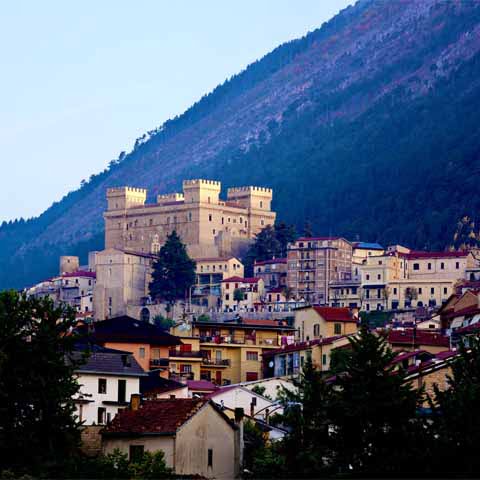
The town sits at the heart of the Valle Peligna in the Abruzzo region, encircled by some of the highest country in the Apennines: the Morrone massif rising directly above the rooftops, the great wall of the Majella to the east, and the mountains toward Scanno closing the southern horizon. Few Italian towns of this size hold such a density of monuments, and fewer still open onto a national park within minutes of the main square.

Sulmona is also blessedly authentic. The evening passeggiata along Corso Ovidio belongs to Sulmonesi, the Wednesday and Saturday market fills Piazza Garibaldi beneath a thirteenth-century aqueduct as it has for centuries, and the confetti workshops still shape sugar and almond into flowers by hand. Travelers who come here find an Italy that has never needed to perform.

Our specialists have designed Abruzzo journeys for two decades, and Sulmona is one of the places we recommend most confidently to travelers seeking substance: Roman poetry, medieval stone, living craft, and serious mountains. This guide distills what we know, and every trip we build from it is composed by hand around what you tell us.

What Is the Geography and Setting of Sulmona?

Sulmona lies at about 1,300 feet in the Valle Peligna, a broad, fertile basin that was a lake in prehistoric times and is now one of the great gardens of the Apennines. The flat valley floor produces the town’s celebrated red garlic, beans, and orchards, while the encircling peaks climb past 9,000 feet on the Majella, whose summit, Monte Amaro, is the second-highest point in the entire Apennine chain.

The Morrone massif rises immediately northeast of town, carrying on its slopes the hermitage of Sant’Onofrio, where the hermit Pietro da Morrone lived before becoming Pope Celestine V in 1294. Behind it spreads the Majella National Park, a wilderness of high plateaus, beech forests, and deep gorges that shelters Marsican brown bears, Apennine wolves, and chamois, and whose geological riches have earned it recognition as a UNESCO Global Geopark.

The setting shapes the climate and the calendar. Summers are warm and dry on the valley floor with cool mountain evenings, winters bring snow to the peaks and a crisp, clear light to the town, and spring and autumn deliver the long, golden days that make walkers and photographers linger. The mountains are not a backdrop here; they are the town’s pantry, its pilgrimage ground, and its playground, and a well-designed itinerary uses all three.

When Is the Best Time of Year to Visit Sulmona?

Easter is the town’s most extraordinary moment. On Easter Sunday morning, Piazza Garibaldi fills for the Madonna che Scappa, the Running Madonna, when a statue of the mourning Virgin is carried from the church of San Filippo Neri and, at the sight of the risen Christ, her black mantle falls away to reveal a green dress as doves rise and the bearers break into a run across the square. It is one of the most moving Easter rituals in Italy, and thousands gather to hold their breath with the town.

Late July brings the Giostra Cavalleresca, the Renaissance jousting tournament revived in 1995, when riders in sixteenth-century costume gallop a figure-eight course in Piazza Garibaldi for the honor of the town’s districts, with processions, drummers, and flag throwers filling the week. Summer as a whole is festival season across the Peligna valley, with village celebrations in every direction.

Autumn is the connoisseur’s choice: harvest in the vineyards and orchards, the red garlic braided and hung, truffles and porcini in the mountain kitchens, and the beech forests of the Majella turning copper. Winter offers quiet squares, snow on the peaks, and skiing in the highland towns nearby.

Spring may be the valley’s most beautiful secret. The orchards of the Peligna bloom against snow still lying on the Majella, the mule paths to the hermitages open in mild air, and the garlic fields green the valley floor in tidy rows. Whenever you travel, we align your dates with what the valley and the calendar are actually doing, so the season becomes an asset rather than an accident.

How Many Days Should You Spend in Sulmona?

One full day serves the historic center well: the Annunziata complex, the cathedral of San Panfilo, the Ovid statue in Piazza XX Settembre, the aqueduct and fountain of Piazza Garibaldi, and an unhurried education in confetti along Corso Ovidio, closed by the evening passeggiata and a long trattoria dinner. Sulmona’s compact, level center rewards exactly this measured pace.

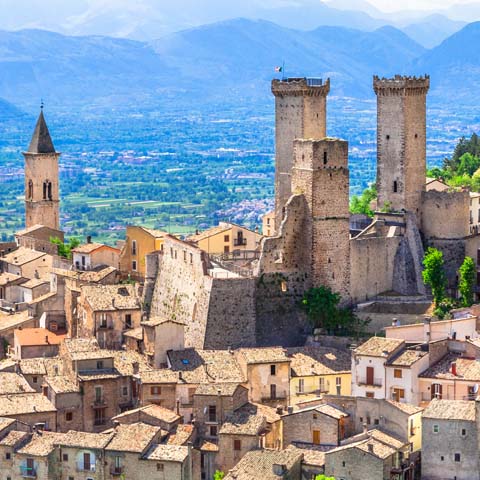
A second day belongs to the Morrone: the climb to the hermitage of Sant’Onofrio, the Roman sanctuary of Hercules Curinus on the slope below it, and the great Abbey of Santo Spirito al Morrone at the mountain’s foot, three sites that stack two thousand years of faith onto a single hillside. A third day opens the villages, Pacentro’s towers, Scanno’s lake, or Pescocostanzo’s highland elegance, each within easy reach by private car.

Travelers who give Sulmona four or five nights use it as a base for the whole region, adding the Majella’s hermitages and gorges, a day on the historic mountain railway, or the wine cellars of the valley. Because every Trips 2 Italy itinerary is designed by hand, we weigh Sulmona against the other chapters of your Italian journey and give it the nights that serve the whole trip best.

Which Areas of Sulmona Should You Know?

Corso Ovidio is the spine, a long, elegant street named for the poet that runs the length of the historic center, lined with confetti shops, cafes, and palaces, and porticoed where it passes the town’s grandest monument, the Santissima Annunziata. That complex, begun in 1320, pairs a sculpted facade blending Gothic and Renaissance with a baroque church, and its palazzo houses the civic museum where the town keeps its Roman mosaics, goldwork, and memory.

Piazza Garibaldi is the great open stage at the center’s edge, one of the largest squares in Abruzzo, bounded along one side by the pointed arches of the medieval aqueduct raised in 1256 and cornered by the Renaissance Fontana del Vecchio of 1474. The twice-weekly market fills it with produce from the valley, and the Giostra and the Easter rites fill it with the whole town.

Piazza XX Settembre, midway along the corso, holds the bronze statue of Ovid, cast by Ettore Ferrari and placed here in 1925, the poet gazing pensively over the cafes of his hometown. At the northern gate stands the cathedral of San Panfilo, raised, tradition says, over a Roman temple of Apollo and Vesta, with a medieval crypt beneath its baroque nave. Where you base yourself matters less in a town this walkable, but choosing between a palazzo in the center and a countryside estate beneath the Majella shapes the trip’s character, and we make that choice with you.

How Do You Get Around Sulmona and the Peligna Valley?

Within the walls, on foot. The historic center is level, compact, and largely calm, arranged so that the cathedral, the Annunziata, the Ovid statue, and Piazza Garibaldi connect along a single graceful street with cafes placed exactly where a pause feels right. The passeggiata along Corso Ovidio in the early evening is not a means of transport; it is one of the town’s essential experiences.

For everything beyond the center, we arrange private drivers who know these mountains intimately. The roads to Pacentro, Scanno, and Pescocostanzo climb through switchbacks and gorges that reward a local hand at the wheel, and a driver turns them into pure scenery: every viewpoint stopped for, every village lane navigated with ease, every mountain lunch reached without a moment of stress.

Arrivals are simpler than the mountain setting suggests. Rome lies roughly two hours to the west by road, Pescara and the Adriatic under an hour east, and Sulmona has long been the rail junction of the central Apennines, a heritage that survives in the historic scenic railway that departs its station for the high plateaus. We arrange every transfer in advance and support it around the clock, so the journey to the mountains unfolds as seamlessly as the days among them.

Timing belongs to logistics too. The market runs on Wednesday and Saturday mornings, the hermitage path rewards a clear early start, the villages show their best light in the late afternoon, and the great festivals demand rooms and vantage points reserved months ahead. In a valley whose pleasures follow the calendar this closely, thoughtful planning is not a detail; it is the difference between visiting Sulmona and being welcomed by it.

How Do We Weave Sulmona Into a Complete Italian Itinerary?

Sulmona’s position makes it a natural hinge in a larger Italian story. Rome lies about two hours west, so the town pairs effortlessly with the capital, trading Roman intensity for mountain air, poetry, and silence. Eastward the road descends to the Adriatic coast and the Trabocchi shore, and northward L’Aquila and Gran Sasso extend the Abruzzo chapter into a full mountain week.

The occasion shapes the composition. For travelers who plan around the table, the red garlic harvest, the confetti workshops, and the mountain trattorias fold into a wine and culinary journey. For those drawn to the outdoors, the Majella’s trails and gorges anchor active trips in Italy. And for those composing something larger, Sulmona becomes a chapter in a custom trip to Italy designed entirely from what you tell us.

This guide is one of five we have written on the town. Continue with our Sulmona culture guide, Sulmona history guide, Sulmona food and wine guide, and Sulmona things to do guide, or widen the lens with our Abruzzo travel guide to see the region around the city.

Ready to Begin Planning Your Sulmona Vacation?

Sulmona deserves more than a template. Since 2003, Trips 2 Italy has designed private Italian vacations one traveler at a time, hand selecting every experience based on what you tell us rather than fitting you into a predefined package. Our Italian-born team plans Sulmona with the knowledge of people who call Italy home, from the confetti workshops of Corso Ovidio to the hermitage trails of the Morrone, and we remain at your side throughout your trip with 24/7 assistance. Tell us how you imagine Sulmona, and we will craft the itinerary that matches it.

Explore Our Sulmona Vacation Itineraries

Frequently Asked Questions About Traveling to Sulmona

Emphatically yes. Sulmona offers the birthplace of Ovid, the world’s most celebrated confetti tradition, a medieval aqueduct spanning one of Abruzzo’s grandest squares, the hermitage of a pope on the mountain above town, and the Majella National Park at its doorstep. It is one of central Italy’s most complete small cities, and one of its least discovered.

Two things above all: it is the hometown of the Roman poet Ovid, born here in 43 BC and honored with a bronze statue in Piazza XX Settembre, and it is the capital of confetti, the sugared almonds crafted here since the Middle Ages and shaped by hand into flowers and bouquets. The medieval aqueduct of Piazza Garibaldi and the Giostra Cavalleresca joust complete its signature.

Roughly two hours by road, which makes Sulmona one of the easiest mountain destinations in Italy to reach from the capital. Trips 2 Italy arranges private transfers from Rome, so the journey becomes a scenic drive through the Apennines rather than a logistical puzzle, with stops along the way if the itinerary invites them.

One day covers the historic center’s monuments and confetti workshops, a second opens the hermitage of Sant’Onofrio and the abbey below it, and a third reaches Pacentro, Scanno, or Pescocostanzo. Travelers who stay longer use Sulmona as a base for the whole Majella region, and we design the length around your wider Italian journey.

Easter Sunday brings the Madonna che Scappa, the running Madonna ritual in Piazza Garibaldi, and the last weekend of July brings the Giostra Cavalleresca joust. Autumn offers harvest flavors and golden mountain light, and winter offers quiet squares beneath snowy peaks. The specialists at Trips 2 Italy align your dates with what the valley is doing best.

One of the best. The town sits at the center of the Valle Peligna with the Majella National Park beside it, Pacentro, Scanno, and Pescocostanzo within easy reach, L’Aquila and Gran Sasso to the north, and the Adriatic under an hour east. Trips 2 Italy arranges private drivers and guides so each day radiates out and returns to a comfortable base.