Reggio Emilia History Guide

HOME » POPULAR ITALIAN DESTINATIONS » REGGIO EMILIA TRAVEL GUIDE » REGGIO EMILIA HISTORY GUIDE

Reggio Emilia Travel Guide        Culture        History        Food and Wine        Things to Do        Plan My Trip

About this guide: This guide to the history of Reggio Emilia was written by the Italian-born travel specialists at Trips 2 Italy, a custom tour operator that has designed hand-crafted Italian vacations since 2003. Every recommendation below reflects the same first-hand knowledge our team draws on when we build a private Reggio Emilia itinerary around a traveler’s interests, dates, and pace. Read it for your research, then let us translate it into a trip designed entirely around you.

How Did Reggio Emilia Begin?

Reggio Emilia began as Regium Lepidi, a Roman settlement founded in the second century BC by the consul Marcus Aemilius Lepidus along the great road he had opened in 187 BC, the Via Aemilia that still names both the city and its region. The road remains the main street of the historic center, and the forum of the Roman town lay near today’s Piazza Prampolini, so the modern city literally walks the ancient one.

The colony prospered as a market town on the empire’s busiest northern artery, positioned in the heart of what is now the Emilia Romagna region between the Apennine passes and the Po. Mosaics, inscriptions, and grave goods from Regium Lepidi fill the archaeological halls of the Palazzo dei Musei, the civic museum complex a few steps from the cathedral.

The empire’s collapse brought Goths, Byzantines, and Lombards, and under the Lombards and then the Franks the city’s bishops rose to govern it, as they did across the Emilian plain. By the tenth century Reggio had walls, a cathedral, and a place in the contests of emperors and popes, a modest city about to find itself at the center of European history.

Walking this earliest chapter is easy and rewarding. The Via Emilia still runs straight through the center under changing street names, the museum’s Roman galleries are compact and vivid, and a historian guide can peel back the layers of Piazza Prampolini until the forum shows through. We build such walks into history-focused days with specialists chosen for their storytelling.

Who Was Matilde di Canossa and Why Does She Matter Here?

In the eleventh century, the hills south of Reggio were the seat of the most powerful woman in Europe. Matilde di Canossa, Grand Countess of Tuscany, ruled a swath of Italy from her family’s fortress of Canossa in the Reggian Apennines, and in January 1077 her castle hosted one of the most famous scenes of the Middle Ages: the Holy Roman Emperor Henry IV standing barefoot in the snow for three days, begging Pope Gregory VII to lift his excommunication.

The episode gave European languages the phrase going to Canossa, meaning a humbling submission, and it marked a turning point in the long struggle between empire and papacy. Matilde, who had engineered the meeting, spent her life as the papacy’s greatest ally and northern Italy’s most formidable ruler, endowing churches and fortresses across these valleys until her death in 1115.

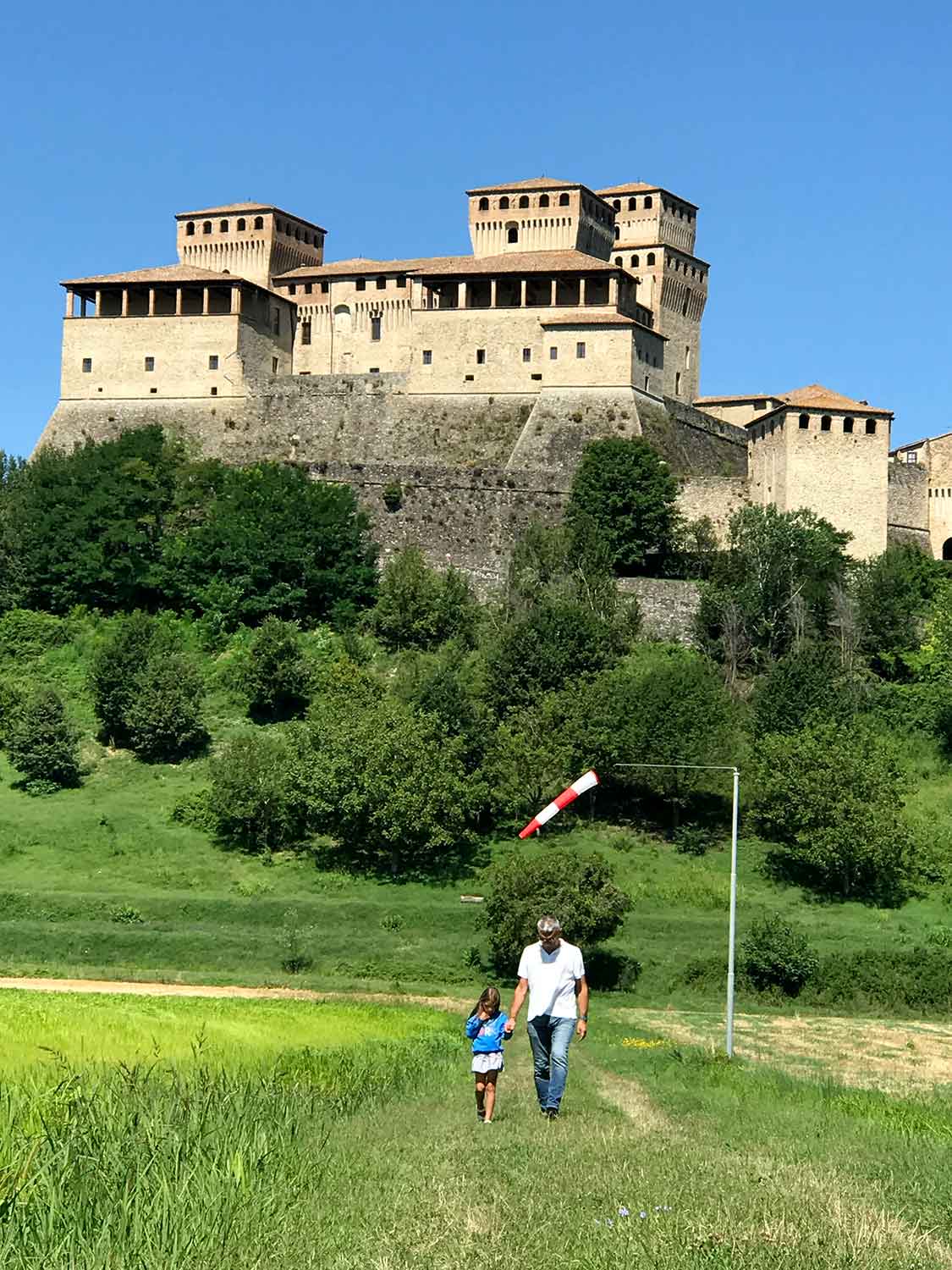
Her landscape survives as one of the most evocative in Emilia. The ruined walls of Canossa still crown their white clay crag, the intact castle of Rossena glows red on its volcanic outcrop nearby, and Bianello above Quattro Castella, where Matilde received the emperor on other occasions, remains the best preserved of the four hill castles that gave the town its name.

We design Matilde days with a private driver and a medievalist guide, threading castle to castle through vineyards and chestnut woods, with a long lunch in the hills and the story told where it happened. For many travelers it becomes the most memorable day of an Emilian journey, a piece of world history hiding in plain sight.

How Did the Commune and the Este Dukes Shape Reggio?

After Matilde’s death, Reggio lived the classic drama of the Italian commune: self-government won and defended, prosperity on the Via Emilia, and ferocious rivalries with its neighbors. The cathedral and San Prospero took shape in these centuries, and the city’s statutes, guilds, and markets built the civic habits the Reggiani still recognize in themselves.

From 1409 the city passed definitively to the Este, the dynasty of Ferrara and later Modena, who would rule Reggio with brief interruptions for four and a half centuries. Este Reggio produced its share of glories: Ludovico Ariosto, author of Orlando Furioso, was born here in 1474 while his father commanded the citadel, and Matteo Maria Boiardo, the poet of Orlando Innamorato, governed the city and was born at nearby Scandiano.

The Este centuries also gave the city its great sanctuary. When the miracle of 1596 filled Reggio with pilgrims, the Basilica della Ghiara rose with ducal blessing and the best painters of the Emilian school, and the city’s silk trade and markets kept it prosperous within the Duchy of Modena and Reggio. It was a comfortable provincial existence, until the French Revolution arrived on the Via Emilia.

Why Was the Italian Flag Born in Reggio Emilia?

In 1796 Napoleon’s army swept the old duchies aside, and the freed cities of the Po plain moved quickly to organize themselves. Delegates of Bologna, Ferrara, Modena, and Reggio gathered in Reggio Emilia and proclaimed the Cispadane Republic, and on 7 January 1797, meeting in the neoclassical archive hall of the town palace, they voted to adopt a banner of green, white, and red, the first time the Italian tricolore was declared the flag of a sovereign Italian state.

The hall, designed by Ludovico Bolognini in the 1770s for the ducal archives, has been known ever since as the Sala del Tricolore, and it now serves as the council chamber of the city that guards it. The adjacent Museo del Tricolore traces the flag’s journey from that January morning through the Risorgimento to the Republic, with original banners and documents that make the story tangible.

The date remains a national anniversary. Every 7 January, the Festa del Tricolore brings ceremonies, honor guards, and frequently the President of the Republic to Piazza Prampolini, and the city wears its role with unforced pride: not a museum piece but a working town hall where Italy’s most familiar symbol happens to have been born.

Standing in the hall itself is quietly powerful, a room of pale columns and galleries where a nation’s colors were chosen by vote. We arrange visits with historian guides who set the scene in its revolutionary moment, then walk the few steps to the museum and the piazza so the whole story unfolds in the space of a morning.

How Did Reggio Emilia Enter Modern Italy?

The Risorgimento brought the tricolore home. In 1859 and 1860 Reggio joined the plebiscites that dissolved the Duchy of Modena and Reggio into the new Kingdom of Italy, and the flag first raised over the Cispadane Republic became the banner of the whole peninsula. The city threw itself into the new age as a capital of agriculture, cooperative enterprise, and increasingly confident civic socialism.

The twentieth century tested that confidence hard. Reggio’s countryside became a stronghold of the Resistance during the Second World War, and its most painful emblem is the story of the seven Cervi brothers, farmers from Campegine executed by the fascist regime in December 1943; their farmhouse is now a national museum of rural life and resistance. Liberation came in April 1945, and the reconstruction that followed produced, among much else, the parent-built school that grew into the Reggio Emilia educational approach.

The postwar decades rebuilt prosperity on old foundations: the dairies and their consortium, the mechanical and agricultural industries, and in 1951 a new kind of enterprise, when Achille Maramotti founded Max Mara and pointed the city toward fashion. The new century added its own emblem, Santiago Calatrava’s Mediopadana station and bridges, which placed Reggio Emilia on the high-speed map of Europe in gleaming white steel.

Which Places Bring Reggio Emilia's History to Life?

Piazza Prampolini compresses the story into a single view: the Romanesque cathedral above the site of the Roman forum, the baptistery beside it, and the Palazzo del Comune whose upper hall is the Sala del Tricolore. A passage away, the lions of San Prospero guard the patron’s basilica with Procaccini’s Last Judgement filling the apse, and Corso Garibaldi leads to the Ghiara and its baroque golden age.

The Palazzo dei Musei gathers the deeper layers, from the mosaics of Regium Lepidi to the collections of Lazzaro Spallanzani, the eighteenth century naturalist born at nearby Scandiano, while the Museo del Tricolore documents the flag’s two centuries. The Galleria Parmeggiani adds its eccentric collector’s hoard, and the Collezione Maramotti carries the story into contemporary art.

The province completes the chronicle. Canossa, Rossena, and Bianello keep Matilde’s age on their hilltops, Scandiano’s castle remembers Boiardo and Spallanzani, the Cervi farmhouse at Gattatico honors the Resistance, and Calatrava’s white wave at Mediopadana states the present tense. We sequence these places so the centuries arrive as a story rather than a shuffle, with historian guides chosen for their narrative gift.

How Is Reggio Emilia Preserving Its Heritage?

Reggio Emilia treats preservation as a civic duty in the same spirit as its schools. The Sala del Tricolore remains a working council chamber maintained as a national monument, the civic museums have been reorganized around the city’s full arc from Rome to the present, and the basilicas of San Prospero and the Ghiara are conserved by institutions that regard Procaccini and Guercino as ongoing responsibilities.

The countryside’s heritage is guarded with equal seriousness. The Terre di Canossa network keeps Matilde’s castles open and interpreted rather than sealed away, the Cervi museum anchors the memory of the rural Resistance, and the consortia of Parmigiano Reggiano and the city’s own traditional balsamic vinegar enforce production disciplines that are themselves living history, centuries old and legally protected.

For travelers, this means the past here is unusually intact and unusually welcoming. We arrange encounters with the preservation world itself where access allows, from museum specialists to the guardians of the aging cellars and castle sites, as part of our cultural tours across Italy. History in Reggio Emilia is a working enterprise, and meeting its custodians is one of the city’s quiet privileges.

Ready to Begin Planning Your Reggio Emilia Vacation?

Reggio Emilia deserves more than a template. Since 2003, Trips 2 Italy has designed private Italian vacations one traveler at a time, hand selecting every experience based on what you tell us rather than fitting you into a predefined package. Our Italian-born team plans Reggio Emilia with the knowledge of people who call Italy home, from the Sala del Tricolore to the dawn dairies of the Parmigiano Reggiano valleys and the castle lands of Matilde di Canossa, and we remain at your side throughout your trip with 24/7 assistance. Tell us how you imagine Reggio Emilia, and we will craft the itinerary that matches it.

Explore Our Reggio Emilia Vacation Itineraries

Frequently Asked Questions About the History of Reggio Emilia

Reggio Emilia began as Regium Lepidi, founded by the Roman consul Marcus Aemilius Lepidus in the second century BC along the Via Aemilia, the road he opened in 187 BC. That road still runs through the center as the city’s main street, and finds from the Roman town fill the archaeological galleries of the Palazzo dei Musei.

In January 1077, at the castle of Canossa in the Reggian Apennines, the Holy Roman Emperor Henry IV waited barefoot in the snow for three days until Pope Gregory VII, a guest of Countess Matilde di Canossa, absolved him of excommunication. The episode gave Europe the phrase going to Canossa, and the castle ruins, with the nearby fortresses of Rossena and Bianello, can be visited today. Trips 2 Italy arranges castle days with medievalist guides and private drivers.

On 7 January 1797, delegates of the Cispadane Republic, meeting in the archive hall of Reggio Emilia’s town palace, voted to adopt the green, white, and red tricolore as the flag of their new state, the first sovereign Italian adoption of the banner. The room is known as the Sala del Tricolore, the adjacent Museo del Tricolore tells the flag’s story, and each 7 January the city hosts national celebrations.

Ariosto, one of the greatest poets of the Italian Renaissance and author of Orlando Furioso, was born in Reggio Emilia in 1474, where his father commanded the citadel for the Este dukes. The city honors him alongside Matteo Maria Boiardo of nearby Scandiano, author of Orlando Innamorato, making this small corner of Emilia the birthplace of both great chivalric epics.

The seven Cervi brothers were farmers from Campegine in the Reggio countryside who sheltered fugitives and joined the Resistance during the Second World War; they were executed by the fascist regime in December 1943. Their farmhouse at Gattatico is now a museum of rural life and resistance, and their story remains central to the province’s identity.

The Via Emilia itself, still the spine of the city under changing street names, is the greatest Roman monument, and the Palazzo dei Musei displays mosaics, inscriptions, and everyday objects from Regium Lepidi. A walk with a historian guide, which Trips 2 Italy arranges as part of history-focused itineraries, traces the ancient street grid beneath the modern piazzas.