Modena Culture Guide

HOME » POPULAR ITALIAN DESTINATIONS » MODENA TRAVEL GUIDE » MODENA CULTURE GUIDE

Modena Travel Guide        Culture        History        Food and Wine        Things to Do        Plan My Trip

About this guide: This guide to the culture of Modena was written by the Italian-born travel specialists at Trips 2 Italy, a custom tour operator that has designed hand-crafted Italian vacations since 2003. Every recommendation below reflects the same first-hand knowledge our team draws on when we build a private Modena itinerary around a traveler’s interests, dates, and pace. Read it for your research, then let us translate it into a trip designed entirely around you.

What Defines the Culture of Modena?

Modena’s culture rests on a habit of doing difficult things superbly and without fuss. The same city that raised one of Europe’s defining Romanesque cathedrals in the Middle Ages went on to host a ducal court of continental refinement, then taught the world what a racing engine could be, all while perfecting a vinegar that takes a quarter century to make properly.

That range is less surprising when you understand the setting. Modena grew prosperous on the Via Emilia, the great road that still organizes the Emilia Romagna region, and prosperity here has always expressed itself through craft: carved stone, illuminated manuscripts, hand-rolled pasta, aluminum engine blocks. The Modenese word for this is often simply passione, and it applies equally in the workshop and the kitchen.

There is also a distinct civic personality, confident and understated, shaped by centuries as a capital. From 1598 to 1859 Modena was the seat of the Este dukes, and the city still carries a capital’s institutions: a historic university founded in 1175, an important art gallery, a serious opera house, and a musical tradition that produced two of the twentieth century’s great voices.

For travelers, the reward is a culture that is lived rather than displayed. The itineraries we design place you inside it, at the workbench, in the attic acetaia, and in the theater, with the people who carry these traditions.

What Should You Know About Modena's Art and Architecture?

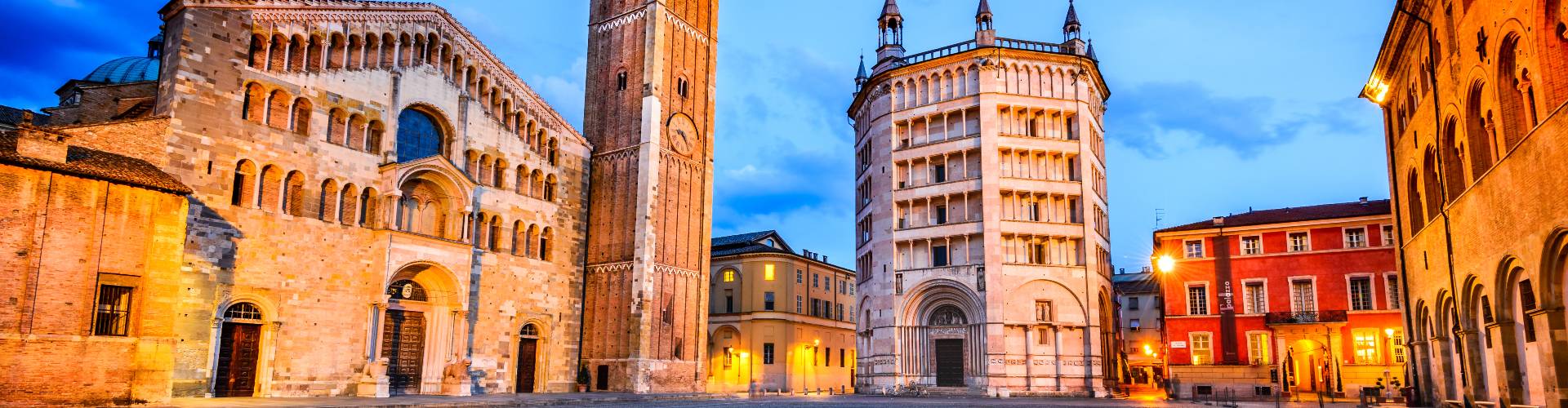
Modena’s cathedral is one of the founding monuments of European Romanesque art. Begun in 1099 by the architect Lanfranco and carved by the sculptor Wiligelmo, it is among the first great buildings in centuries whose creators are known by name, and their partnership of structure and sculpture set a standard the rest of Europe followed. Wiligelmo’s Genesis reliefs on the facade, vivid and humane, are counted among the earliest masterpieces of medieval sculpture.

The details reward a slow visit. The Porta della Pescheria carries one of the earliest surviving depictions of King Arthur’s knights anywhere in art, carved before most of the written romances existed, and the interior holds the sculpted gallery of the pontile above the crypt where San Geminiano, the city’s fourth-century patron, still rests. Beside the cathedral rises the Ghirlandina, the marble bell tower nearly 290 feet tall, finished with its Gothic spire in 1319 and leaning gently ever since.

The Este centuries added a second artistic layer. The Galleria Estense in the Palazzo dei Musei preserves the dukes’ collections, including Bernini’s marble bust of Duke Francesco I and a celebrated portable altarpiece by El Greco, alongside paintings by Correggio, Guercino, and the Emilian school, while the Este library keeps the Bible of Borso d’Este, one of the most lavishly illuminated books of the Renaissance.

We pair travelers with art historians who unfold these works layer by layer, and we time cathedral visits to the quiet hours when the carvings can be read as their makers intended.

Why Is Modena a City of Voices?

Luciano Pavarotti was born in Modena in 1935, the son of a baker who sang tenor in the local choir, and the city shaped him long before the world knew his name. Remarkably, Mirella Freni, one of the great sopranos of the same era, was born in Modena the same year, and the two shared a wet nurse as infants, a story the Modenese tell with justified delight. Few cities of any size have given opera two such voices in a single generation.

That legacy is present and visitable. The municipal opera house, a graceful nineteenth-century theater opened in 1841, is now named the Teatro Comunale Pavarotti-Freni and maintains a full season of opera and concerts. On the outskirts of the city, the villa where Pavarotti spent his final years is preserved as his house museum, keeping his stage costumes, pianos, letters, and the warmth of a home rather than a shrine.

The musical lineage runs deeper than the twentieth century. Orazio Vecchi, one of the inventive composers of the late Renaissance, was born in Modena and directed music at its cathedral, and the Este court maintained a serious musical establishment through its centuries as a capital. The city’s choirs, conservatory, and church music continue that thread today, which is why voices trained here keep appearing on international stages.

Music in Modena extends well beyond opera, from choral traditions rooted in the cathedral to open-air summer concerts that fill the piazzas. We arrange opera evenings, house museum visits, and behind-the-scenes theater experiences as part of our entertainment and festival experiences in Italy, timed to the theatrical calendar so the music becomes a reason to travel rather than an accident.

How Did Engines Become Part of Modena's Culture?

In Modena, the automobile is treated as a cultural achievement of the same order as sculpture or music, and the claim is defensible. Enzo Ferrari was born here in 1898 and founded his racing stable in the city before moving production to nearby Maranello, Maserati has built its cars in Modena since 1940, and Pagani and Lamborghini work within a short drive. The concentration of design, engineering, and hand craftsmanship in this small stretch of the plain has no parallel anywhere.

What makes it culture rather than industry is the human scale. The Motor Valley grew from workshops of mechanics, pattern makers, and metal shapers, many trained in the region’s agricultural machine shops, and that artisan lineage persists: engines assembled by hand, bodywork shaped by craftsmen, test drivers who learned on these same roads. The Museo Enzo Ferrari in Modena, its yellow aluminum hall curving over the workshop where Enzo’s father worked, tells the story as biography rather than catalog.

The passion is also thoroughly public. Vintage Ferraris gather on Piazza Grande for anniversaries, the Motor Valley Fest fills the city each spring, and conversation in any bar can turn expertly to engineering. We arrange museum days, factory-area visits, and private drives with specialists who grew up inside this world, because hearing the Motor Valley explained by its own people is the difference between seeing cars and understanding a civilization of speed.

Which Craft Traditions Still Live in Modena?

The definitive Modenese craft matures in the attic. Traditional balsamic vinegar is raised in batteries of wooden barrels of decreasing size, in oak, chestnut, cherry, mulberry, and juniper, refilled once a year and never hurried, for a legal minimum of twelve years and often far longer. The families who keep acetaie speak of their barrels the way winemakers speak of vineyards, and visiting one is a lesson in patience as a form of art.

The kitchen holds an equally living tradition. The sfogline, the pasta makers who roll dough into translucent sheets with a wooden pin and close tortellini by hand at astonishing speed, remain the guardians of the city’s table, and their skills pass through families and market kitchens rather than schools. Around them work the salumieri who craft zampone and cotechino, the pork specialties Modena protects with official designations, and the dairymen who turn out Parmigiano Reggiano wheels in the province’s hills.

A third lineage works in metal and clay. The machine shops of Modena, heirs to generations of precision craftsmen, still shape prototypes, restore vintage racing cars, and supply the supercar makers with hand-finished components, while nearby Sassuolo grew into the world capital of ceramic tile making, an industry that turned the province’s clay into a global design language.

We arrange encounters across all these worlds, from acetaia tastings with the owning family to pasta sessions beside a sfoglina and workshop visits arranged through relationships built over two decades. Meeting the hands that make Modena is the experience travelers remember longest, because the city’s culture is finally a culture of makers, and its makers enjoy explaining what excellence costs in time.

What Festivals Fill the Modenese Calendar?

The city’s patronal feast comes first. On January 31, Modena honors San Geminiano with a solemn opening of the cathedral crypt, a sprawling street fair along the center’s avenues, and a holiday atmosphere that briefly turns the elegant city into a village celebrating its saint, as it has for centuries.

September brings the Festival Filosofia, one of the most distinctive cultural events in Italy, when Modena, Carpi, and Sassuolo host three days of free public philosophy lectures, exhibitions, and performances that draw audiences in the hundreds of thousands. The sight of a medieval piazza filled to its edges for a lecture on a single philosophical theme says a great deal about this region’s civic culture.

Spring belongs to the engines, with the Motor Valley Fest staging displays, open houses, and gatherings across the city, while summer fills the piazzas with open-air cinema and concerts, and the surrounding villages keep the calendar of sagre, the food festivals that celebrate a single beloved ingredient, from Vignola’s cherries to the new Lambrusco. We track this calendar year-round and build itineraries so a festival becomes the centerpiece of a trip rather than a lucky accident.

What Is Daily Life Like in Modena?

Modenese daily life follows rhythms a traveler can join within a day. Mornings belong to the Mercato Albinelli, where the city shops for fresh pasta, seasonal produce, and salumi beneath the market’s elegant ironwork, and to the bar, where espresso is taken standing amid conversation. The day is organized around a serious lunch, and the kitchen calendar still follows the seasons of the plain and the hills.

The late afternoon brings the passeggiata along Via Emilia and the porticoed streets, an unhurried social walk that doubles as the city’s daily assembly. The aperitivo hour follows naturally, a glass of chilled Lambrusco with warm gnocco fritto or a plate of prosciutto, taken at a table with no view of a clock. Evening gathers everyone into the piazzas, which function as the city’s shared living room in every season that allows it.

What distinguishes Modena is how unperformed all of this is. The city hosts travelers graciously but arranges nothing for their benefit, which is precisely its appeal. Our Italian cultural tours are composed of exactly these hours, a market morning beside a local cook, an aperitivo in the right bar, a festival evening among neighbors, arranged through relationships and timed to the life of the place.

Ready to Begin Planning Your Modena Vacation?

Modena deserves more than a template. Since 2003, Trips 2 Italy has designed private Italian vacations one traveler at a time, hand selecting every experience based on what you tell us rather than fitting you into a predefined package. Our Italian-born team plans Modena with the knowledge of people who call Italy home, from the Romanesque carvings of Piazza Grande to the engine workshops of the Motor Valley, and we remain at your side throughout your trip with 24/7 assistance. Tell us how you imagine Modena, and we will craft the itinerary that matches it.

Explore Our Modena Vacation Itineraries

Frequently Asked Questions About Modenese Culture

The UNESCO-listed ensemble of its Romanesque cathedral, Ghirlandina tower, and Piazza Grande, the operatic legacy of Luciano Pavarotti and Mirella Freni, the supercar culture of Ferrari and Maserati, and the craft of traditional balsamic vinegar. Few cities of this size hold four traditions of such stature.

Lanfranco was the architect and Wiligelmo the sculptor of Modena Cathedral, begun in 1099. They are among the first medieval masters known by name, and Wiligelmo’s Genesis reliefs on the facade rank among the earliest masterpieces of Romanesque sculpture, a key reason UNESCO recognized the site in 1997.

Yes. The villa on the city’s outskirts where Luciano Pavarotti spent his final years is preserved as a house museum, displaying his stage costumes, pianos, and personal collections in the intimate setting of his own home. Trips 2 Italy arranges visits along with opera evenings at the Teatro Comunale Pavarotti-Freni.

A free public philosophy festival held each September across Modena, Carpi, and Sassuolo, filling piazzas with lectures, exhibitions, and performances around a single annual theme. It draws audiences in the hundreds of thousands and is one of the most distinctive cultural events in Italy.

Yes, and it is the best way to understand it. Trips 2 Italy arranges private drives on the roads where test drivers train, visits connected to the workshops and restoration shops that serve the supercar makers, and time with specialists who grew up inside this world, alongside the Enzo Ferrari Museum in Modena and the Ferrari museum at Maranello.

Wonderfully so. Supercar museums, tower climbs, hands-on pasta making, castle visits in the province, and gelato-paced piazza evenings hold every generation’s attention. We compose family itineraries so art, music, and engineering arrive as adventure rather than obligation.