Capri Culture Guide

HOME » POPULAR ITALIAN DESTINATIONS » CAPRI TRAVEL GUIDE » CAPRI CULTURE GUIDE

Capri Travel Guide        Culture        History        Food and Wine        Things to Do        Plan My Trip

About this guide: This guide to the culture of Capri was written by the Italian-born travel specialists at Trips 2 Italy, a custom tour operator that has designed hand-crafted Italian vacations since 2003. Every recommendation below reflects the same first-hand knowledge our team draws on when we build a private Capri itinerary around a traveler’s interests, dates, and pace. Read it for your research, then let us translate it into a trip designed entirely around you.

What Defines the Culture of Capri?

Capri’s culture is the meeting of two currents that should not mix and somehow do. The first is the ancient life of a small Mediterranean island in the Campania region: fishermen, lemon farmers, vine growers, and stone masons whose whitewashed, vaulted houses gave the island its architectural signature. The second is a century and a half of the world’s most glamorous visitors, from Roman emperors to Romantic poets to film stars, each generation adding a layer to the island’s legend.

The result is a place with a genius for hospitality that never quite surrenders its own character. The boutiques along Via Camerelle share the island with sandal makers who cut leather to the customer’s foot as they have for generations. The yachts below Tragara anchor in water where Caprese fishermen still set their nets at dawn. The island absorbed the world’s attention without dissolving into it.

For travelers, this doubleness is the great cultural pleasure of Capri. In a single day you can watch the morning theater of the Piazzetta, visit a villa built by a Swedish dreamer on Roman foundations, and end in a family cellar in Anacapri tasting wine from vines a few steps away. The itineraries we design are built to hold both islands in balance.

How Did Artists and Writers Shape Capri's Identity?

Modern Capri was in many ways written into existence. After the rediscovery of the Blue Grotto in 1826, painters and poets of the Romantic age carried the island’s image across Europe, and by the late nineteenth century Capri had become a haven for artists, writers, and free spirits of every nationality who found on its cliffs a liberty the mainland did not offer.

The roll call is astonishing for four square miles. The Swedish physician Axel Munthe built Villa San Michele and made it world famous with his memoir. Maxim Gorky lived here for years and received Lenin as his guest. Norman Douglas distilled the island’s expatriate world into his novel South Wind, Curzio Malaparte built his startling red villa on Punta Massullo, and Graham Greene and Pablo Neruda both found refuge in Anacapri, where Neruda wrote some of his most beloved poems.

Their traces are still visitable, and visiting them well is a matter of storytelling. We pair travelers with guides who bring this human history alive on the very terraces where it happened, from Munthe’s sphinx gazing over the bay to the literary walks of Anacapri. For readers, Capri is not just beautiful. It is an anthology with a view.

The island returned the compliment by entering the world’s imagination as an idea: the place where life could be lived beautifully and on one’s own terms. That idea still draws travelers today, and it explains why Capri’s cultural pull outlasts every change of fashion. People do not come only to see the island. They come to try on, for a few days, the life it has always promised.

What Is the Piazzetta and Why Is It Capri's Living Room?

Officially it is Piazza Umberto I, and it is scarcely larger than a ballroom. Yet the Piazzetta is one of the most famous squares in the world, a little stage of cafe tables beneath a seventeenth-century clock tower where the island has gathered for centuries. Locals call it simply la piazza, and its four cafes function as the island’s salon, observatory, and news exchange all at once.

The Piazzetta’s ritual is the aperitivo hour, when the tables fill and the evening’s cast assembles: residents, visitors, and the occasional famous face, all observing one another with practiced Mediterranean discretion. It has been called the world’s smallest theater, and the description is exact. The performance begins after the day boats leave and continues past midnight in summer.

The connoisseur’s Piazzetta, though, is the morning one, when the square belongs to espresso, newspapers, and delivery carts, and the clock tower chimes over a town still stretching. We build both hours into our itineraries, because together they explain the island: Capri performs in the evening and lives in the morning, and travelers should witness both.

What Architecture Gives Capri Its Character?

Caprese architecture is a vernacular of light: whitewashed walls, rounded vaulted roofs built without timber, pergolas of vine and bougainvillea, and staircases that negotiate the island’s verticality with sculptural grace. The style grew from necessity, from lime, stone, and the absence of forests, and it became one of the Mediterranean’s most influential building traditions, studied by modern architects for its purity.

Set against this humble perfection are the island’s great set pieces. The Charterhouse of San Giacomo, a fourteenth-century Carthusian monastery, spreads its cloisters above the southern cliffs. Villa San Michele in Anacapri layers Roman fragments into a house and garden of legendary beauty. Villa Lysis stands in poignant Art Nouveau elegance above the Blue Grotto side of the island, and Villa Malaparte’s red wedge on Punta Massullo is counted among the boldest houses of the twentieth century.

Even the grandest villas converse with the vernacular: white walls, framed views, the sea as the final room of every house. We arrange architecture-focused walks with specialists who read these buildings fluently, from the monastery’s cloisters to the modernist icons, and who can open doors that casual visitors never find.

The island’s gardens deserve equal billing with its buildings. The Gardens of Augustus terrace their flowerbeds above the southern cliffs, Villa San Michele’s pergolas frame the bay in cypress and wisteria, and every Caprese house of consequence treats its garden as an outdoor salon. On an island this vertical, the garden is where architecture and landscape negotiate, and the results are among the loveliest small gardens in Italy.

Which Craft Traditions Still Live on Capri?

Capri’s most famous craft walks out of the workshop on the customer’s feet. The handmade Capri sandal, flat leather soles and slender straps fitted and finished while you wait, has been made in tiny botteghe here for generations, worn by everyone from island fishermen to twentieth-century royalty. Watching a sandal maker cut, shape, and buckle a pair to your own foot in minutes is one of the island’s purest pleasures.

Scent is the island’s other signature. Capri’s perfume tradition traces its origins to the Carthusian monks of San Giacomo, whose garden flowers and herbs became the basis of essences still produced on the island today, and small laboratories in both towns continue to distill the island’s rosemary, lemon, and wild carnation into fragrances found nowhere else. Alongside them work ceramicists, linen tailors, and coral and cameo artisans carrying on the great Bay of Naples tradition.

We arrange visits that go behind the counter: private fittings with sandal makers, perfume workshops where travelers compose their own essence from island notes, and studio visits with artisans who explain their craft as they work. These encounters, personal and unhurried, are the cultural souvenirs our travelers mention years later.

What Festivals and Traditions Mark the Caprese Year?

The island’s devotional calendar begins with San Costanzo, Capri’s patron saint, whose feast on May 14 carries his silver bust in procession from the church at Marina Grande while the whole island turns out in celebration. Anacapri answers on June 13 with the feast of Sant’Antonio di Padova, its own patron, when the upper town’s lanes fill with processions, petals, and music. The rivalry between the two celebrations is ancient, affectionate, and entirely serious.

September brings the Settembrata Anacaprese, the harvest festival of the upper town, with grape celebrations, traditional games, and long communal tables that recall the island’s agricultural soul. Through the summer, open-air concerts fill remarkable venues: the cloister of the Charterhouse, the gardens of Villa San Michele, where a Swedish foundation hosts sunset performances on the terrace overlooking the bay.

New Year on Capri deserves special mention, when the Piazzetta becomes an open-air ballroom and the island celebrates with music and midnight fireworks over Marina Grande. We time itineraries to these moments as part of our entertainment and festival experiences in Italy, securing the vantage points and tables that turn a festival from a spectacle you watch into one you join.

How Do We Open Caprese Culture to Our Travelers?

Beneath the season’s glitter, Capri keeps the rhythms of a small southern Italian island, and meeting them is the heart of a cultural visit. The day begins early at Marina Grande, where fishing boats land their catch and the first funicular carries workers up to town, and the island’s roughly twelve thousand residents live the year in two movements: the long summer of hospitality and the quiet winter when Capri belongs to itself. Anacapri especially preserves this village life, with its evening passeggiata, its garden plots, and its unhurried conversations on church steps.

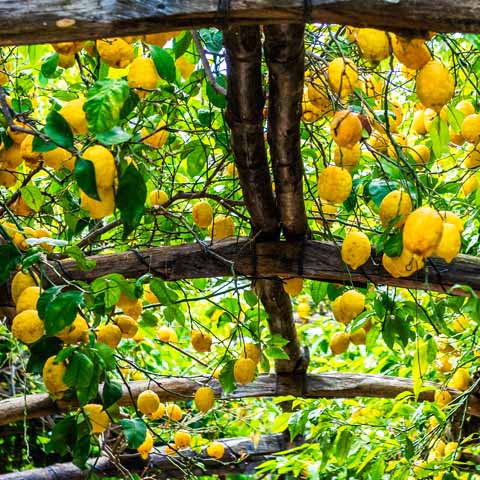
The deepest travel experiences here come from brushing against that daily life: a dawn walk to the harbor as the boats come in, a morning coffee among the regulars in Anacapri, an hour in a lemon garden with the family who tends it. Our Italian cultural tours are composed of exactly these hours, arranged through relationships and timed to the life of the island rather than the schedule of the day boats.

Capri’s culture is famously visible and famously hard to enter. Anyone can photograph the Piazzetta; joining the island’s life takes introductions. A sandal fitting becomes memorable when the artisan tells you whose feet the bench has measured. A villa visit becomes unforgettable in the quiet hour arranged before the gates open. A festival becomes yours when you watch it from a family’s balcony rather than the street.

Because our team is Italian-born and has worked with Capri’s hoteliers, boatmen, artisans, and guides since 2003, we plan the island from the inside: private garden visits, workshops that do not advertise, tables held at the hour when the terrace is at its finest, and the boatmen who know which cove is calm on which wind. These are not options chosen from a list. They are arrangements composed for each traveler based on what they tell us, and on an island whose fame compresses so many visitors into so few hours of the day, the right arrangements produce a completely different Capri, one of quiet terraces, open doors, and unhurried encounters.

Ready to Begin Planning Your Capri Vacation?

Capri deserves more than a template. Since 2003, Trips 2 Italy has designed private Italian vacations one traveler at a time, hand selecting every experience based on what you tell us rather than fitting you into a predefined package. Our Italian-born team plans Capri with the knowledge of people who call Italy home, from the Piazzetta’s quiet morning hours to a private boat gliding beneath the Faraglioni, and we remain at your side throughout your trip with 24/7 assistance. Tell us how you imagine Capri, and we will craft the itinerary that matches it.

Explore Our Capri Vacation Itineraries

Frequently Asked Questions About the Culture of Capri

The Piazzetta, the world’s most theatrical small square; a century and a half of writers and artists from Axel Munthe to Graham Greene and Pablo Neruda; handmade sandals and island perfumes; the whitewashed vaulted architecture that influenced modern design; and festivals like the feast of San Costanzo in May. The island blends ancient Mediterranean village life with international glamour.

The house and garden that Swedish physician Axel Munthe built in Anacapri on the site of a Roman villa and chapel, made world famous by his memoir The Story of San Michele. Its loggias, Roman fragments, and sphinx overlooking the Bay of Naples make it one of the most beautiful house museums in the Mediterranean, and its gardens host summer concerts at sunset.

Yes, and it is one of the island’s signature experiences. Small workshops in Capri town and Anacapri cut and fit handmade leather sandals to your foot while you wait, a craft passed down for generations. Trips 2 Italy arranges private fittings with the island’s finest artisans as part of custom itineraries.

The feast of San Costanzo, Capri’s patron, fills the island with processions on May 14, and Anacapri celebrates its patron Sant’Antonio on June 13. September brings the Settembrata Anacaprese harvest festival, and summer evenings offer concerts in the Charterhouse cloister and the gardens of Villa San Michele. We time itineraries so these moments become centerpieces rather than lucky accidents.

Axel Munthe built Villa San Michele, Maxim Gorky hosted Lenin here, Norman Douglas set South Wind on the island, Curzio Malaparte built his famous red villa on Punta Massullo, and Graham Greene and Pablo Neruda both kept homes in Anacapri. Literary and artistic walks in their footsteps are among the island’s richest cultural experiences.

The Piazzetta is essential Capri, but the secret is timing. Evening brings the famous aperitivo theater after the day boats depart; early morning shows the square as the island’s true living room, all espresso and church bells. The specialists at Trips 2 Italy build both hours into a stay, along with the quiet lanes that radiate from the square.