Capri Travel Guide

HOME » POPULAR ITALIAN DESTINATIONS » CAPRI TRAVEL GUIDE

Capri Travel Guide        Culture        History        Food and Wine        Things to Do        Plan My Trip

About this guide: This Capri travel guide was written by the Italian-born travel specialists at Trips 2 Italy, a custom tour operator that has designed hand-crafted Italian vacations since 2003. Every recommendation below reflects the same first-hand knowledge our team draws on when we build a private Capri itinerary around a traveler’s interests, dates, and pace. Read it for your research, then let us translate it into a trip designed entirely around you.

What Makes Capri One of the World's Most Celebrated Islands?

Capri is four square miles of limestone rising from the Bay of Naples, and for two thousand years it has held a grip on the imagination far out of proportion to its size. Roman emperors governed the world from its cliffs, nineteenth-century travelers rediscovered a sea cave glowing impossibly blue, and the twentieth century made its little piazza a stage for writers, artists, and film stars. The island sits at the glamorous heart of the Campania region, facing the Sorrentine Peninsula across a narrow strait, close enough to the mainland for an easy crossing yet completely apart in character.

What travelers find when they arrive is more layered than the postcard. Yes, there are the Faraglioni rising from turquoise water, the designer windows along Via Camerelle, and the theater of the Piazzetta at aperitivo hour. But there are also silent lanes scented with jasmine, the ruins of a Roman emperor’s palace on a clifftop, a mountaintop reached by a one-person chairlift, and fishermen’s coves where the island’s older life continues undisturbed.

Capri rewards travelers who see both islands: the celebrated one and the quiet one. Our specialists have planned journeys here for more than two decades, timing the famous sights for their calmest hours and opening the paths, terraces, and sea caves that day visitors never reach. This guide distills that experience.

Use it to shape your thinking, then let us shape the trip. Every Capri vacation we design is composed from what you tell us, hand selected experience by experience, never assembled from a predefined package.

What Is the Geography and Climate of Capri?

Capri is a block of limestone, geologically a continuation of the Sorrentine Peninsula, separated from Punta Campanella by a strait barely three miles wide. Its coastline is almost entirely cliff, dropping sheer into water of extraordinary clarity and riddled with sea caves, of which the Blue Grotto is only the most famous. Two summits define the island: Monte Solaro, the highest point at 1,932 feet above the sea, and Monte Tiberio in the east, where Emperor Tiberius built his palace.

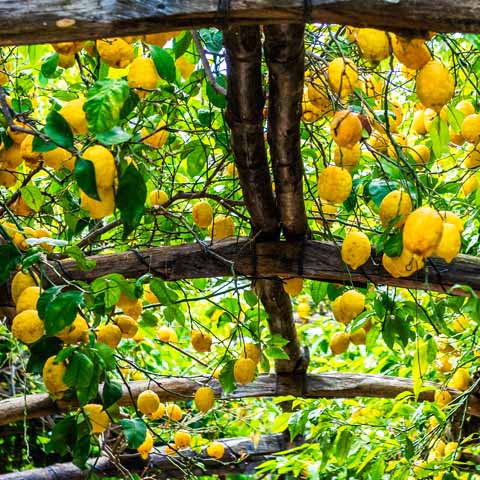
The island divides naturally into two towns. Capri town occupies the saddle between the heights, gathered around its famous Piazzetta and spilling toward Marina Grande, the main harbor, and Marina Piccola, the sheltered southern cove. Anacapri spreads across the higher western plateau beneath Monte Solaro, historically reachable only by a stairway cut into the cliff, and it keeps to this day a quieter, more rural character of whitewashed lanes, vineyards, and lemon gardens.

The climate is gently Mediterranean. Summers are warm, dry, and cooled by sea breezes on the heights; winters are mild and green, when the island returns to its residents; and spring and autumn bring wildflowers, clear light, and perfect walking temperatures. The sea itself holds its warmth well into October, which stretches the swimming season far beyond the summer calendar.

For travelers, the practical meaning of this geography is intensity. Nowhere else in Italy do a world-famous sea cave, a Roman imperial palace, a mountain panorama, and a legendary piazza sit within a single morning’s reach of one another. The island is small enough to know and rich enough to reward a lifetime of returns, which is why so many of our travelers come back to it.

When Is the Best Time of Year to Visit Capri?

Capri lives two lives, and choosing between them is the first planning decision. High summer, from June through August, is the island of legend: yachts anchored beneath the Faraglioni, the Piazzetta glittering late into the night, and every beach club terrace full. It is glamorous, social, and warm for swimming, and travelers who want Capri at full theatrical power should embrace it, with arrangements made well in advance because the island’s finest experiences are reserved early.

The connoisseur’s seasons are spring and autumn. From April to early June the island is covered in wildflowers, the walking paths are at their best, and the great sights breathe easily. September and October offer warm seas, golden light, and evenings when the Piazzetta belongs to people who are staying rather than passing through. Many of our most devoted travelers will visit Capri in no other months.

The rhythm of the day matters as much as the season. Most visitors arrive mid-morning and leave by late afternoon, which means travelers who sleep on the island experience a different Capri entirely: the Piazzetta at breakfast, the Gardens of Augustus in evening light, and the lanes silent under the stars. When we plan a Capri itinerary, we build the days around this tide, placing the famous sights in the quiet hours and the boat on the water when the light is finest.

How Many Days Should You Spend on Capri?

The day trip is the most common way to see Capri and the least satisfying. In a single day, the island can show you the Blue Grotto, a walk to the Gardens of Augustus, and lunch with a view, but it cannot show you itself, because its greatest transformation happens after the last afternoon boats depart. We counsel almost every traveler to stay at least two nights.

Two to three nights is the ideal first visit. It allows a full day on the water circling the island, an unhurried day divided between Capri town’s walks and Anacapri’s heights, and the evenings and early mornings that are the true privilege of sleeping on the island. Travelers with a third full day add the quieter paths, the lighthouse at Punta Carena for sunset, or simply a morning at a beach club with no plan at all.

Capri also serves beautifully as the restful chapter of a longer journey through Campania, following the intensity of Naples, Pompeii, or the Amalfi Coast drive. Because every Trips 2 Italy itinerary is built by hand, we weigh the island against the rest of your route and give it the nights it deserves rather than the hours a standard tour allows.

What Are the Two Towns of Capri: Capri Town and Anacapri?

Capri town is the island’s celebrated face. From Marina Grande, a funicular railway rises to the Piazzetta, the small square that functions as the island’s salon, ringed by cafe tables and crowned by a clock tower. From there the town unfolds in pedestrian lanes: Via Camerelle with its boutiques, Via Tragara leading to the belvedere above the Faraglioni, and quieter paths winding toward the Charterhouse of San Giacomo and the Gardens of Augustus.

Anacapri, higher and historically separate, is the island’s soulful side. Its heart is the Church of San Michele with its extraordinary hand-painted majolica floor, and its lanes lead to Villa San Michele, the house and garden a Swedish physician built on the cliff edge, and to the chairlift that floats visitors up Monte Solaro. Anacapri keeps vineyards, lemon groves, and a village pace that surprises travelers who expected only glamour.

The two towns are ten minutes apart by road and a world apart in temperament, and the finest Capri itineraries use both. We often base travelers according to their character: the Piazzetta’s energy and evening scene on one hand, Anacapri’s serenity and views on the other, then weave days that let each side of the island play its part.

The island’s third dimension is its coastline: Marina Grande with its ferries and fishing boats, Marina Piccola with its beach clubs beneath the Faraglioni, and the swimming platforms by the lighthouse at Punta Carena. Wherever you base yourself, the water is never more than a short descent away, and a good itinerary treats the coast as a destination in itself rather than a boundary.

How Do You Get to Capri and Around the Island?

Capri has no airport, and that is part of its magic: everyone arrives by sea. Hydrofoils and fast ferries reach Marina Grande from Naples in under an hour and from Sorrento in about twenty-five minutes, with seasonal connections from Positano and Amalfi. We arrange the crossings as part of every itinerary, and for travelers who prefer to arrive privately, we charter boats that turn the transfer itself into the first experience of the trip, complete with a slow pass beneath the cliffs before the harbor.

On the island, distances are small but vertical. The funicular links Marina Grande to Capri town in minutes, open-top taxis and a local bus connect the towns, and the chairlift carries visitors from Anacapri to the summit of Monte Solaro. Beyond that, Capri is a walking island: nearly everything worth seeing is reached on foot along pedestrian lanes and cliff paths, which is exactly how the island reveals its best corners.

Every arrival, luggage transfer, and connection in a Trips 2 Italy itinerary is arranged in advance and supported around the clock, from the dock in Naples to your hotel door and back again. On an island where porters still move suitcases by hand cart through pedestrian lanes, seamless logistics are not a luxury. They are the difference between arriving flustered and arriving enchanted.

How Do We Weave Capri Into a Complete Italian Itinerary?

Capri anchors the sea chapter of almost any southern Italian journey. It pairs naturally with Naples and Pompeii to the north, with Sorrento across the strait, and with the Amalfi Coast a short sail away, which makes it the crowning pause in the classic Campania route. Many travelers also fold it into longer itineraries that begin in Rome, letting the island provide the exhale after the capital’s intensity. However it fits, we sequence the journey so Capri arrives when you are ready to slow down.

The occasion shapes the composition. Capri is one of the world’s great romantic destinations, and for couples we build it into an Italian honeymoon with private boats, cliff-terrace dinners, and mornings with nowhere to be. For families, the island’s boats, chairlift, and swimming coves become an adventure within a family vacation to Italy. And for travelers composing something larger, Capri becomes a luminous movement in a custom trip to Italy designed entirely from what you tell us.

This guide is one of five we have written on the island. Continue with our Capri culture guide, Capri history guide, Capri food and wine guide, and Capri things to do guide, or widen the lens with our Campania travel guide to see the coast and cities around the island.

Ready to Begin Planning Your Capri Vacation?

Capri deserves more than a template. Since 2003, Trips 2 Italy has designed private Italian vacations one traveler at a time, hand selecting every experience based on what you tell us rather than fitting you into a predefined package. Our Italian-born team plans Capri with the knowledge of people who call Italy home, from the Piazzetta’s quiet morning hours to a private boat gliding beneath the Faraglioni, and we remain at your side throughout your trip with 24/7 assistance. Tell us how you imagine Capri, and we will craft the itinerary that matches it.

Explore Our Capri Vacation Itineraries

Frequently Asked Questions About Traveling to Capri

Late spring and early autumn offer the island at its finest: April to early June brings wildflowers and perfect walking weather, while September and October pair warm seas with golden light and calmer streets. High summer delivers Capri’s famous glamour and social energy. The specialists at Trips 2 Italy match your dates to the version of the island you want and arrange the experiences that each season does best.

Two to three nights is the ideal first visit. That allows a full day on the water circling the island, a day divided between Capri town and Anacapri, and the quiet mornings and evenings that only overnight guests experience. A day trip shows you the sights; staying on the island shows you Capri.

Emphatically yes. Most visitors leave by late afternoon, and the island that remains, with the Piazzetta at dusk, silent lanes, and sunrise over the Bay of Naples, is the Capri travelers fall in love with. We design itineraries around this daily rhythm, placing the famous sights in the calm hours that overnight guests enjoy.

Everyone arrives by sea. Hydrofoils and fast ferries reach Marina Grande from Naples in under an hour and from Sorrento in about twenty-five minutes, with seasonal service from Positano and Amalfi. Trips 2 Italy arranges every crossing, and for travelers who prefer it, we charter private boats that make the arrival itself an experience.

Capri town offers the Piazzetta, the boutiques, and the island’s evening theater; Anacapri offers serenity, village character, and the heights of Monte Solaro. Both are superb bases ten minutes apart, and matching the base to the traveler is one of the first decisions we make together when planning a Capri stay.

Beautifully. The island sits a short sail from Positano, Amalfi, and Sorrento, and it makes the perfect restful chapter before or after the coastal drive. We sequence Campania itineraries so the boats, transfers, and hotels flow seamlessly from coast to island and back.