Things To Do in Campania

HOME » POPULAR ITALIAN DESTINATIONS » ITALIAN TRAVEL GUIDES BY REGION » CAMPANIA TRAVEL GUIDE » CAMPANIA THINGS TO DO GUIDE

Campania Travel Guide        Culture        History        Food and Wine        Things to Do        Plan My Trip

About this guide: This guide to things to do in Campania was written by the Italian-born travel specialists at Trips 2 Italy, a custom tour operator that has designed hand-crafted Italian vacations since 2003. Every recommendation below reflects the same first-hand knowledge our team draws on when we build a private Campania itinerary around a traveler’s interests, dates, and pace. Read it for your research, then let us translate it into a trip designed entirely around you.

What Belongs at the Top of Every Campania Itinerary?

Pompeii first. The buried city rewards a half day at minimum, and the difference between wandering its grid unguided and walking it with a private archaeologist is the difference between ruins and a resurrection. We pair it with Herculaneum for depth or with a Vesuvius crater ascent for drama, and we schedule the sites for early entry, when the streets are cool and nearly empty.

Naples follows, and deserves more than the day trip most itineraries allow. The National Archaeological Museum holds the treasures of the buried cities and belongs to the same story as the excavations; the centro storico stacks Greek, Gothic, and baroque along Spaccanapoli; and the Sansevero Chapel’s veiled Christ stops every visitor mid-sentence. Add an evening of pizza in the city that invented it, and Naples converts its skeptics reliably.

The third essential is the coast seen from the water. A private boat day along the Amalfi Coast or around Capri, with swimming stops in coves unreachable by road, is the single most requested experience in our Campania itineraries and the one travelers describe longest afterward. This is where planning shows its value most: timed entries, early starts, the right guides, and the right hours turn the region’s celebrated sights from endurance into awe.

A practical rhythm serves every first visit: archaeology in the morning while the light is low and the stones are cool, the water or a garden in the heat of the day, and a village or a city quarter in the evening when it returns to its own life. Build the days this way and Campania’s intensity becomes a pleasure rather than a test, which is exactly how we compose them.

What Is It Like to Explore the Amalfi Coast?

The Amalfi Coast is a single, continuous work of art: a corniche road threading between cliff and sea past villages that seem painted onto the rock. Positano is the icon, its pastel houses cascading to a beach lined with boats; Amalfi pairs its great cathedral with lanes that remember a maritime republic; and Ravello floats a thousand feet above the water, where the gardens of Villa Rufolo and Villa Cimbrone frame the sea views that made it a refuge for composers and writers.

The smaller villages hold the coast’s quieter pleasures: Praiano’s sunsets, the fishing cove of Marina di Praia, the fjord of Furore, Atrani’s tiny piazza, and Cetara, where the fishing fleet still lands anchovies and the colatura they become. Above it all runs the Path of the Gods, the cliff-top trail whose views justify its name, walkable in a morning with the sea a thousand feet below.

We compose coast days around the road’s rhythms: villages in the early morning or evening when they belong to themselves, the water in the middle of the day, and Ravello’s gardens in the late afternoon light. With a private driver and boat arranged in tandem, the coast becomes what it promises in photographs, and the crowds become someone else’s story.

Photographers should plan the coast around light. Dawn belongs to Positano’s stacked facades catching the first sun, late afternoon to the long gold on the cliffs between Amalfi and Ravello, and blue evening to the villages glittering above their harbors. We time coastal days accordingly, with a driver who knows exactly where to stand when the light arrives.

Which Island Should You Choose: Capri, Ischia, or Procida?

Capri is the legend, and it earns its reputation twice over: once for the glamour of the piazzetta, the boutiques, and the gardens above the Faraglioni, and again for natural drama that no crowd can diminish, the Blue Grotto’s impossible light, the chairlift to Monte Solaro’s summit panorama, and the sea cliffs of the island’s wilder side. The secret is timing: stay overnight or arrive early by private boat, and Capri in the soft hours belongs to you.

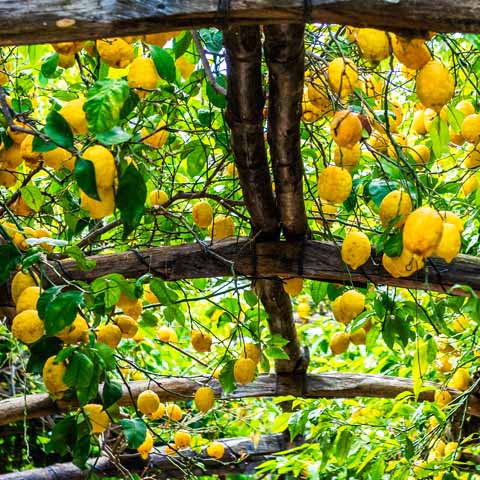
Ischia, the largest island, trades glamour for abundance: thermal springs that have soothed visitors since Greek times, the terraced poseidon gardens, the Aragonese castle rising from its islet, and green slopes of vineyards and lemon groves. It suits travelers who want an island to inhabit rather than tour. Procida, smallest and least changed, is the painters’ island, a huddle of fishermen’s houses in faded pastels around the marina of Corricella, and its unhurried authenticity made it Italy’s Capital of Culture in 2022.

Choosing among them, or sequencing two, is exactly the kind of judgment our specialists bring. A honeymoon wants Capri’s evenings, a wellness-minded traveler wants Ischia’s waters, a photographer wants Procida’s dawn, and a well-built itinerary can give a traveler the right island on the right day, by private boat, with the logistics invisible.

Which Archaeological Wonders Reward a Deeper Look?

Beyond Pompeii, the region is an open-air archive of the ancient world. Herculaneum preserves the intimate texture Pompeii lost: carbonized wooden doors, upper stories, and the boathouses where its people were found. Paestum, an hour south, raises three golden Doric temples on a grassy plain, among the most complete Greek buildings in existence, with a museum whose Tomb of the Diver fresco is unique in the Greek world.

West of Naples, the Phlegraean Fields tell the stranger stories: the Sibyl’s cave at Cumae, the vast Flavian amphitheater of Pozzuoli with its intact underground works, and Baia, the Las Vegas of the Roman empire, whose villas and mosaic floors now lie beneath the bay and can be seen by glass-bottomed boat or, for certified divers, visited underwater. Few experiences anywhere match swimming above a Roman floor.

In Naples itself, the past runs vertically: the Napoli Sotterranea descends into Greek quarries and Roman aqueducts forty meters below the streets, and San Lorenzo Maggiore stacks a Roman market beneath a Gothic church. We compose archaeology-focused itineraries with the specialists these sites deserve, sequenced so the centuries arrive as a narrative rather than a shuffle of stones.

Two lesser-known sites reward travelers who want to go further: the Villa Oplontis at Torre Annunziata, a vast imperial residence with some of the finest wall painting to survive from antiquity, and the villas of Stabiae on their ridge above the sea, both wonderfully quiet compared with their famous neighbors. Adding one of them to a second archaeology day is the kind of judgment our specialists build into itineraries for travelers who fell in love with Pompeii.

Where Do You Find the Quieter Side of Campania?

South, mostly. Beyond Paestum stretches the Cilento, a national park of mountains, cork oak forests, and a coastline of clear coves and unhurried towns like Castellabate and Palinuro, whose blue grotto rivals Capri’s with a fraction of the visitors. This is the landscape where researchers first defined the Mediterranean diet, and its agriturismi, olive groves, and white-fig harvests keep a rural Campania most itineraries never touch.

The interior holds its own discoveries: the Irpinia wine hills around Taurasi and Tufo, where cellar doors open by relationship rather than schedule; the papal-scale Certosa di Padula, one of Europe’s largest monasteries; and Benevento’s Roman arch and witch-haunted folklore. Even the famous coast keeps quiet corners, Atrani at dawn, the lemon terraces above Minori, the high villages of the Lattari mountains where mozzarella nel mirto is still smoked over myrtle.

Our itineraries deliberately alternate the celebrated with the quiet, because the alternation is what keeps a trip feeling like discovery. The travelers who fall hardest for Campania are almost always the ones whose itineraries gave them one day nobody they know has ever taken.

Evenings deserve their own planning everywhere in the region. In Naples that means an opera at the San Carlo or the passeggiata along the seafront with Vesuvius darkening across the bay; on the coast it means dinner on a terrace after the day visitors have gone, when Positano and Amalfi return to the people staying the night. The evening hours are the region’s most beautiful, and itineraries that plan for them feel entirely different from itineraries that merely end each day.

What Outdoor and Active Experiences Does Campania Offer?

Campania was made to be moved through. The Path of the Gods walk above the Amalfi Coast is the headline, but the Lattari mountains hold a network of mule tracks linking coast villages to chestnut forests, the Valle delle Ferriere waterfall canyon drops into Amalfi itself, and Vesuvius offers the singular experience of hiking the crater rim of the volcano that made the region’s history.

The sea doubles everything: kayaking beneath the cliffs of the Sorrento peninsula, sailing the islands, swimming in the marine reserves of Punta Campanella and the Cilento, and diving above the sunken villas of Baia. Trail runners, cyclists who relish a climb, and families who want their adventures gentle all find their measure here, and we fold these days into itineraries as part of our active trips in Italy, matched carefully to ability and appetite.

Active Campania pairs naturally with its rewards: the hike ends at a lemon-terrace lunch, the kayak morning ends with the day’s catch grilled at a harbor table, the Vesuvius ascent ends in a Lacryma Christi tasting on the volcano’s own slopes. We design the pairing deliberately, because in Campania effort and pleasure were never meant to be separate itineraries.

What Day Trips and Extensions Pair Well With Campania?

Campania’s position makes it the natural gateway to the Italian south. Rome sits just over an hour north by high-speed rail, so the capital pairs with the bay as naturally as any two destinations in Italy. The royal palace of Caserta, with its two-mile garden cascade, makes a grand half-day inland, and Benevento or the Irpinia wine country extend the same day into the region’s green interior.

Farther afield, Puglia’s trulli and baroque Lecce lie across the peninsula for travelers continuing through the Mezzogiorno, and ferries and short flights link Naples to Sicily and the Aeolian Islands for journeys that follow the volcanic thread south. Northbound, the Rome and Florence corridor puts most of Italy’s classic route within easy reach of a Campania beginning.

How far to reach depends on the trip’s rhythm, and that judgment is our craft. As part of a custom trip to Italy, we sequence extensions so each one refreshes the journey rather than crowding it, with every transfer arranged and supported around the clock. Campania rewards travelers who resist the urge to see everything, and we design itineraries that make that restraint feel like luxury.

Ready to Begin Planning Your Campania Vacation?

Campania deserves more than a template. Since 2003, Trips 2 Italy has designed private Italian vacations one traveler at a time, hand selecting every experience based on what you tell us rather than fitting you into a predefined package. Our Italian-born team plans Campania with the knowledge of people who call Italy home, from the streets of Naples to the terraced villages of the Amalfi Coast, and we remain at your side throughout your trip with 24/7 assistance. Tell us how you imagine Campania, and we will craft the itinerary that matches it.

Explore Our Campania Vacation Itineraries

Frequently Asked Questions About Things to Do in Campania

Pompeii, walked with a private archaeologist, is the essential encounter, closely followed by a boat day along the Amalfi Coast or around Capri and an evening of pizza in Naples. All three depend heavily on timing and access, which is why Trips 2 Italy arranges early entries, expert guides, and private boats as the foundation of every Campania itinerary.

The Blue Grotto is entered in small rowboats through a low sea opening, conditions permitting, and the electric-blue light inside is unlike anywhere else on earth. Lines can be long in high season, so we time visits for the best hours and pair them with a private circumnavigation of the island so the whole day, not just the grotto, becomes the memory.

The Sentiero degli Dei is a moderate cliff-top walk of about five miles between Bomerano and Nocelle, mostly level or descending when walked toward Positano, with continuous sea views. Reasonably fit walkers manage it comfortably in a morning. We arrange transfers to the trailhead, a guide if desired, and a well-earned lunch at the end.

Yes, and it is one of the region’s great days: the buried city in the cool morning hours with an archaeologist, then the drive high onto the volcano and the walk to the crater rim in the afternoon, with the whole bay spread below. Trips 2 Italy arranges the timing, driver, and guides so the day unfolds without a single line or logistical worry.

Pompeii fascinates children when a storytelling guide leads it, Vesuvius is a real volcano they can climb, boat days mean swimming stops and sea caves, and pizza-making with a Neapolitan pizzaiolo is a guaranteed triumph. We compose family itineraries so history and nature arrive as adventure, with the pacing and downtime that keep every generation happy.

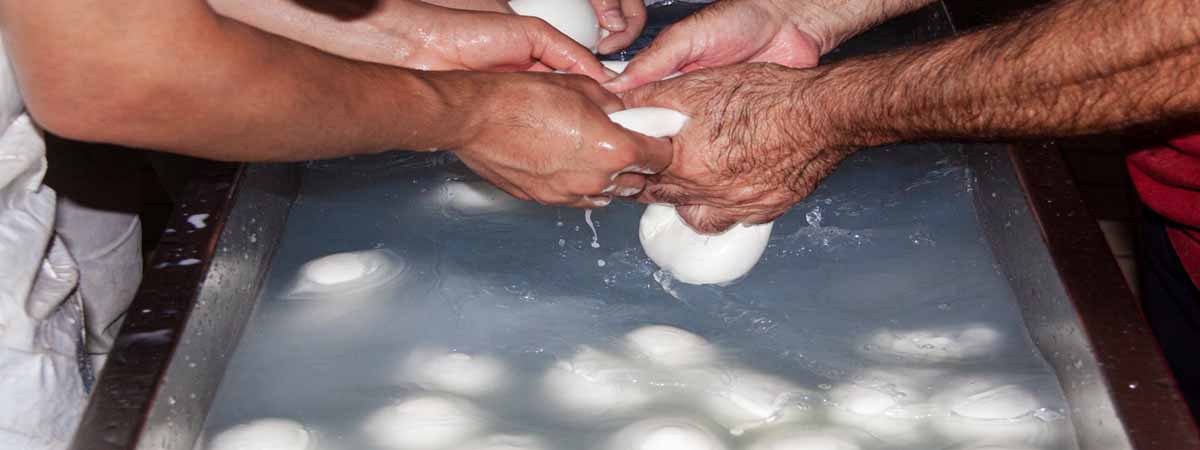
Emphatically. Paestum’s three Doric temples are among the best preserved in the Greek world, standing golden on their plain beside a museum that holds the unique Tomb of the Diver fresco. Paired with a buffalo mozzarella dairy visit nearby, it makes one of the finest day trips in southern Italy, and it opens the door to the quiet Cilento coast beyond.