
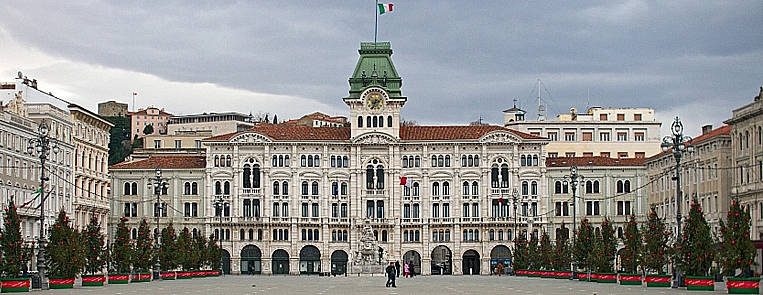
Veneto and Friuli regions in depth Semi-Escorted Mini Tour
Discover Veneto and Friuli Venezia Giulia, two fantastic regions off the beaten path. Enjoy a cruise along the Brenta River, visit Padua, Verona, Trieste, the Soave wine region and
HOME » POPULAR ITALIAN DESTINATIONS » VICENZA TRAVEL GUIDE » VICENZA THINGS TO DO GUIDE
Vicenza Travel Guide Culture History Food and Wine Things to Do Plan My Trip
About this guide: This guide to things to do in Vicenza was written by the Italian-born travel specialists at Trips 2 Italy, a custom tour operator that has designed hand-crafted Italian vacations since 2003. Every recommendation below reflects the same first-hand knowledge our team draws on when we build a private Vicenza itinerary around a traveler’s interests, dates, and pace. Read it for your research, then let us translate it into a trip designed entirely around you.
Begin in Piazza dei Signori, the city’s magnificent living room, where the Basilica Palladiana lifts its two tiers of white loggias above the market square beside the slender medieval Torre Bissara. Climb to the upper loggia and the rooftop terrace when exhibitions allow, browse the jewelry museum within, and return in the evening when the marble glows and the square fills for the aperitivo. It is the perfect introduction to the city, and to the region we cover in our Veneto travel guide.
Then walk the Corso Andrea Palladio end to end. The street is an open-air museum of palace fronts, Gothic windows giving way to the master’s classical facades, with the loggias of the Palazzo del Capitaniato and the courtyards of half a dozen noble houses opening off the flanks. Detour a block in either direction and the city rewards you with porticoed lanes, artisan windows, and quiet churches.
Save time for the oldest corner of the city, where the Retrone river bends beneath the stone arch of Ponte San Michele. The lanes here, called contra’ in the Vicentine manner, keep their medieval intimacy, and the view of palaces rising sheer from the water explains why locals call this their little corner of Venice. It is the perfect counterweight to the Corso’s grandeur, five minutes and five centuries away.
Timing and access are where our planning earns its keep. We schedule the Basilica and the theater for their quietest hours, secure guided visits that open interiors casual visitors miss, and pair the center with the hillside villas in the right order for the light. Vicenza is compact, and a well-sequenced day here delivers an astonishing amount of beauty without ever feeling rushed.
No visit to Vicenza is complete without the Teatro Olimpico, the oldest surviving indoor theater in the world and one of the most breathtaking rooms in Italy. Palladio designed it in his final year for the city’s academy of humanists, a Roman theater reborn indoors, with tiers of steps curving beneath a painted sky and a stage wall crowded with columns and statues.
The marvel behind the archways still astonishes: seven streets of an ideal ancient city, built in wood and stucco by Vincenzo Scamozzi for the premiere of Oedipus the King in 1585, recede into painted distance with such cunning that a few yards read as half a mile. Created for a single evening, they are now the oldest surviving stage sets on earth, preserved through four centuries of care.
We arrange visits with guides who bring the theater’s story alive, from the academy’s ambitions to the tricks of the perspective, and when the autumn classical season or a concert aligns with your dates, we secure seats for a performance beneath that painted sky. Attending music or drama in Palladio’s last masterpiece is an experience travelers describe for the rest of their lives.
Monte Berico is Vicenza’s sacred balcony. A covered walkway of one hundred fifty arches climbs the hill, built in the eighteenth century so pilgrims could ascend in shade and shelter, and the climb remains a beloved local ritual, equal parts devotion and constitutional. At the top stands the sanctuary of the Madonna of Monte Berico, commemorating the apparitions that consoled the city during the plagues of the 1420s.
The basilica rewards unhurried attention, from its glowing marble interior to the monumental canvas by Paolo Veronese in the refectory, a banquet scene of astonishing scale that survived history’s turbulence and remains gloriously in place. Outside, the piazzale opens the classic panorama: the city’s towers and rooftops below, the villa-dotted hills around, and the wall of the Alps floating on the northern horizon.
We often arrange Monte Berico as the opening or closing movement of a Vicenza day, paired with the two great villas on the slopes below so the hillside unfolds as a single graceful sequence. Travelers who prefer not to walk the porticoes ascend by private car and stroll down instead, an arrangement our drivers handle seamlessly.
The hill holds one more chapter for the historically curious: the park of Villa Guiccioli, where the fighting of 1848 surged, now shelters the museum of the Risorgimento and the Resistance, and its gardens make a peaceful coda to the sanctuary and the view. Between the devotion, the panorama, and the history, Monte Berico rewards a slower visit than most travelers expect to give it.
Villa La Rotonda is the essential pilgrimage, the most influential private house in Western architecture, crowning its hilltop just beyond the city walls. Palladio’s perfect square with four identical temple fronts and a central dome has been copied on three continents, yet no copy captures the serenity of the original in its landscape. The grounds alone justify the visit, and on days when the frescoed interior opens, the domed hall is unforgettable.
Ten minutes away, Villa Valmarana ai Nani offers the perfect counterpoint: an intimate villa whose rooms Giambattista Tiepolo and his son Giandomenico frescoed in 1757 with scenes from Homer, Virgil, Ariosto, and Tasso alongside sly vignettes of country carnival life. The stone dwarfs along the garden wall give the house its name and its legend, and the visit pairs gods and gossip in a single enchanting hour.
Beyond the hillside, the villa civilization spreads across the province and the wider Veneto, from Palladio’s working farm villas to the lavish later estates of the Riviera del Brenta. Devoted enthusiasts can follow the master into the countryside, to early works like Villa Godi in the foothills or the serene Villa Pojana on the plain, tracing his ideas from first experiments to final refinement.
We compose villa itineraries with private drivers and expert guides, confirming seasonal opening days, arranging special access where relationships allow, and pacing the day so each interior, garden, and view receives the time it deserves. Villa visiting is an art of logistics as much as appreciation, and it is precisely the kind of day where our planning transforms the experience.
Palazzo Chiericati, one of Palladio’s boldest palaces, houses the civic art museum, where Vicentine and Venetian painting hangs beneath frescoed ceilings in the very rooms the architect designed. A short walk away, the Palladio Museum in Palazzo Barbarano unfolds the master’s life and method with models, drawings, and scholarship, the ideal preparation for everything you will see outside its windows.
The church of Santa Corona is the city’s treasury of painting: Giovanni Bellini’s luminous Baptism of Christ, Veronese’s Adoration of the Magi, a jewel-like Gothic interior, and the simple crypt chapel Palladio designed. The cathedral adds its Palladian dome and ancient crypt, while the Diocesan Museum and the archaeological collections trace the city back to its Roman and early Christian bones.
Collectors of quieter pleasures should seek out the Gallerie d’Italia in Palazzo Leoni Montanari, a lavish Baroque palace holding Venetian paintings, including delightful scenes of eighteenth-century life, and one of the finest collections of Russian icons in western Europe, an unexpected treasure in a city already full of them.
The jewelry museum inside the Basilica Palladiana completes the circuit with a collection unique in Italy, honoring the goldsmiths’ craft that built the modern province. We weave these interiors into city days with art historians who connect them into a single story, and we time each visit so masterpieces receive quiet minutes rather than passing glances.
Evenings in Vicenza follow a graceful choreography that travelers quickly learn to love. First comes the passeggiata along the Corso Palladio, when the whole city seems to drift past the palace fronts and the goldsmiths’ lit windows. Then the aperitivo claims Piazza dei Signori, spritzes and small plates beneath the Basilica’s loggias while the light performs its nightly transformation of the white stone.
Dinner is the evening’s centerpiece, whether a historic dining room serving baccala as it has for generations, a creative kitchen reinterpreting the province’s ingredients, or a countryside table among the vines a short drive away. On the right dates, the evening culminates at the Teatro Olimpico with music or classical drama, or with concerts in palace courtyards during the summer season.
The seasons change the evening’s character. Summer keeps the piazzas alive past midnight with music drifting from palace courtyards, autumn draws the city indoors to the theater and the long dinner, and winter dresses the Corso in lights while the goldsmiths’ windows glow like reliquaries. Whatever the month, the after-dark city rewards travelers who linger.
We design evenings as carefully as days, reserving the tables that suit each night’s mood, securing performance seats months ahead, and arranging drivers so that a villa-country dinner or a late concert ends with an effortless return. In a city this beautiful after dark, the hours between aperitivo and midnight are not an afterthought. They are half the reason to stay overnight.
The classic trio lies to the north. Bassano del Grappa charms with its covered wooden bridge over the emerald Brenta, its grappa distilleries, and its ceramics tradition. Marostica spreads beneath twin castles around the chess-square where costumed townspeople play a living match in even-numbered Septembers. Between them, the walled towns and villa villages of the foothills reward slow wandering.
Higher still, the Asiago plateau opens a different world: high meadows and spruce forests, dairies producing the famous cheese, and the moving memorials of the First World War, whose alpine front once ran across these hills. In winter the plateau turns to snowshoeing and cross-country skiing, and in summer its trails and malghe make glorious walking, experiences we arrange as part of our active trips in Italy.
To the south and west wait the Colli Berici wine roads, the Euganean hills, and Soave with its castle and golden wines, while Venice, Verona, and Padova are all within an hour by rail. We sequence these excursions within a custom trip to Italy so each day trip refreshes the journey, with every driver, guide, and table arranged before you travel and supported around the clock.
Vicenza deserves more than a template. Since 2003, Trips 2 Italy has designed private Italian vacations one traveler at a time, hand selecting every experience based on what you tell us rather than fitting you into a predefined package. Our Italian-born team plans Vicenza with the knowledge of people who call Italy home, from Palladio’s palaces along the Corso to the villa countryside and the goldsmiths’ ateliers, and we remain at your side throughout your trip with 24/7 assistance. Tell us how you imagine Vicenza, and we will craft the itinerary that matches it.
Discover Veneto and Friuli Venezia Giulia, two fantastic regions off the beaten path. Enjoy a cruise along the Brenta River, visit Padua, Verona, Trieste, the Soave wine region and
The Veneto is not just Venice. The marvellous gems that are enclosed in this region need to be discovered slowly. We will help you in their discovery with our
The Teatro Olimpico and the Basilica Palladiana share the crown: the world’s oldest indoor theater with its 1585 perspective stage sets, and Palladio’s white double loggias above Piazza dei Signori. Trips 2 Italy schedules both for their quietest hours with guides who bring the stories alive, and adds Villa La Rotonda for the full Palladian triumvirate.
Yes. The grounds open regularly and the frescoed interior opens on set days that vary by season, so planning matters. Trips 2 Italy confirms current schedules, arranges private guides and drivers, and pairs La Rotonda with Villa Valmarana ai Nani and Monte Berico so the hillside unfolds as one graceful half day.
Delightfully so. The historic center is compact, level, and largely pedestrian, with porticoes sheltering walkers in any weather, and nothing essential lies more than fifteen minutes from Piazza dei Signori. For the villas, wine hills, and day trips beyond the walls, we arrange private drivers so the countryside becomes scenery rather than logistics.
Bassano del Grappa with its wooden bridge and distilleries, Marostica and its chess square, the Asiago plateau with its cheese dairies and Great War memorials, the Colli Berici and Soave wine country, and the cities of Venice, Verona, and Padova are all within easy reach. We compose day trips around your interests with drivers and expert guides.
Villa Valmarana ai Nani, on the slope of Monte Berico, holds rooms frescoed in 1757 by Giambattista Tiepolo and his son Giandomenico, pairing epic scenes from Homer and Ariosto with witty views of eighteenth-century country life. It sits minutes from Villa La Rotonda, and the two villas make a perfect pairing.
Yes, and pleasantly manageable. Children love the trick perspective of the Teatro Olimpico’s stage streets, the climb past the porticoes of Monte Berico, gelato on the piazza, and day trips to Marostica’s castles or the meadows and dairies of the Asiago plateau. We compose family itineraries so architecture and history arrive as adventure rather than obligation.