
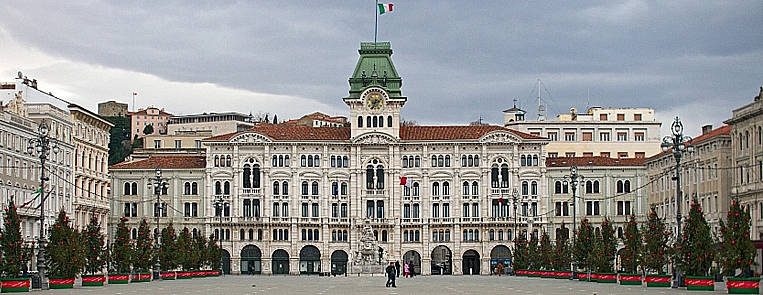
Veneto and Friuli regions in depth Semi-Escorted Mini Tour
Discover Veneto and Friuli Venezia Giulia, two fantastic regions off the beaten path. Enjoy a cruise along the Brenta River, visit Padua, Verona, Trieste, the Soave wine region and
HOME » POPULAR ITALIAN DESTINATIONS » VICENZA TRAVEL GUIDE » VICENZA HISTORY GUIDE
About this guide: This guide to the history of Vicenza was written by the Italian-born travel specialists at Trips 2 Italy, a custom tour operator that has designed hand-crafted Italian vacations since 2003. Every recommendation below reflects the same first-hand knowledge our team draws on when we build a private Vicenza itinerary around a traveler’s interests, dates, and pace. Read it for your research, then let us translate it into a trip designed entirely around you.
Vicenza is far older than the Renaissance face it shows the world. Settled by the ancient Veneti and absorbed into the Roman orbit, it became the municipium of Vicetia in 49 BC, a prosperous stop on the road between Verona and the lagoon ports. The Roman street plan survives with remarkable clarity: today’s Corso Palladio traces the decumanus, and the historic center still walks in Roman footsteps.
The city’s fortunes have always been tied to its position on the great east-west corridor of the Veneto, the fertile plain we introduce in our Veneto travel guide. Rivers powered its mills, the plain fed it, and the hills at its back offered stone, timber, and refuge. Fragments of the Roman city still surface, from the cryptoporticus of a first-century house beneath the cathedral square to stretches of aqueduct in the outskirts.
After Rome’s collapse, Vicenza passed through Gothic, Lombard, and Frankish hands, a turbulent inheritance it shared with the whole Po plain. The medieval city that emerged from those centuries was compact, walled, and ambitious, organized around the church, the market, and the tower houses of its feuding families, the raw material from which its later elegance would be carved.
Human history here reaches back far beyond the Romans. The caves and slopes of the Colli Berici sheltered hunters in the depths of prehistory, and the Veneti who followed left sanctuaries and trade goods that testify to a plain already busy with exchange long before Latin was spoken on it. Travelers with a taste for deep time find that Vicenza’s story, like so much of Italy’s, begins tens of thousands of years before its famous chapters.
Medieval Vicenza lived the classic drama of the northern Italian communes. It won self-government, joined the Lombard League that faced down Emperor Frederick Barbarossa in the twelfth century, and then spent generations contending with its own noble factions and with larger neighbors. Padova, Verona’s Scaligeri lords, and Milan’s Visconti each held the city in turn, and every overlord left walls, towers, and scars.
The thirteenth century brought the city under the shadow of Ezzelino da Romano, the ruthless lord whose name still carries a shiver across the Veneto, and the fourteenth saw Vicenza contested like a prize on a board between the region’s great dynasties. These hard generations taught the city a lesson it never forgot: that survival lay in alliance with a power strong enough to guarantee peace, a lesson that would shortly point it toward the lagoon.
Through it all, the city grew rich on wool, silk, and trade, and its institutions matured. The Gothic palazzo that would later wear Palladio’s marble loggias rose at the center as the seat of justice and commerce, the great preaching churches of the Dominicans and Franciscans filled with art, and the university tradition of neighboring Padova drew Vicentine minds into the intellectual currents of the age.
In 1404, weary of wars it could not win alone, Vicenza offered itself to the Republic of Venice, a voluntary dedication the city would commemorate for centuries. The choice proved shrewd. Venice brought four hundred years of peace, order, and access to one of the world’s great trading empires, and Vicenza’s energies turned from defense to refinement, setting the stage for the most brilliant century in its history.
Sixteenth-century Vicenza performed one of the great acts of self-invention in urban history. A provincial city bruised by the wars of the early 1500s decided to rebuild itself as a new Rome, and it found its instrument in Andrea Palladio, a miller’s son trained as a stonecutter, whose talent was recognized and cultivated by the humanist count Gian Giorgio Trissino. Palladio absorbed the ruins of ancient Rome and returned to translate them into a living city.
Commission followed commission. In 1549 he won the charge to encase the failing medieval town hall in double loggias of white stone, the project that became the Basilica Palladiana and made his name. The nobility competed for his palaces along the Corso, the countryside filled with his villas, and in 1570 he published The Four Books of Architecture, the most influential architectural treatise ever printed. His final work, the Teatro Olimpico, was rising when he died in 1580.
No other city is so completely the portrait of one mind, and walking it chronologically is a singular experience. We arrange Palladian itineraries with architectural historians who trace the master’s development palace by palace, from early experiments to the serene confidence of La Rotonda, so that travelers watch a genius mature in stone over the course of a single afternoon.
Palladio’s villas answered a precise historical moment. As Venice’s maritime trade faced new pressures in the sixteenth century, the Republic’s nobility turned landward, draining and cultivating the Veneto plain and commissioning country houses that were working farms and classical statements at once. Palladio gave the movement its architecture: temple fronts on farmhouses, dignity conferred on agriculture, the villa as a philosophy of civilized country life.
Villa La Rotonda, begun in the 1560s on its hilltop outside Vicenza, became the ideal’s purest expression, a domed square house with four identical porticoed faces greeting the landscape in every direction. Its descendants are everywhere: England’s Palladian country houses, Thomas Jefferson’s Monticello, and two centuries of civic buildings across Europe and America all trace their lineage to this quiet Vicentine hill.
The villa civilization continued long after Palladio, and its later chapters glow just as vividly, nowhere more than at Villa Valmarana ai Nani, where Giambattista Tiepolo and his son frescoed the rooms in 1757 with gods, heroes, and carnival scenes. We compose villa days that pair architecture with living context, including gardens, frescoed interiors, and the agricultural estates that still work the land around them.
When Napoleon extinguished the Venetian Republic in 1797, Vicenza passed with the Veneto into six decades of French and then Austrian rule. The city earned a heroic chapter in the Risorgimento: in 1848 its citizens rose against the Austrian army and held the heights of Monte Berico under bombardment, a resistance so fierce that the city was later decorated with a gold medal, and in 1866 Vicenza joined the newborn Kingdom of Italy with the rest of the region.
The twentieth century tested the province severely. In the First World War the Asiago plateau above the city became a front line, its meadows torn by three years of mountain warfare whose memorials still crown the heights, and in the Second World War Allied bombing struck the city itself, burning the roof of the Basilica Palladiana, which was faithfully rebuilt in the years that followed.
From those wounds Vicenza built one of Italy’s most dynamic postwar economies, led by its goldsmiths, textile houses, and precision manufacturers. The international gold fair, founded in the 1950s, grew into one of the world’s leading jewelry gatherings, and the province’s workshops and factories carried Vicentine craftsmanship to every continent while the historic center kept its Renaissance face intact.
Prosperity funded preservation rather than replacement, and in 1994 UNESCO inscribed Vicenza and the Palladian villas as World Heritage, sealing the marriage of industry and beauty that defines the city today. Modern Vicenza wears its history lightly: a city of exporters and engineers whose evening stroll still passes beneath facades that changed the world’s architecture.
The Corso Palladio is the city’s history compressed into a single walk: Roman in its alignment, medieval in its plot lines, Renaissance in its facades, and thoroughly alive in its shopfronts. Piazza dei Signori gathers the story at the center, with the Basilica’s white loggias wrapped around the Gothic hall, the slender medieval Torre Bissara beside them, and Venetian columns bearing the Lion of Saint Mark watching over the market.
The Teatro Olimpico preserves the Renaissance’s final flourish with its 1585 stage city of Thebes, while Palazzo Chiericati’s galleries and the Palladio Museum in Palazzo Barbarano unfold the age’s art and ideas. Santa Corona reaches deeper into the past with its Gothic vaults, Bellini altarpiece, and the tomb chapel Palladio designed, and the cathedral crypt touches the city’s Roman and early Christian roots.
Monte Berico completes the arc. The sanctuary commemorates the apparitions that consoled the plague-stricken city in the 1420s, the porticoed walkway below it embodies eighteenth-century devotion, and the terrace where 1848’s defenders stood now offers the finest view of the city they saved. On the same hill, the museum of the Risorgimento and the Resistance, set in the park of Villa Guiccioli where the fighting raged, carries the story into the modern age.
We sequence history-focused days so these places tell their story in order, from the Roman street grid to the Renaissance theater to the memorials of the World Wars, with guides chosen for their narrative gift. History in Vicenza is unusually walkable: two millennia unfold within a single square mile, and a well-told day here leaves travelers understanding not just the city but the whole arc of northern Italy.
Vicenza treats preservation as a civic art. The UNESCO inscription covers more than twenty Palladian buildings in the city and two dozen villas across the Veneto, and behind the listing stands a working ecosystem of restorers, scholars, and institutions, led by the international center for Palladian studies housed in one of the master’s own palaces. The Basilica Palladiana itself emerged from a meticulous multi-year restoration gleaming as the city’s crown.
Preservation here extends beyond monuments to skills and land. Goldsmithing is nurtured as living heritage through schools, the museum, and the great fairs, the villa estates maintain their gardens and agricultural life, and the wine hills and the Asiago plateau keep rural traditions, from cheese making to the memorial care of the Great War sites, firmly in the present tense.
For travelers this means Vicenza’s past is unusually intact and unusually welcoming, from frescoed villa rooms still lived in to a Renaissance theater still performing. We arrange encounters with this preservation world where access allows, from restoration specialists to villa custodians, as part of our cultural tours, and we build history-driven itineraries as a thread of a custom trip to Italy designed entirely around your interests.
Vicenza deserves more than a template. Since 2003, Trips 2 Italy has designed private Italian vacations one traveler at a time, hand selecting every experience based on what you tell us rather than fitting you into a predefined package. Our Italian-born team plans Vicenza with the knowledge of people who call Italy home, from Palladio’s palaces along the Corso to the villa countryside and the goldsmiths’ ateliers, and we remain at your side throughout your trip with 24/7 assistance. Tell us how you imagine Vicenza, and we will craft the itinerary that matches it.
Discover Veneto and Friuli Venezia Giulia, two fantastic regions off the beaten path. Enjoy a cruise along the Brenta River, visit Padua, Verona, Trieste, the Soave wine region and
The Veneto is not just Venice. The marvellous gems that are enclosed in this region need to be discovered slowly. We will help you in their discovery with our
Vicenza was settled by the ancient Veneti and became the Roman municipium of Vicetia in 49 BC, giving the city well over two thousand years of continuous life. Its main street still follows the Roman decumanus, and traces of the ancient city survive beneath the cathedral square and in the historic center’s street plan.
Palladio was a sixteenth-century architect, trained as a stonemason, who rebuilt Vicenza with palaces, the Basilica Palladiana, the Teatro Olimpico, and villas including La Rotonda, and whose 1570 treatise The Four Books of Architecture became the most influential architectural book ever printed. His style shaped country houses, capitols, and civic buildings across Europe and America.
UNESCO inscribed the City of Vicenza and the Palladian Villas of the Veneto in 1994, extending the listing in 1996, because Palladio’s buildings here defined a classical language that transformed architecture worldwide. The site protects more than twenty buildings in the city along with two dozen villas across the region.
Vicenza voluntarily gave itself to the Republic of Venice in 1404 and flourished under the Lion of Saint Mark for nearly four centuries, enjoying peace and trade while its nobility built the palaces and villas that define the city. Venetian columns still stand in Piazza dei Signori as emblems of that long partnership.
In the First World War the Asiago plateau above Vicenza was a major alpine front, and its memorials still crown the heights, while Second World War bombing damaged the city, including the roof of the Basilica Palladiana, which was faithfully rebuilt. Trips 2 Italy arranges guided days on the plateau for travelers interested in this moving history.
Yes. Villa La Rotonda and Villa Valmarana ai Nani sit on the hillside just outside the center, and further villas are scattered through the countryside. Opening days and hours vary by season and property, so Trips 2 Italy confirms schedules, arranges drivers and expert guides, and composes villa itineraries around what is open and at its best.