Marche Travel Guide

HOME » POPULAR ITALIAN DESTINATIONS » ITALIAN TRAVEL GUIDES BY REGION » MARCHE TRAVEL GUIDE

Marche Travel Guide        Culture        History        Food and Wine        Things to Do        Plan My Trip

About this guide: This Marche travel guide was written by the Italian-born travel specialists at Trips 2 Italy, a custom tour operator that has designed hand-crafted Italian vacations since 2003. Every recommendation below reflects the same first-hand knowledge our team draws on when we build a private Marche itinerary around a traveler’s interests, dates, and pace. Read it for your research, then let us translate it into a trip designed entirely around you.

What Makes Marche Italy in a Single Region?

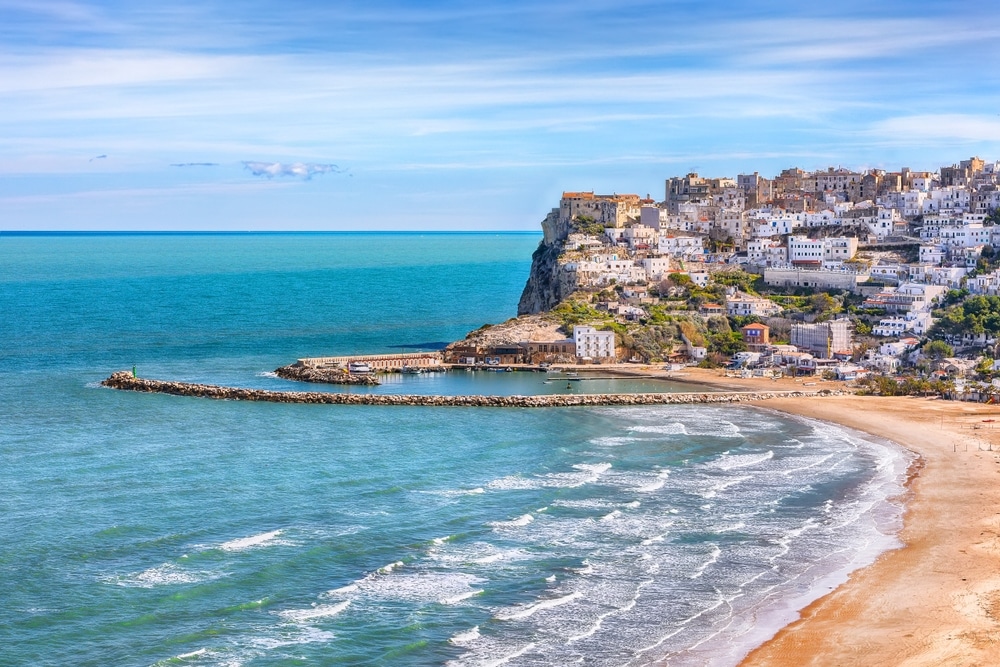
Italians often describe Marche as the whole country distilled into one region, and the geography supports the claim. Within an hour or two of driving, a traveler passes from the snow-holding peaks of the Sibillini Mountains through hill country stitched with vineyards and walled villages, past Renaissance cities of the first importance, and down to more than a hundred miles of Adriatic coastline where the white cliffs of Monte Conero drop straight into turquoise water.

The region’s cultural claims are just as concentrated. Urbino, the mountain city of Duke Federico da Montefeltro, was one of the great courts of the Renaissance and the birthplace of Raphael. Ascoli Piceno gathers one of Italy’s most beautiful squares entirely in polished travertine. Loreto has drawn pilgrims to the Holy House for more than seven centuries, Pesaro gave the world Rossini, and Recanati gave Italian literature its greatest modern poet in Giacomo Leopardi.

What Marche has never gathered is the crowding of the famous circuits. This is a region where Italians themselves vacation, where the beach towns fill with families from Bologna and Rome rather than tour groups, and where a traveler can stand alone in front of a Piero della Francesca. For travelers who have done the classic first trip and want the Italy Italians keep for themselves, Marche is among the most rewarding answers we know.

Use this guide to shape your thinking, then let us shape the trip. Every Marche vacation we design is composed from what you tell us, hand selected experience by experience, never assembled from a predefined package.

The name itself hints at the region’s plural character: Le Marche, the marches, the old borderlands of emperors and popes, a region assembled from many small worlds rather than ruled from one capital. That inheritance is precisely what makes it so rewarding to explore today, because every valley keeps its own accent, its own dish, and its own festival.

What Is the Geography and Climate of Marche?

Marche occupies the calf of the Italian boot, a band of territory running from the Apennine ridge east to the Adriatic Sea. Its structure is a comb of parallel river valleys, each descending from the mountains to the coast, which is why the region reads as a sequence of hilltop towns facing each other across cultivated valleys. The Sibillini Mountains anchor the southern interior, rising above 8,000 feet at Monte Vettore and protected as a national park of high meadows, gorges, and legends.

The coastline changes character at Monte Conero, the only significant limestone headland on the Adriatic between Trieste and the Gargano. North of it, resort towns such as Senigallia, with its famous velvet-sand beach, and Rossini’s Pesaro line a gentle shore. At the Conero itself, the land climbs into a green promontory of arbutus and holm oak above coves like the Due Sorelle, reachable only from the water. South of Ancona, the coast relaxes again toward San Benedetto del Tronto and its palm-lined promenade.

The climate follows the region’s layered geography. The coast enjoys a classic Adriatic pattern of hot, bright summers and mild winters, the hill country runs a few degrees cooler with crisp, clear autumns, and the Sibillini hold snow well into spring. The agricultural year, from the June grain harvest through the September vendemmia to the autumn olive pressing and white truffle season, gives every month its own flavor, and we plan itineraries with that calendar open on the table.

For travelers, the practical meaning of this geography is choice. A single Marche itinerary can hold a Renaissance palace morning, a vineyard lunch, a mountain walk, and an evening swim beneath white cliffs, provided someone sequences it well. That is the work our specialists do first, matching the region’s stacked landscapes to the trip you actually want.

When Is the Best Time of Year to Visit Marche?

Late spring and early summer are superb. May and June bring long days, warm seas by the month’s end, wildflowers across the Sibillini meadows, and towns going about their own lives before the Italian holiday season begins. It is the season we most often recommend for travelers who want to combine coast, countryside, and cities in a single unhurried itinerary.

July and August belong to the festivals. Pesaro fills with the Rossini Opera Festival, Macerata stages opera under the stars in the extraordinary Sferisterio arena, Ascoli Piceno rides its medieval Quintana joust in full costume, and Senigallia swings through its celebrated vintage music festival. The beaches are at their liveliest, and evening life in the piazzas runs past midnight. Arrangements for the great festivals must be made well in advance, which is precisely the work we handle.

September and October may be the connoisseur’s choice: the vendemmia animates the Verdicchio hills around Jesi and Matelica, the white truffle season opens around Acqualagna, the sea often stays warm for swimming into early October, and the light over the hill towns turns golden. Winter has its own rewards, from uncrowded galleries in Urbino to long trattoria lunches built around the season’s truffles and game.

Whenever you come, we align the itinerary with the season rather than fighting it: harvest experiences in the Verdicchio hills in autumn, boat days on the Conero in the long light of June, opera evenings in August, and truffle mornings when the woods are at their best. The season you travel should shape the trip you take, and designing that alignment is precisely our work.

How Many Days Should I Spend in Marche?

A first meaningful encounter with Marche wants five to seven days. A natural shape gives two days to Urbino and the Montefeltro hills, a day to the Frasassi Caves and the Verdicchio country around Jesi, two days to the Conero Riviera for the coast, and a day or two to Ascoli Piceno and the south. That rhythm lets the region’s remarkable variety unfold without ever feeling like a checklist.

Travelers with more time discover why Marche rewards slowness. A second week opens the Sibillini Mountains, the quiet wine villages of the Piceno, hill towns such as Gradara, Corinaldo, and Offida, and the kind of unplanned afternoons in which the region does its best work. Because every Trips 2 Italy itinerary is built by hand, we weigh your interests and the other destinations in your Italian journey, then give Marche the space it deserves rather than the space a standard package allows.

Marche also serves beautifully as the restorative middle chapter of a longer Italian journey. After the intensity of Rome or Florence, a few days based between the Conero coast and the hill country reset a trip’s rhythm completely, and the region’s east-coast position makes it a natural bridge between the great cities and the Adriatic.

However long you stay, resist the urge to see everything. Marche rewards depth over coverage, and the itineraries travelers describe for years afterward are the ones that left room for the unplanned hour in the piazza, the second morning at the beach, the return to the trattoria that felt like a discovery. We design that room in deliberately.

Which Cities and Towns Should Anchor Your Marche Itinerary?

Urbino comes first for most travelers: a Renaissance city preserved almost whole on its double hill, crowned by the Palazzo Ducale of Federico da Montefeltro and listed as a UNESCO World Heritage Site. Ascoli Piceno, in the far south, answers with a completely different beauty, a city of Roman bridges and medieval towers whose travertine Piazza del Popolo is among the most elegant public rooms in Italy.

Ancona, the regional capital, is a working Adriatic port with a Greek foundation, a Romanesque cathedral on its headland, and Trajan’s arch above the harbor. Pesaro combines Rossini’s birthplace and a UNESCO City of Music designation with a relaxed seafront, while Macerata rises through brick lanes to its famous open-air opera arena. Loreto’s basilica, sheltering the Holy House, and Recanati, the hill town of the poet Leopardi, sit within sight of each other near the coast.

Around the anchors gather the supporting cast: Jesi and Matelica in the Verdicchio vineyards, Fabriano with its seven centuries of papermaking, Genga at the mouth of the Frasassi gorge, Gradara beneath the castle of Paolo and Francesca, and fishing towns from Fano to San Benedetto del Tronto. The art of a Marche itinerary is selection and sequence, matching three or four bases to your tastes, and it is exactly the kind of composing our specialists do best.

Where you base yourself shapes the whole character of the visit. A hilltop base in the Montefeltro near Urbino, a countryside estate among the Verdicchio vines, and a village above the Conero’s coves each create a completely different trip from the same list of destinations. We match bases to travelers as the first act of planning, because in Marche the view from your morning espresso is part of the itinerary.

How Do You Get Around Marche?

Marche is a region of parallel valleys and hilltop towns, and its pleasures are scattered in a way that rewards thoughtful logistics. For the interior, we arrange private drivers who know the ridge roads between Urbino and the Metauro valley, the vineyard lanes around Jesi and Matelica, and the mountain approaches to the Sibillini, so that the landscape becomes scenery rather than navigation and every wine tasting can be enjoyed.

The coast is the region’s fast axis. Rail links run the length of the Adriatic shore, connecting Pesaro, Senigallia, Ancona, and San Benedetto del Tronto efficiently and continuing north to Bologna and Venice or south toward Puglia. Ancona’s airport and busy port make the region straightforward to enter and leave, and we sequence itineraries so trains handle the coastal distances while cars handle the hills.

Within the walled towns, everything worth seeing is reached on foot, from Urbino’s steep brick lanes to Ascoli’s travertine streets, and part of planning well is simply choosing where the walking should happen at which hour of the day. Every transfer in a Trips 2 Italy itinerary is arranged in advance and supported around the clock, from the moment you land to the morning you depart.

Arrivals deserve a word: Ancona’s airport connects through the major Italian and European hubs, Bologna and Rome serve the region comfortably by onward rail or private transfer, and cruise travelers reach the region through Ancona’s port. We plan the approach as carefully as the itinerary itself, so the first hours in Italy are already vacation.

How Do We Weave Marche Into a Complete Italian Itinerary?

Marche pairs naturally with its neighbors. Umbria lies just across the Apennine passes, so Urbino and the Frasassi Caves combine easily with Assisi and Perugia in a single hill-country journey. Emilia-Romagna’s food cities sit up the coast beyond Rimini, Rome is comfortably reached across the mountains, and the Adriatic rail line opens Venice to the north and Puglia to the south. However it fits, we design the sequence so Marche’s unhurried rhythm lands exactly where your journey needs it.

The occasion shapes the composition. For a honeymoon, we balance the Conero’s coves and cliff-top villages with Urbino’s Renaissance romance as part of an Italian honeymoon built around the two of you. For travelers who plan around the table, the Verdicchio hills, the truffle towns, and the brodetto ports can carry an entire wine and culinary journey. And for those composing something larger, Marche becomes a discovery chapter in a custom trip to Italy designed entirely from what you tell us.

This guide is one of five we have written on the region. Continue with our Marche culture guide, Marche history guide, Marche food and wine guide, and Marche things to do guide, or widen the lens with our complete Italy travel guide.

Ready to Begin Planning Your Marche Vacation?

Marche deserves more than a template. Since 2003, Trips 2 Italy has designed private Italian vacations one traveler at a time, hand selecting every experience based on what you tell us rather than fitting you into a predefined package. Our Italian-born team plans Marche with the knowledge of people who call Italy home, from the Renaissance courtyards of Urbino to the white cliffs of the Conero Riviera, and we remain at your side throughout your trip with 24/7 assistance. Tell us how you imagine Marche, and we will craft the itinerary that matches it.

Explore Our Marche Vacation Itineraries

Frequently Asked Questions About Traveling to Marche

May, June, September, and early October offer the finest balance of warm seas, open countryside, and towns living their own lives, while July and August bring the Rossini Opera Festival in Pesaro, the Sferisterio opera season in Macerata, and Ascoli Piceno’s Quintana joust. The specialists at Trips 2 Italy align your dates with what the region does best in that season, from harvest weeks to festival nights.

Five to seven days allows a meaningful first visit: two for Urbino and the Montefeltro, a day for the Frasassi Caves and the Verdicchio country, two for the Conero Riviera, and a day or two for Ascoli Piceno. A second week opens the Sibillini Mountains and the quieter hill towns. Because we build every itinerary by hand, the right length depends on your interests and the rest of your Italian journey.

Far less than Italy’s famous circuits. Marche is where many Italians take their own vacations, so its beach towns, hill villages, and even its great monuments keep an authentic local rhythm through most of the year. Travelers routinely find themselves nearly alone in front of masterpieces in Urbino that would draw lines anywhere else.

Urbino’s UNESCO-listed Renaissance center and the court of Federico da Montefeltro, Raphael’s birthplace, the white cliffs and coves of the Conero Riviera, the vast Frasassi Caves, Ascoli Piceno’s travertine Piazza del Popolo, the pilgrimage basilica of Loreto, Verdicchio wine, and olive all’ascolana, the region’s celebrated stuffed and fried olives.

The interior is best experienced with a private driver, which turns the ridge roads and vineyard lanes into scenery and lets every tasting be enjoyed, while the coastal rail line connects Pesaro, Senigallia, Ancona, and the southern beach towns efficiently. Trips 2 Italy arranges every transfer in advance, with support around the clock, so the logistics disappear into the trip.

Wonderfully so. The shallow, sandy beaches of Senigallia and San Benedetto, boat afternoons beneath the Conero cliffs, the theatrical chambers of the Frasassi Caves, castle visits at Gradara, and gelato-paced evenings in the piazzas keep every generation engaged. We compose family itineraries so history and nature arrive as adventure rather than obligation.