
Undiscovered Umbria tour package
This short tour is dedicated to discovering the rustic beauty of this marvelous region full of cultural and natural richness waiting to be explored.
Gubbio Travel Guide Culture History Food and Wine Things to Do Plan My Trip
About this guide: This Gubbio travel guide was written by the Italian-born travel specialists at Trips 2 Italy, a custom tour operator that has designed hand-crafted Italian vacations since 2003. Every recommendation below reflects the same first-hand knowledge our team draws on when we build a private Gubbio itinerary around a traveler’s interests, dates, and pace. Read it for your research, then let us translate it into a trip designed entirely around you.
Gubbio climbs the lower slopes of Monte Ingino in tiers of pale gray limestone, a medieval town so complete and so little altered that many Italians name it first when asked where the Middle Ages still stand intact. Towers, arched lanes, and fortified palaces rise street above street, and at the center of it all a great public square hangs in mid air on stone vaults, looking out over the rooftops to the green Apennine valley below.
The town occupies the northeastern corner of Umbria, away from the region’s busier corridors, which is precisely why it kept its character. Gubbio was ancient Iguvium long before Rome absorbed it, and the seven bronze Eugubine Tablets preserved in its civic museum carry the longest surviving text in the ancient Umbrian language, a document of European importance kept in a town of fewer than thirty thousand people.
Gubbio is also a town of living spectacle. Each May 15 the Festa dei Ceri, one of the oldest festivals in Italy, sends three enormous wooden ceri racing through the streets and up the mountain, and each winter the slope of Monte Ingino becomes the largest Christmas tree in the world, drawn in hundreds of lights above the rooftops.
Our specialists have planned Gubbio for history lovers, festival travelers, families, and couples in search of an Umbria beyond the famous names. Use this guide to shape your thinking, then let us shape the trip itself, hand selected experience by experience around what you tell us.
Gubbio sits in northeastern Umbria, roughly twenty five miles from Perugia and a similar reach from Assisi, where the last folds of the Apennines meet the broad upland plain the Romans knew as the ager Gubinus. The town is built against Monte Ingino, whose summit basilica watches over the streets below, and the mountains behind it rise toward Monte Cucco and the border with the Marche.
The setting explains the town. Limestone from these slopes built every palace and lane, which is why Gubbio reads as a single composition in gray stone, warming to silver and honey as the light moves. Below the walls, the plain spreads out in grain fields and pasture, scattered with farmhouses and cypress, and the surrounding hills hold the oak and beech woods that yield the truffles of the Eugubine table.
The town’s plan is easy to hold in the mind. Three long streets run along the hillside in parallel terraces, stitched together by stepped lanes and vaulted passages, with Piazza Grande as the great balcony at their center. The lower town holds the gates and churches of the plain, the upper town the cathedral and the ducal palace, and above everything rise the wooded slopes of Monte Ingino, crowned by the basilica that watches over it all. Few towns explain themselves so clearly to a traveler willing to walk them.
The climate follows the inland Apennine pattern: warm, dry summers freshened by mountain air in the evening, long green springs, golden autumns that bring the truffle harvest, and crisp winters when snow occasionally dusts Monte Ingino and the town gathers around its fireplaces. Because Gubbio faces south and west across the plain, late afternoon light on the stone facades is a daily event worth planning an unhurried passeggiata around.
One date stands apart. On May 15 the Festa dei Ceri fills the town from dawn to nightfall, and travelers who witness it join one of the oldest continuously celebrated festivals in Italy. Late May adds the Palio della Balestra, the crossbow challenge against Sansepolcro staged in medieval costume on Piazza Grande, making the second half of May the most theatrical fortnight of the Eugubine year.
Autumn is the season of the table, when white and black truffles come down from the surrounding woods and the town’s kitchens are at their most generous. From early December into January, Gubbio becomes Italy’s Christmas town: the mountainside tree of lights is switched on, cribs and markets fill the lanes, and the stone streets are at their most atmospheric.
Summer brings long evenings, classical performances at the Roman theatre below the walls, and easy access to the mountain air of the Apennines, while spring and early autumn offer the ideal walking weather for a town built on a slope. When we design a Gubbio itinerary, your dates become an instrument: we time the visit to the festival, the harvest, or the quiet season you prefer, and we arrange the vantage points and tables that each season rewards.
Festival dates concentrate demand in a town this size, and the difference between attending the Festa dei Ceri and truly experiencing it is preparation. Rooms within the walls, seats at the celebratory tables, and well-placed viewing are spoken for months ahead, which is why we begin composing May itineraries early and confirm every element before you travel. Travelers who prefer Gubbio at its calmest find deep winter quietly rewarding, with the lanes wrapped in mountain stillness and the kitchens at their most local.
A full day and a night is the honest minimum. That allows an unhurried morning around Piazza Grande and the Palazzo dei Consoli, an afternoon ride up the funivia to the Basilica of Sant’Ubaldo, and the evening hour when the day visitors have gone and the lanes return to the Eugubini themselves. Staying overnight is the single best decision a traveler can make here, because Gubbio after dark, lamplit and quiet, is among the most evocative townscapes in Italy.
Two days let the town breathe. The second day opens the Roman theatre, the Palazzo Ducale and the cathedral at the top of the town, the churches tied to St Francis and the wolf, and time in the ceramics workshops that continue five centuries of Eugubine lusterware. Walkers can add the mountain paths above the basilica for long views across the Apennines.
Many travelers weave Gubbio into a wider Umbrian journey, pairing it with Assisi, Perugia, Spoleto, and Orvieto over five to seven days. Because every Trips 2 Italy itinerary is built by hand, we weigh how deeply you want to settle into each town and give Gubbio the space that matches your interests rather than the space a standard package allows.
Piazza Grande comes first, the audacious fourteenth century square suspended over the lower town on massive vaulted substructures. On its uphill side rises the Palazzo dei Consoli, begun in 1332 and attributed to Angelo da Orvieto, a crenellated civic palace whose bell tower defines the skyline of the whole valley. Inside, the civic museum keeps the Eugubine Tablets, the bronze ritual texts that are the town’s greatest treasure.
From the top of the town, the funivia carries travelers up Monte Ingino in open standing baskets, a six minute ascent to the Basilica of Sant’Ubaldo, where the town’s patron saint rests and the three great ceri wait out the year between festivals. Below the walls, the first century BC Roman theatre still seats audiences for summer performances, and the Palazzo Ducale, raised for Federico da Montefeltro in the 1470s, brings a graceful Renaissance courtyard to the highest terrace of the medieval town.
The connective tissue matters as much as the monuments: Via dei Consoli and its workshops, the arched lanes stepping between terraces, the narrow walled up openings beside old doorways that tradition calls the porte della morte, and the fountain of the mad, where three laps and a splash of water earn visitors an honorary license as a matto of Gubbio. We sequence these encounters so the town unfolds as a story rather than a checklist.
Gubbio keeps a certain distance from the main lines, which is part of its preservation and part of its charm. The town has no railway station of its own; the nearest is at Fossato di Vico on the Rome to Ancona line, about twelve miles away, and Perugia’s airport and stations sit under an hour to the southwest. For our travelers, none of this requires a second thought: we arrange private transfers from Rome, Florence, Perugia, or anywhere else your Italian journey begins, timed to your day rather than a timetable.
Within the walls, Gubbio is a town for walking, though a town built on a hillside asks a little of the legs. The main terraces connect by stepped lanes, an elevator near Piazza Grande eases the climb between levels, and the funivia handles the mountain itself. Comfortable shoes and an unhurried pace are the only equipment required.
For the countryside, a private driver transforms the day. The truffle woods, the hermitages and high roads of the Apennines, and the neighboring hill towns all sit within easy reach, and with a driver who knows the region every winding road becomes scenery rather than navigation. Every transfer in a Trips 2 Italy itinerary is arranged in advance and supported around the clock, from the moment you land to the morning you depart.
Gubbio pairs naturally with the rest of Umbria. Assisi and Perugia each lie under an hour away, Spoleto and Orvieto extend the journey south and west, and across the Apennines the ducal city of Urbino continues the Montefeltro story that Gubbio’s own Palazzo Ducale begins. The town also makes a rewarding pause between Florence and Rome for travelers crossing central Italy, trading the crowds of the famous corridor for a night inside a genuinely medieval world.
The occasion shapes the composition. For travelers drawn to living traditions, we build days around the Festa dei Ceri or the Palio della Balestra as part of a broader program of Italian cultural tours. For families, the funivia, the fountain of the mad, and the legend of the wolf turn history into adventure. And for those composing something larger, Gubbio becomes a chapter in a custom trip to Italy designed entirely from what you tell us.
This guide is one of five we have written on the town. Continue with our Gubbio culture guide, Gubbio history guide, Gubbio food and wine guide, and Gubbio things to do guide, or widen the lens with our Umbria travel guide.
Gubbio deserves more than a template. Since 2003, Trips 2 Italy has designed private Italian vacations one traveler at a time, hand selecting every experience based on what you tell us rather than fitting you into a predefined package. Our Italian-born team plans Gubbio with the knowledge of people who call Italy home, from the hanging Piazza Grande to the oak woods of Monte Ingino, and we remain at your side throughout your trip with 24/7 assistance. Tell us how you imagine Gubbio, and we will craft the itinerary that matches it.
This short tour is dedicated to discovering the rustic beauty of this marvelous region full of cultural and natural richness waiting to be explored.
Mid to late May is the most spectacular window, with the Festa dei Ceri on May 15 and the Palio della Balestra crossbow challenge in the last days of the month. Autumn brings the truffle harvest to the town’s tables, and December turns Gubbio into Italy’s Christmas town beneath the mountainside tree of lights. The specialists at Trips 2 Italy align your dates with the season that matches your interests.
One full day with an overnight covers the essential town, from Piazza Grande and the Palazzo dei Consoli to the funivia ride up Monte Ingino, and the evening hours after day visitors leave are reason enough to stay. Two days add the Roman theatre, the Palazzo Ducale, the Franciscan sites, and the ceramics workshops at a truly unhurried pace.
Gubbio offers one of the most complete medieval townscapes in Italy, a civic museum holding the ancient Eugubine Tablets, a mountaintop basilica reached by an open-air funivia, and festival traditions that have run for centuries. It rewards travelers who want an Umbria of authentic character, and it combines beautifully with Assisi, Perugia, Spoleto, and Orvieto in a single itinerary.
Gubbio has no train station of its own, and the nearest rail stop at Fossato di Vico still leaves a transfer of about twelve miles. Trips 2 Italy resolves this entirely with private transfers from Rome, Florence, Perugia, or any point on your Italian route, arranged in advance and supported around the clock so the town’s remoteness becomes part of its charm rather than a complication.
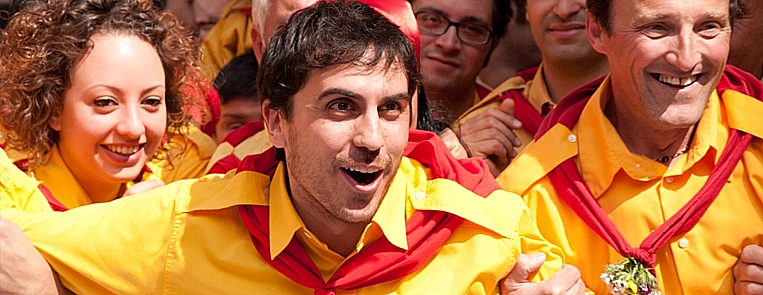
Held every May 15, the Festa dei Ceri is one of Italy’s oldest festivals, in which three teams race enormous wooden ceri crowned with the statues of Sant’Ubaldo, San Giorgio, and Sant’Antonio through the streets and up Monte Ingino to the basilica. The whole town takes part, the atmosphere is electric, and the three ceri are so beloved that they appear on the emblem of the Region of Umbria.
Very much so. Children love the open basket ride up the mountain, the legend of St Francis and the wolf, the fountain of the mad with its playful license, and the Christmas season spectacle. We compose family itineraries that pace the hill town’s stairs and stories so every generation stays engaged.