
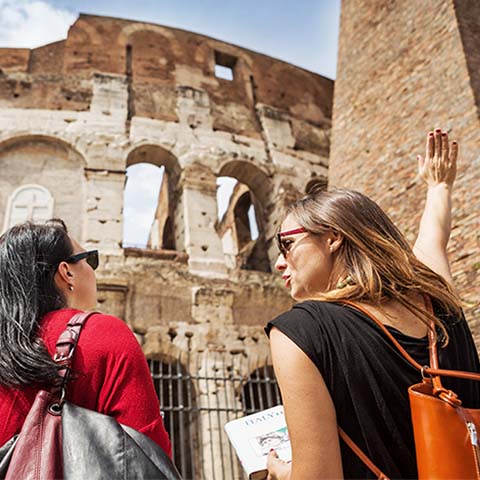
Rome, Venice and Florence Your Way 8 Days / 7 Nights
See Italy’s three iconic cities your way on an 8-day guided journey. Explore the Colosseum, the Vatican, and Florence’s cathedrals, then glide through Venice by gondola. Private driver, premium
HOME » POPULAR ITALIAN DESTINATIONS » FLORENCE TRAVEL GUIDE » FLORENCE THINGS TO DO GUIDE
Florence Travel Guide Culture History Food and Wine Things to Do Plan My Trip
About this guide: This guide to things to do in Florence was written by the Italian-born travel specialists at Trips 2 Italy, a custom tour operator that has designed hand-crafted Italian vacations since 2003. Every recommendation below reflects the same first-hand knowledge our team draws on when we build a private Florence itinerary around a traveler’s interests, dates, and pace. Read it for your research, then let us translate it into a trip designed entirely around you.
Three encounters define a first visit: the Duomo complex crowned by Brunelleschi’s dome, the Uffizi’s Renaissance galleries, and Michelangelo’s David at the Accademia. Each is world-changing, each sits within a fifteen-minute walk of the others, and each depends heavily on timing and access, which is exactly where planning shows its value.
Around the icons spreads the city that produced them: Piazza della Signoria with its open-air sculpture and the Palazzo Vecchio’s tower, the Ponte Vecchio at the river, the basilicas of Santa Croce and Santa Maria Novella, and the climb to Piazzale Michelangelo as the evening light takes the skyline. The genius of Florence, the capital of the Tuscany region, is that its essential list fits into a walkable square mile.
We arrange timed and early entries, expert guides who turn masterpieces into stories, and sequences that meet the great sites at their best hours rather than their busiest. The difference between meeting the David in the right hour and the wrong one is the difference between awe and endurance, and composing that difference is our daily work.
Two further climbs reward the energetic. The Palazzo Vecchio’s tower offers the finest view of the dome across the rooftops, and the church of Orsanmichele, ringed by its guild statues, makes the perfect pause between the icons. Florence is a vertical city disguised as a walkable one, and its towers are where the geography suddenly makes sense.
The cathedral of Santa Maria del Fiore anchors a square that compresses four centuries of ambition: Giotto’s marble bell tower, the Baptistery of San Giovanni with Ghiberti’s gilded Gates of Paradise, and above everything the terracotta mountain of Brunelleschi’s dome, completed in 1436 and still the largest masonry dome ever built.
The climb is the signature experience. Four hundred sixty-three steps wind up between the dome’s two shells, past Vasari’s Last Judgment frescoes at close range, to a lantern-top panorama over the entire city and the hills beyond. It is unforgettable and genuinely physical, and reservations are strictly timed; the bell tower offers a slightly gentler alternative with the finest view of the dome itself.
The Opera del Duomo Museum behind the cathedral is the complex’s quiet masterpiece, holding the original Gates of Paradise panels, Donatello’s haunting Magdalene, and the Pieta Michelangelo carved for his own tomb. We sequence Duomo mornings so the climb, the museum, and the square itself build on each other, with skip-the-line access arranged throughout.
Give the Baptistery its own unhurried minutes. The oldest building on the square, its ceiling blazes with thirteenth-century mosaics of the Last Judgment that Dante knew by heart, and its three sets of bronze doors, Ghiberti’s Gates of Paradise chief among them, are a history of Renaissance sculpture told in panels. The originals wait in the Opera del Duomo Museum, close enough to compare within the hour.
The Uffizi rewards strategy more than stamina: Botticelli’s Birth of Venus and Primavera, Leonardo’s Annunciation, and Titian’s Venus of Urbino anchor a collection that repays two focused hours with a storyteller over five exhausted ones alone. At the Accademia, the David deserves unhurried minutes, and Michelangelo’s unfinished Prisoners, straining out of their marble along the approach, are for many travelers the deeper revelation.
The second tier would headline any other city. The Bargello holds Donatello’s David and the room where Renaissance sculpture was born, San Marco keeps Fra Angelico’s frescoed cells in their original hush, the Medici Chapels hold Michelangelo’s brooding tomb allegories, and the Brancacci Chapel preserves the Masaccio frescoes on which painting learned perspective. Santa Croce adds the tombs of Michelangelo, Galileo, and Machiavelli beneath Giotto’s frescoes.
We compose art itineraries with specialists who read these rooms fluently, arrange timed access so masterpieces get quiet minutes rather than crowd views, and alternate the famous with the intimate so the days build rather than blur. For serious enthusiasts, where access allows, we add conversations with curators, restorers, and scholars.
Santa Maria Novella completes the church circuit: Masaccio’s Trinity, the first painting to master true perspective, Ghirlandaio’s fresco cycles, and Alberti’s marble facade, with the historic pharmacy the Dominicans founded next door still trading in its frescoed halls. It stands two minutes from the rail station, which makes it the perfect first or last masterpiece of a Florence stay.
Cross the river and Florence changes register. The Pitti Palace, the Medici’s vast residence, holds the Palatine Gallery’s Raphaels and Titians in gilded royal apartments, and behind it the Boboli Gardens rise in terraces of cypress avenues, grottoes, and fountains, the Renaissance garden that taught Europe how to landscape, with the quieter Bardini Garden and its wisteria pergola next door.
The quarters of Santo Spirito and San Frediano are the city’s living workshop, where gilders, bookbinders, silversmiths, and leather artisans work at benches inherited through generations. Piazza Santo Spirito, ringed by its market and cafes beneath Brunelleschi’s last church, keeps the neighborhood rhythm travelers fall in love with, and we arrange studio visits here that no ticket window sells.
Finish the quarter uphill. The lanes of San Niccolo climb past tower gates to Piazzale Michelangelo, the terrace built in 1869 whose panorama defines the city’s image, and a few minutes higher stands San Miniato al Monte, the green-and-white Romanesque church whose sunset view, with monks’ chant drifting from the interior, is for many travelers the single finest moment in Florence.
The Vasari Corridor, the Medici’s private elevated passage running from the Palazzo Vecchio over the Ponte Vecchio to the Pitti Palace, lets travelers walk the dukes’ own commute above the city when access allows, and it is among the most requested arrangements in our Florence itineraries. Even from below, tracing its windows across the bridge explains at a glance how power moved through Renaissance Florence.
Fiesole is the classic escape: the Etruscan hill town twenty minutes above the city, with its Roman theater, monastery walks, and long views back over the dome and the valley. The gardens make a second strategy, from the Bardini’s wisteria tunnel to the rose garden below Piazzale Michelangelo, and the quarter of Sant’Ambrogio offers the city’s most local morning, its market and cafes almost untouched by tourism.
Timing is the other secret. The Duomo square belongs to the city at dawn, the great churches are contemplative at opening hour, and the Oltrarno’s streets return to their workshops by late afternoon. Even the Uffizi has its quiet hours, and we build itineraries around them deliberately.
Our Florence days alternate the celebrated with the quiet on purpose, because the alternation is what keeps a trip feeling like discovery rather than accomplishment. The travelers who fall hardest for Florence are almost always the ones whose itineraries gave them one hour nobody they know has ever taken.
For the gentlest hour in the city, take to the water. Traditional wooden boats still pole quietly along the Arno at dusk, sliding beneath the Ponte Vecchio as the goldsmiths’ windows light up, and the view of the city from its river remains the one most visitors never see. We arrange these evenings in season, often paired with an aperitivo on a terrace above the far bank.
Evening is when Florence exhales. The passeggiata fills the marble streets between the Duomo and the river, the aperitivo hour opens across the piazzas with a spritz or a glass of Chianti and generous accompaniments, and the historic wine windows pour glasses through palace walls as they did four centuries ago. Sunset belongs to the high terraces, Piazzale Michelangelo above all, where the whole city turns gold across the Arno.
Culture keeps evening hours too. The Maggio Musicale season brings opera and concerts to the city’s stages, churches host candlelit performances in the acoustics they were built for, and summer adds open-air cinema and festivals along the riverbanks. Dinner then takes over as the evening’s true event, from family trattorie to celebrated tasting rooms, and it will not be hurried.
For couples especially, we compose Florence evenings as carefully as its days: a private terrace aperitivo, a sunset arranged from the right vantage, an after-hours gallery moment where access allows, and the table that suits the night. It is one reason the city anchors so many of the Italian honeymoons we design.
Evening is also when the gelato ritual reaches its full civic seriousness. The passeggiata pauses at the gelateria the way other cities pause at a bar, flavors are debated with genuine feeling, and the Buontalenti cream named for the Medici court designer is the connoisseur’s test of a house. Joining the debate, cone in hand, on a warm marble street is Florence at its most companionable.
The Chianti hills come first: a day of family wine estates, castle cellars, and hilltop villages beginning half an hour from the city, with a long lunch among the vines at its center. Siena answers with the shell-shaped Campo and its striped cathedral, San Gimignano raises its medieval towers above vineyard country, and the pairing of Lucca’s tree-topped walls with Pisa’s Field of Miracles fills a graceful day to the west.
Active travelers can reach further: e-bike rides through the wine roads, walks along stretches of the Via Francigena pilgrim route between hill towns, truffle hunts in the autumn woods, and hot air balloon mornings over the Tuscan valleys, each returning to the city by evening. With a private driver, the region composes itself around your interests rather than a bus schedule.
How far to reach depends on the trip’s rhythm, and that judgment is our craft. We build Florence excursions into family vacations to Italy and every kind of custom trip to Italy, sequencing each day so it refreshes the journey rather than crowding it. Florence rewards travelers who resist the urge to see everything, and we design itineraries that make that restraint feel like luxury.
Florence deserves more than a template. Since 2003, Trips 2 Italy has designed private Italian vacations one traveler at a time, hand selecting every experience based on what you tell us rather than fitting you into a predefined package. Our Italian-born team plans Florence with the knowledge of people who call Italy home, from the corridors of the Uffizi to the Chianti hills at the city’s doorstep, and we remain at your side throughout your trip with 24/7 assistance. Tell us how you imagine Florence, and we will craft the itinerary that matches it.
See Italy’s three iconic cities your way on an 8-day guided journey. Explore the Colosseum, the Vatican, and Florence’s cathedrals, then glide through Venice by gondola. Private driver, premium
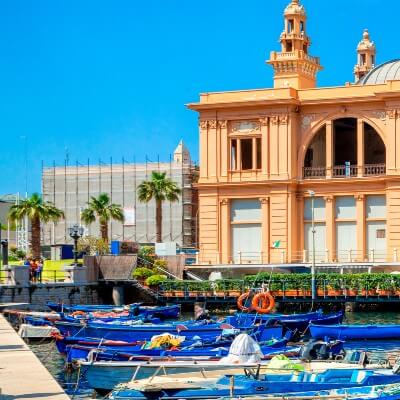
A romantic 12-day journey through southern Italy featuring charming towns, candlelit piazzas, ancient wonders, and breezy seaside escapes from Lecce to Bari, with experiences designed for unforgettable moments together. Starting from $7,844 per person
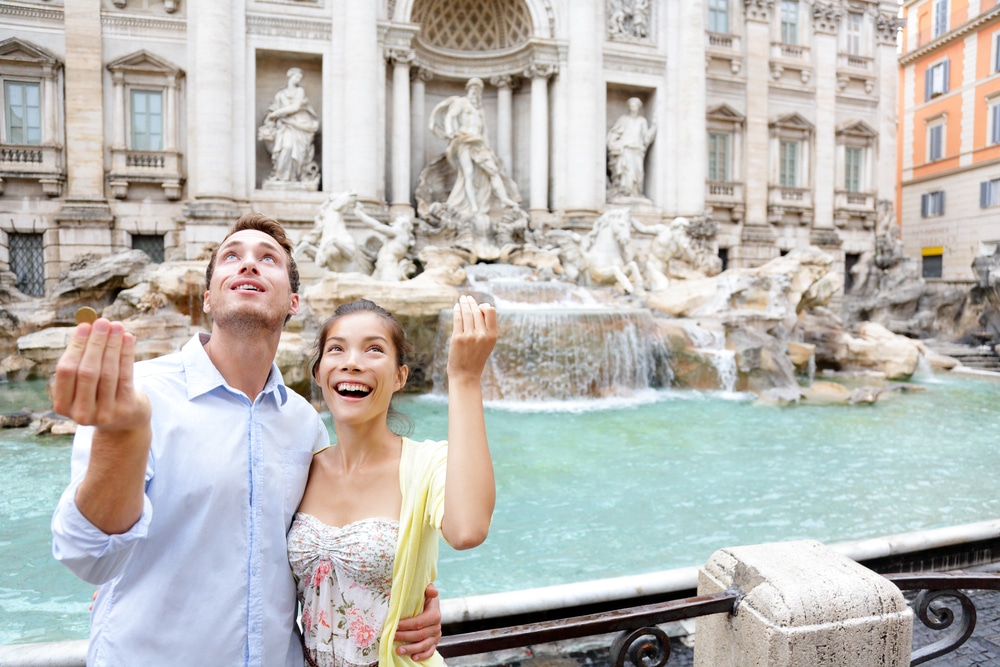
Embark on an unforgettable 11-day honeymoon through northern Italy, where each destination reveals a new chapter of romance and discovery. From Venice’s enchanting canals and timeless artistry, to the
The Renaissance trio of Brunelleschi’s dome, the Uffizi, and Michelangelo’s David defines a first visit, followed closely by an Oltrarno afternoon and the sunset from Piazzale Michelangelo. All of it depends on timing and access, which is why Trips 2 Italy arranges timed entries, early hours, and expert guides as the foundation of every Florence itinerary.
For most travelers, yes: 463 steps wind between the dome’s two shells past Vasari’s frescoes to a panorama over the entire city, and the climb itself is a lesson in the structure’s audacity. Entries are strictly timed and sell out, so we reserve them well ahead; Giotto’s bell tower is a fine alternative with the best view of the dome itself.
Reserve timed entries well in advance, visit at opening or in the late afternoon, and give each collection focused hours rather than a full exhausting day. We arrange both museums with expert guides who turn the rooms into a story, which consistently transforms how travelers remember them.
The Pitti Palace and Boboli Gardens, the artisan workshops of Santo Spirito and San Frediano, the neighborhood piazzas, and the climb through San Niccolo to Piazzale Michelangelo and San Miniato al Monte. Trips 2 Italy arranges studio visits with master artisans here, an experience no ticket window sells.
The Chianti wine country leads, thirty minutes from the city, followed by Siena, San Gimignano, and the Lucca and Pisa pairing to the west. Autumn adds truffle hunting and harvest visits. With a private driver arranged by our specialists, each returns you to Florence in time for the passeggiata.
Piazzale Michelangelo is the classic panorama, and San Miniato al Monte just above it adds Romanesque beauty and evening chant with the same golden view. Rooftop terraces along the Arno offer the intimate version with a glass in hand, and we build Florence evenings around whichever suits the traveler.