Parma History Guide

HOME » POPULAR ITALIAN DESTINATIONS » PARMA TRAVEL GUIDE » PARMA HISTORY GUIDE

Parma Travel Guide        Culture        History        Food and Wine        Things to Do        Plan My Trip

About this guide: This guide to the history of Parma was written by the Italian-born travel specialists at Trips 2 Italy, a custom tour operator that has designed hand-crafted Italian vacations since 2003. Every recommendation below reflects the same first-hand knowledge our team draws on when we build a private Parma itinerary around a traveler’s interests, dates, and pace. Read it for your research, then let us translate it into a trip designed entirely around you.

How Did Parma Begin?

Parma was founded by Rome in 183 BC as a colony on the newly built Via Aemilia, the great road that still runs through the city’s heart and still carries its name in the region around it. Two thousand settlers received plots along the stream the city was named for, and the grid they laid out survives beneath the modern center, with Piazza Garibaldi occupying the site of the Roman forum.

The colony prospered on the road. Positioned in the western reaches of what is now the Emilia Romagna region, Parma commanded the passage between the Po plain and the Apennine passes toward the sea, a geography that would define its fortunes in every century that followed. Roman Parma earned the nickname Chrysopolis, the golden city, a name preserved in Byzantine sources and cherished by the Parmigiani ever since.

The empire’s collapse brought the usual procession of Goths, Byzantines, and Lombards, and then the Franks, under whom Parma’s bishops rose to govern the city. By the eleventh century the bishop’s Parma was a power in imperial politics, producing two antipopes and taking the emperor’s side in the great quarrels of the age, a taste for consequence that a small city never quite lost.

Traces of the ancient city still surface. The Archaeological Museum in the Pilotta, among the oldest in Italy, keeps the bronzes, mosaics, and the famous Tabula Alimentaria of nearby Veleia, and the street plan of the center remains the Roman surveyor’s work. Walking it with a historian who can peel back the layers turns an elegant shopping street into two thousand years of continuous habitation.

What Shaped Medieval Parma?

The Middle Ages gave Parma its face. After a fire damaged the earlier church, the great Romanesque cathedral rose through the late eleventh century and was consecrated in 1106, and in 1178 Benedetto Antelami carved into it his Deposition, a relief whose tenderness announced a new age of Italian sculpture. In 1196 Antelami began the Baptistery, an octagon of pink Verona marble that took half a century to complete and remains the city’s signature.

Around these buildings, Parma lived the classic drama of the Italian commune: merchant prosperity on the Via Emilia, the founding of a university whose origins reach the eleventh century, and ferocious politics. In 1248 the city achieved European fame when its citizens, defending their commune against the emperor Frederick II, stormed out and destroyed the wooden city he had built for the siege, capturing his treasury and his crown.

The communal centuries closed as they did across the plain, with noble houses contending for control. The Visconti and then the Sforza of Milan held the city, the French took their turn, and in 1521 Parma passed to the Papal States, a transfer that set the stage for the dynasty that would give the city its longest chapter.

The university deserves its own line in the ledger. Imperial and papal privileges gave Parma’s schools standing across Europe, law and medicine drew students over the Apennine passes, and the institution’s continuous life since the Middle Ages places it among the oldest universities in the world. Its presence explains a certain argumentative liveliness the city has never lost, in politics, in music, and above all at the table.

How Did the Farnese Dukes Transform Parma?

In 1545 Pope Paul III, born Alessandro Farnese, carved the Duchy of Parma and Piacenza out of papal territory for his son Pier Luigi, founding a state that would last three centuries. The Farnese made Parma a capital, and capitals require scenery: the colossal brick Palazzo della Pilotta rose from the 1580s, the Parco Ducale had already been laid out as the family’s garden in 1561, and the court collected paintings with dynastic appetite.

The dynasty’s most theatrical gesture came in 1618, when Duke Ranuccio I ordered the Teatro Farnese built inside the Pilotta, a wooden theater of overwhelming scale raised to impress a visiting Medici. Inaugurated in 1628 with festivities that flooded the stage for a mock naval battle, it stands as one of the founding rooms of modern theater design, lovingly rebuilt after a bombing raid struck it in 1944.

The Farnese line ended in 1731, and its last great act shaped two cities: when Charles of Bourbon, son of the last duke’s sister Elisabetta Farnese, became king in Naples, the family’s collections traveled south with him. The duchy passed to the Bourbons of Parma, who rebuilt the ducal palace at Colorno into a little Versailles and kept the small capital polished until Napoleon’s armies redrew the map.

What Did Maria Luigia Bring to Parma?

After Napoleon’s fall, the Congress of Vienna gave the duchy to his second wife, Maria Luigia of Austria, and from 1816 until her death in 1847 she gave Parma the reign it still speaks of with affection. The duchess built bridges and hospitals, endowed charities, championed the arts, and completed the Teatro Regio in 1829, the opera house that became the city’s soul.

She is remembered in the details as much as the monuments. Maria Luigia adored the Parma violet, and the flower became the city’s signature in perfume and candied form; she cultivated the theater, sponsored the young musicians of the duchy, and conducted her small court with a domesticity that endeared her to subjects who had expected an empress’s hauteur. The Glauco Lombardi Museum preserves her world, from court gowns to personal keepsakes.

Her era also incubated the duchy’s greatest son. Giuseppe Verdi, born at Roncole di Busseto in 1813, received his first support from the musical institutions of Maria Luigia’s Parma, and his rise from the fog country of the Bassa to the world’s stages remains the region’s proudest story. The duchess died in 1847; within fourteen years the duchy she had governed was gone, absorbed into a new Italy Verdi’s music helped to imagine.

Her monuments repay unhurried visits: the Regio’s gilded horseshoe, the keepsakes and court portraits of the Lombardi museum, and the violets still candied by the city’s pastry shops each spring. We thread them into a single Maria Luigia morning for travelers charmed, as Parma itself was, by the empress who chose to be a duchess.

How Did Parma Enter Modern Italy?

The duchy’s final years were brief and turbulent, and in 1859 and 1860 Parma joined the plebiscites that carried Emilia into the Kingdom of Italy. The city traded a court for a role as a provincial capital of appetite and industry, and it played the part brilliantly: the food crafts of its valleys industrialized into a modern sector, and in 1877 a local pasta and bread business began the growth that would make Barilla a household name across the world.

The twentieth century tested the city. In August 1922, the working-class Oltretorrente raised barricades and turned back a massed fascist expedition, an episode of resistance Parma still commemorates, and Allied bombing in 1944 struck the Pilotta and the Teatro Farnese, wounds the city repaired with patient exactness. Liberation came in April 1945, and the postwar decades rebuilt prosperity on the oldest foundation of all, the table.

Modern Parma wears its history lightly and profitably. The European Food Safety Authority chose the city for its headquarters in 2003, UNESCO named it a Creative City of Gastronomy in 2015, and in 2020 and 2021 it served as Italian Capital of Culture, a designation the city used to restore and rethink its monuments rather than simply celebrate them.

Food history became institutional history as well. The Parmigiano Reggiano consortium formalized in 1934, the prosciutto consortium followed in 1963, and their disciplines turned ancestral habits into protected law, a very Parmesan way of modernizing: change the paperwork, never the craft. The city’s fairs and food industries grew around them, making the province a world capital of the science of eating well.

Which Places Bring Parma's History to Life?

Piazza Duomo compresses the medieval chapter into a single view: the cathedral with Antelami’s Deposition and Correggio’s dome, the pink Baptistery with its cycle of the months, and the bishop’s palace closing the square. The Pilotta holds the Farnese age entire, from the breathtaking wooden Teatro Farnese to the Galleria Nazionale, where the dynasty’s taste and the duchess’s acquisitions hang together.

Maria Luigia’s Parma is best met at the Teatro Regio, ideally from a seat during the season, and at the Glauco Lombardi Museum, where her violets, portraits, and court life are preserved with real tenderness. The Oltretorrente keeps the popular city’s memory, from Toscanini’s birthplace to the streets of the 1922 barricades, and the university quarter recalls nine centuries of students.

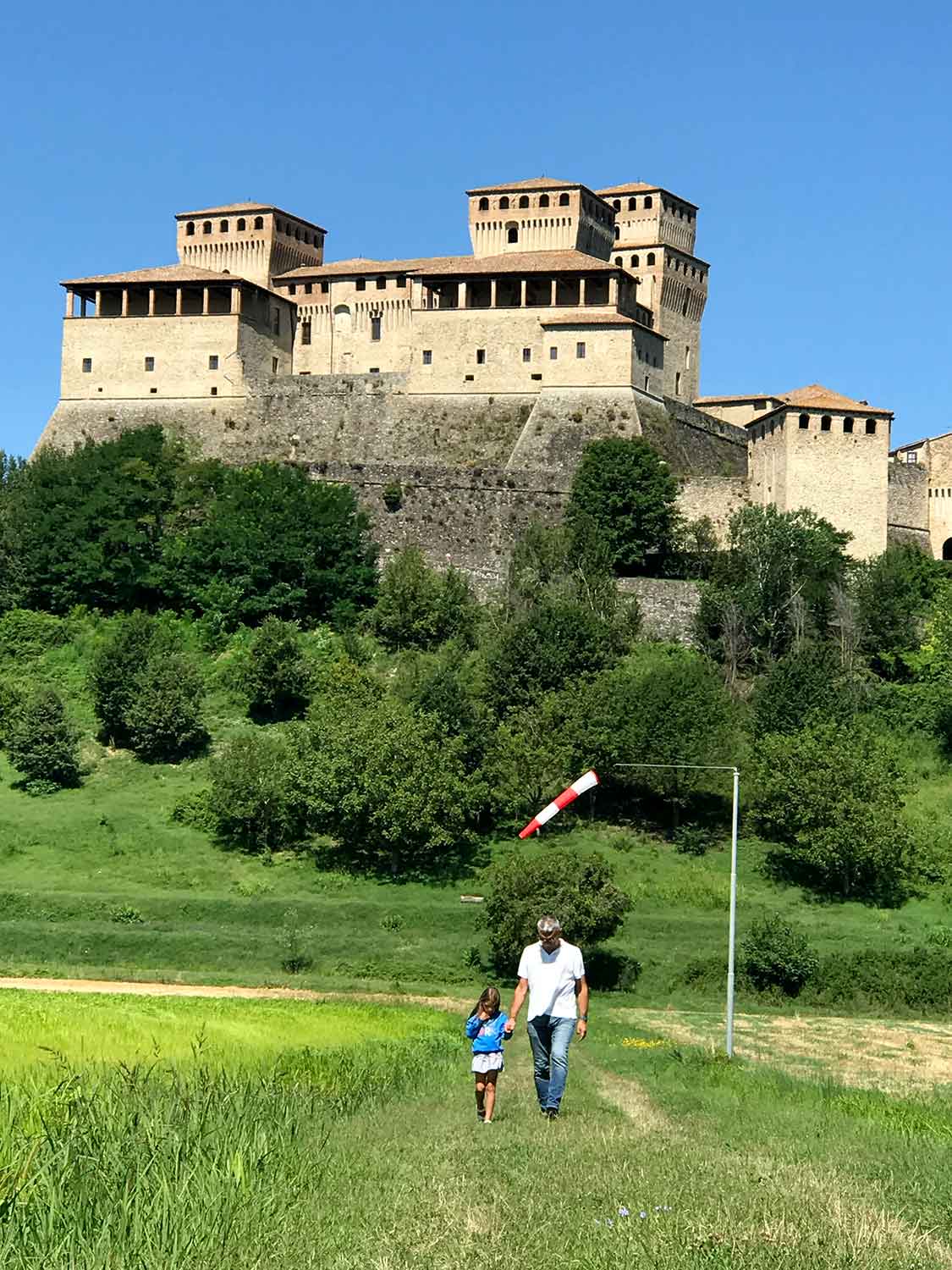
The province extends the story. Torrechiara, raised by Pier Maria Rossi between 1448 and 1460, is among the most perfect castles in Italy, its Camera d’Oro a monument to a knight’s devotion; Fontanellato’s moated Rocca Sanvitale shelters a room frescoed by Parmigianino; Colorno’s ducal palace recalls the Bourbon court; and Busseto keeps Verdi’s whole world. We sequence these places so the centuries arrive as a story rather than a shuffle, with historian guides chosen for their narrative gift.

How Is Parma Preserving Its Heritage?

Parma treats preservation as a civic instinct. The Capital of Culture years financed the reorganization of the Pilotta complex, whose galleries, library, and theater now read as a single narrative of the ducal state, and the cathedral, Baptistery, and Camera di San Paolo are maintained by institutions that regard Antelami and Correggio as ongoing responsibilities rather than finished business.

The edible heritage is protected with equal rigor. The consortia of Parmigiano Reggiano and Prosciutto di Parma enforce production disciplines centuries in the making, the culatello families of the Bassa defend a craft that depends on fog and patience, and the castles of the duchy are kept alive by a provincial network that opens them to visitors rather than sealing them away.

For travelers, this means Parma’s past is unusually intact and unusually welcoming. We arrange encounters with the preservation world itself where access allows, from restoration specialists in the galleries to the guardians of the aging cellars, as part of our cultural tours across Italy. History in Parma is a working enterprise, and meeting its custodians is one of the city’s quiet privileges.

Ready to Begin Planning Your Parma Vacation?

Parma deserves more than a template. Since 2003, Trips 2 Italy has designed private Italian vacations one traveler at a time, hand selecting every experience based on what you tell us rather than fitting you into a predefined package. Our Italian-born team plans Parma with the knowledge of people who call Italy home, from Correggio’s painted dome to the aging cellars of Langhirano and the castles of the old duchy, and we remain at your side throughout your trip with 24/7 assistance. Tell us how you imagine Parma, and we will craft the itinerary that matches it.

Explore Our Parma Vacation Itineraries

Frequently Asked Questions About the History of Parma

Rome founded Parma as a colony in 183 BC on the Via Aemilia, the great road that still crosses the city center. The Roman grid survives beneath the modern streets, Piazza Garibaldi sits on the old forum, and the city’s Byzantine-era nickname Chrysopolis, the golden city, is still remembered with pride.

The Farnese were the papal family for whom the Duchy of Parma and Piacenza was created in 1545, and they ruled it for nearly two centuries. They built the Palazzo della Pilotta and the astonishing wooden Teatro Farnese, laid out the Parco Ducale, and assembled art collections that later traveled to Naples with their Bourbon heirs. Trips 2 Italy arranges Pilotta visits with historian guides who bring the dynasty vividly to life.

Maria Luigia, Marie Louise of Austria, was Napoleon’s second wife, granted the duchy after his fall. She ruled from 1816 to 1847, built the Teatro Regio, endowed bridges, hospitals, and charities, and made the Parma violet the city’s signature. Parma remembers her as its most beloved ruler, and the Glauco Lombardi Museum preserves her world.

The Teatro Farnese is the vast wooden theater Duke Ranuccio I ordered built inside the Palazzo della Pilotta in 1618, inaugurated in 1628 with a flooded-stage naval spectacle. Damaged by bombing in 1944 and meticulously rebuilt, it is one of the founding monuments of modern theater design and among the most moving rooms in Italy.

Verdi was born in 1813 at Roncole di Busseto, in the Po lowlands of Parma’s province, and the musical institutions of the duchy supported his earliest training. Busseto preserves his theater and student haunts, and each October the Festival Verdi fills Parma and the composer’s home towns with his operas. Trips 2 Italy arranges Verdi pilgrimages with musicologist guides and festival tickets.

Torrechiara, built between 1448 and 1460 above the Parma valley, is among Italy’s most beautiful castles, with its frescoed Camera d’Oro. Fontanellato’s moated Rocca Sanvitale holds a room painted by Parmigianino, and Colorno’s ducal palace recalls the Bourbon court. We weave the castles of the duchy into history-focused days with private drivers and expert guides.