Parma Travel Guide

HOME » POPULAR ITALIAN DESTINATIONS » PARMA TRAVEL GUIDE

Parma Travel Guide        Culture        History        Food and Wine        Things to Do        Plan My Trip

About this guide: This Parma travel guide was written by the Italian-born travel specialists at Trips 2 Italy, a custom tour operator that has designed hand-crafted Italian vacations since 2003. Every recommendation below reflects the same first-hand knowledge our team draws on when we build a private Parma itinerary around a traveler’s interests, dates, and pace. Read it for your research, then let us translate it into a trip designed entirely around you.

What Makes Parma One of Italy's Most Elegant Small Cities?

Parma carries itself like a small capital, because for three centuries it was one. The city that served the Farnese dukes and later the Habsburg duchess Maria Luigia still moves with ducal composure: golden facades along cobbled streets, a Romanesque cathedral crowned by one of the most audacious frescoes of the Renaissance, an opera house whose audience is considered the most demanding in Italy, and a table that gave the world Parmigiano Reggiano and Prosciutto di Parma.

The city sits on the ancient Via Emilia in the western reaches of the Emilia Romagna region, between Milan and Bologna, at the head of the valleys that produce its celebrated cheese and ham. In 2015 UNESCO named Parma a Creative City of Gastronomy, and in 2020 and 2021 it served as Italian Capital of Culture, twin honors that describe the place precisely: a city where art and appetite have never been separate subjects.

What surprises travelers most is the harmony of it all. The same evening can hold Correggio’s dome, an aperitivo under the plane trees of the Parco Ducale, and a performance at the Teatro Regio, all within a fifteen minute walk. Parma receives fewer visitors than the famous art cities, so its beauty is still experienced at local rhythm rather than through a crowd.

Our specialists have designed Parma itineraries for two decades, for travelers drawn by the music, the painting, the castles, or above all the table. This guide distills that experience, and every trip we build from it is composed by hand around what you tell us.

What Is the Geography and Setting of Parma?

Parma lies on the southern edge of the Po plain, where the Apennine foothills begin their rise toward Tuscany. The torrente Parma, the stream that gives the city its name, divides the historic center from the Oltretorrente district on its western bank, and the Roman Via Emilia, laid out in 187 BC, still crosses the city as its central artery, linking it to Piacenza in one direction and Reggio Emilia, Modena, and Bologna in the other.

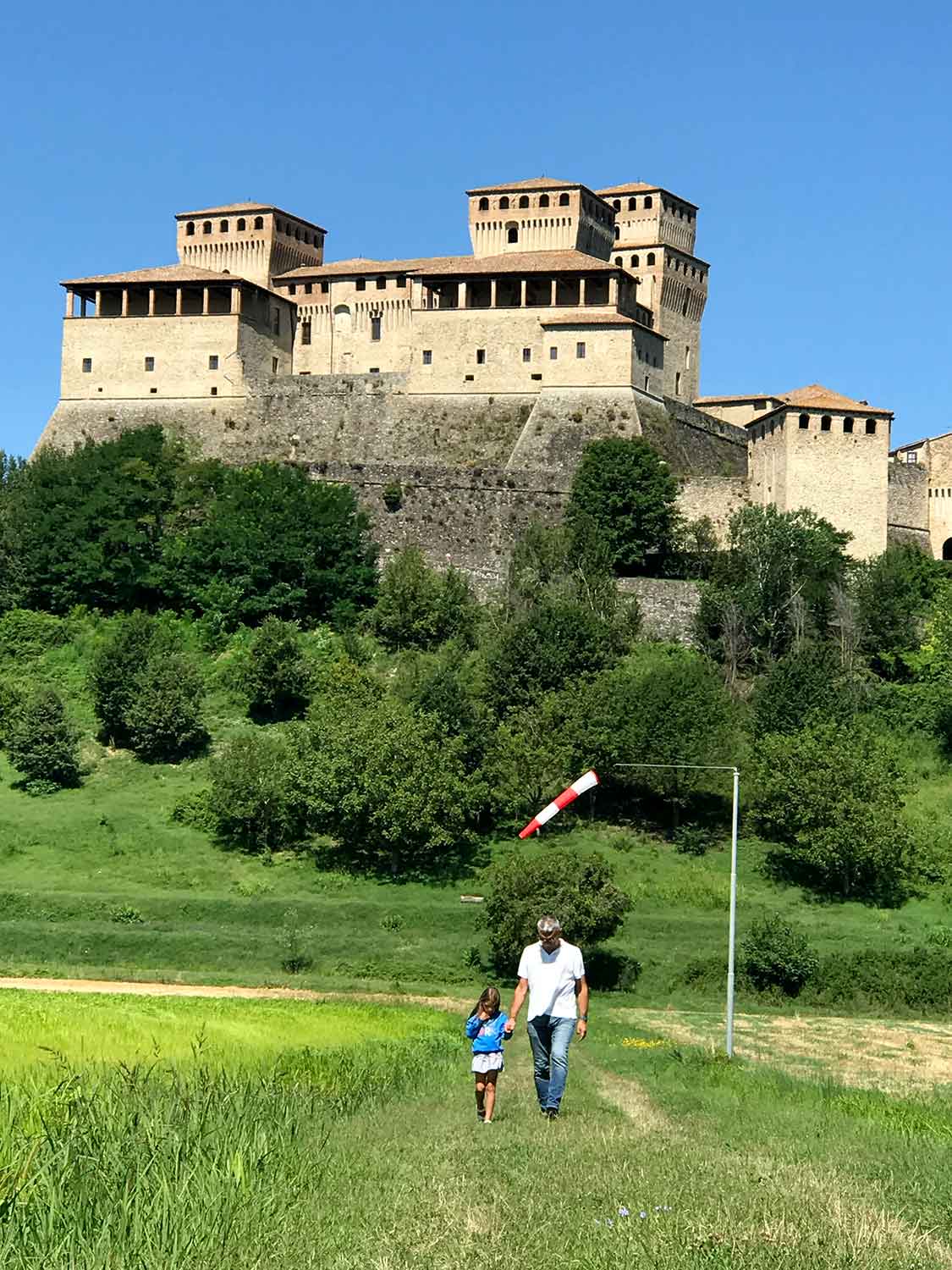
The province is the destination’s second half. South of the city, the valleys of the Parma, Baganza, and Taro rivers climb into hill country strung with the castles of the old duchy, Torrechiara and Felino among them, and the town of Langhirano, where the sweet air descending from the Apennines cures the world’s most famous ham. North, toward the Po river, spreads the Bassa, a flat land of fog, poplars, and small towns where culatello ages in humid cellars and Giuseppe Verdi was born.

The climate follows the moods of the plain. Summers are hot and animated, winters bring the atmospheric fog that the culatello makers of the lowlands genuinely depend upon, and spring and autumn offer the mild golden weather in which the city and its castle country are at their absolute best. Each season sets a different table, and we plan accordingly.

For travelers, the practical meaning is choice. A single Parma base places the city’s art, the ham and cheese valleys, the castle hills, and the Verdi lowlands all within a forty five minute radius, so each day can strike a different note without changing hotels. We design Parma stays around exactly that geometry, pairing city mornings with countryside afternoons and returning you to the same piazza in time for the evening passeggiata.

When Is the Best Time of Year to Visit Parma?

Autumn is the season Parma seems designed for. From late September through November the surrounding hills yield porcini and the prized black truffle of Fragno, the vendemmia animates the Lambrusco and Malvasia vineyards, and October brings the Festival Verdi, when the Teatro Regio and the composer’s home towns fill with performances that draw opera lovers from around the world. September also hosts the September Gastronomy celebrations, when the city honors its ham and cheese in the piazzas.

Spring runs a close second. April, May, and early June bring warm walking weather, the Parco Ducale in full leaf, and the violets that Maria Luigia made the city’s floral signature. Winter has quieter rewards: the opera and concert season in full voice, anolini in brodo steaming on every table, and the fog-wrapped Bassa at its most atmospheric for travelers drawn to the culatello cellars.

Summer is warm on the plain, but the city answers with open-air concerts and long evenings in the piazzas, and the castle country of the foothills stays noticeably cooler. When we plan a Parma itinerary, your dates become an instrument: we time dairy visits, ham cellars, and truffle experiences to the season, and we reserve Festival Verdi performances many months ahead.

How Many Days Should I Spend in Parma?

Two full days cover the essential city in comfort: the cathedral and Correggio’s dome, the pink marble Baptistery, the Palazzo della Pilotta with the Teatro Farnese and the Galleria Nazionale, the food streets around Via Garibaldi, and a proper Parmesan lunch built around anolini or tortelli d’erbetta. The center is compact, flat, and unhurried, so sightseeing here is unusually gentle on the traveler.

A third day belongs to the food valleys: a Parmigiano Reggiano dairy at dawn, the ham cellars of Langhirano before lunch, and the castle of Torrechiara in the golden afternoon light. A fourth opens the Bassa, with a culatello cellar visit near Zibello and the Verdi country around Busseto, or the moated castle of Fontanellato and the ducal palace of Colorno for travelers drawn to the duchy’s grander residences.

Parma also excels as a base of three or four nights for exploring the region, with Bologna, Modena, and Reggio Emilia strung along the same rail line and Milan under an hour and a half away. Because every Trips 2 Italy itinerary is designed by hand, we weigh Parma against the other chapters of your Italian journey and give it the nights that serve the whole trip best.

Parma also rewards the unhurried. The center asks little walking effort, the province unfolds by private car, and evenings resolve into music and long dinners rather than logistics. Travelers who give the city three nights instead of one consistently tell us it became the chapter of their journey they would most gladly relive, which is exactly the effect a well proportioned itinerary is designed to produce.

Which Areas of Parma Should You Know?

Everything radiates from Piazza Duomo, one of the most perfect medieval squares in Italy, where the cathedral, the octagonal Baptistery, and the bishop’s palace compose an ensemble that has barely changed in eight centuries. A few streets south lies Piazza Garibaldi, the civic heart on the line of the old Roman forum, with the Governor’s Palace and the cafes where the city takes its pulse.

Northwest rises the Palazzo della Pilotta, the vast brick complex the Farnese dukes raised in the 1580s, today housing the Teatro Farnese, the Galleria Nazionale, the Palatine Library, and the archaeological museum. Beyond it, across the stream, spreads the Oltretorrente, the old popular quarter where Arturo Toscanini was born, and the Parco Ducale, the green retreat the Farnese laid out in 1561.

The province is part of the address. Langhirano and the Parma valley mean ham and castles, the Bassa toward the Po means culatello and Verdi, and Colorno’s ducal palace presides over the northern plain. For most travelers we recommend sleeping within the historic center, a short walk from Piazza Duomo, and matching the quarter to the traveler is one of the first decisions we make together.

How Do You Get Around Parma?

On foot, almost entirely. The historic center is flat, compact, and largely closed to traffic, so no walk between the major sights takes more than fifteen minutes, and the local habit of cycling everywhere tells you how gentle the distances are. The evening passeggiata along Strada della Repubblica and Via Farini is a pleasure in itself.

For everything beyond the walls, we arrange private drivers and transfers. The province’s treasures are scattered by nature, with the dairies working at dawn across the countryside, Langhirano twenty minutes south, Torrechiara just beyond it, and the culatello cellars and Verdi towns forty minutes north in the Bassa, so a knowledgeable driver turns a complicated day into a seamless one. A driver also means every glass of Lambrusco and Malvasia can be enjoyed without a second thought.

Arrivals are equally simple. Parma sits on the main rail line between Milan and Bologna, and both Milan’s and Bologna’s international airports lie within comfortable reach by road, where travelers in our care are met at the arrivals hall by a private driver. Every arrival, departure, and excursion in a Trips 2 Italy itinerary is arranged in advance and supported around the clock, which matters in a city whose finest experiences, a dawn dairy, a ham cellar, a box at the Regio, are appointments rather than attractions.

How Do We Weave Parma Into a Complete Italian Itinerary?

Parma sits in the middle of northern Italy’s best-connected corridor. Milan lies under an hour and a half away, Bologna under an hour, Florence about two hours, and Venice within easy reach for the next chapter of a journey. Within the region, Modena, Reggio Emilia, Ferrara, and Ravenna extend the story of Emilia Romagna in every direction, and the Cinque Terre coast is a scenic drive across the Apennines.

The occasion shapes the composition. For travelers who plan around the table, Parma anchors an Italian wine and culinary journey with cheese dairies, ham cellars, and truffle woods at its doorstep. Opera lovers build October around the Festival Verdi, couples fold the city into an Italian honeymoon as the flavorful interlude between Venice and Florence, and for those composing something larger, Parma becomes a chapter in a custom trip to Italy designed entirely from what you tell us.

This guide is one of five we have written on the city. Continue with our Parma culture guide, Parma history guide, Parma food and wine guide, and Parma things to do guide, or widen the lens with our Emilia Romagna travel guide to see the region around the city.

Ready to Begin Planning Your Parma Vacation?

Parma deserves more than a template. Since 2003, Trips 2 Italy has designed private Italian vacations one traveler at a time, hand selecting every experience based on what you tell us rather than fitting you into a predefined package. Our Italian-born team plans Parma with the knowledge of people who call Italy home, from Correggio’s painted dome to the aging cellars of Langhirano and the castles of the old duchy, and we remain at your side throughout your trip with 24/7 assistance. Tell us how you imagine Parma, and we will craft the itinerary that matches it.

Explore Our Parma Vacation Itineraries

Frequently Asked Questions About Traveling to Parma

Autumn leads the calendar, with truffle and porcini season in the hills, the grape harvest, September’s gastronomy celebrations, and the Festival Verdi filling the Teatro Regio each October. Spring offers mild weather and the Parco Ducale in full leaf, while winter brings the opera season and the atmospheric fog of the culatello country. The specialists at Trips 2 Italy align your dates with what the city does best in that season.

Two full days cover the historic center, from the cathedral and Baptistery to the Palazzo della Pilotta. A third day opens the food valleys, with a dawn dairy visit, the ham cellars of Langhirano, and the castle of Torrechiara, and a fourth reaches the culatello cellars and Verdi towns of the Bassa. Many travelers use Parma as a three or four night base for the wider region.

Parma offers a remarkable concentration of art, music, and gastronomy at a local rhythm, with Correggio’s dome, a UNESCO Creative City food culture, and Italy’s most passionate opera house all within a walkable center. It rewards travelers who want depth and authenticity, and it pairs beautifully with Milan, Bologna, Florence, and Venice in a longer journey.

Not in the city, which is flat, compact, and best explored on foot or by bicycle. For the dairies, ham cellars, castles, and Verdi country scattered across the province, we arrange private drivers who know the valleys intimately, which lets every tasting be enjoyed and turns the countryside into scenery rather than navigation. Every transfer in a Trips 2 Italy itinerary is arranged in advance.

Parma is the home of Parmigiano Reggiano and Prosciutto di Parma, joined by culatello di Zibello from the Po lowlands, anolini in brodo, tortelli d’erbetta, and torta fritta with salumi. UNESCO named the city a Creative City of Gastronomy in 2015, and its dairies, ham cellars, and family tables remain the best places in the world to understand these foods.

Few destinations on earth match it. Within an hour of the city you can watch Parmigiano Reggiano born at dawn, walk the aging cellars of Langhirano, descend into a culatello cellar in the fog country, and hunt black truffles around Fragno in season. Trips 2 Italy composes entire culinary itineraries around Parma, built from relationships with producers we know personally.