Things To Do in Bologna

HOME » POPULAR ITALIAN DESTINATIONS » BOLOGNA TRAVEL GUIDE » BOLOGNA THINGS TO DO GUIDE

Bologna Travel Guide        Culture        History        Food and Wine        Things to Do        Plan My Trip

About this guide: This guide to things to do in Bologna was written by the Italian-born travel specialists at Trips 2 Italy, a custom tour operator that has designed hand-crafted Italian vacations since 2003. Every recommendation below reflects the same first-hand knowledge our team draws on when we build a private Bologna itinerary around a traveler’s interests, dates, and pace. Read it for your research, then let us translate it into a trip designed entirely around you.

What Belongs at the Top of Every Bologna Itinerary?

Piazza Maggiore first. The great civic square gathers the essentials into one sweep: the Basilica di San Petronio with its famously unfinished facade and the meridian line Cassini traced across its floor in 1655, the crenellated Palazzo d’Accursio, the whispering vault beneath the Palazzo del Podesta, and, in the adjoining square, Giambologna’s bronze Neptune commanding his fountain. Sit with a coffee along the edge and the city introduces itself.

A short walk east stand the Two Towers, the Asinelli and the leaning Garisenda, the surviving giants of Bologna’s medieval skyline and the emblem of the city. From there the itinerary writes itself: the Quadrilatero market lanes, the Archiginnasio with its Anatomical Theatre, and the sevenfold sanctuary of Santo Stefano, all within a few hundred sheltered meters of each other in the heart of the Emilia Romagna capital.

This is where planning shows its value. We arrange guides who turn these stones into stories, timed entries where the great sites offer them, and a sequence that follows the light and the crowds rather than fighting them. Bologna’s center is wonderfully compact, and a well-composed first day delivers more here than in almost any city in Italy.

What Is It Like to Experience the Two Towers?

The Asinelli tower rises just over 97 meters, the tallest leaning medieval tower in Italy, and its companion the Garisenda tilts so theatrically that Dante used it in the Inferno to describe a bending giant. Together they mark the crossroads where the roads from the old city gates converge, and no photograph prepares you for how improbably they hang over the rooftops when you first round the corner of Via Rizzoli.

The classic experience is the climb: nearly five hundred wooden steps winding up the Asinelli’s interior to a platform where the entire red city spreads below, from the hills of San Luca to the plain fading toward the Po. Access arrangements have varied in recent years while engineers carry out the meticulous stabilization of the Garisenda, so panoramic alternatives matter: the terrace of San Petronio, the hilltop church of San Michele in Bosco, and the sanctuary of San Luca all offer sweeping views over the rooftops.

We confirm current access when we build your itinerary, secure climbing slots when they are available, and compose the viewpoint day so you see Bologna from above in the best light regardless. It is a fine example of why a custom itinerary outperforms a checklist: the goal is the experience of the red city at your feet, and there is always a beautiful way to reach it.

Why Walk the Portico to San Luca?

The portico of San Luca is the longest in the world: 666 arches climbing unbroken for 2.3 miles from the Saragozza gate to the Sanctuary of the Madonna di San Luca on the Colle della Guardia. Built between 1674 and 1793 with contributions from the whole city, it shelters a Byzantine icon’s annual descent into Bologna, a procession observed every May since 1433, and it remains the city’s beloved walking ritual, thronged with Bolognesi taking their exercise beneath its vaults at every hour.

The walk itself is a gentle pilgrimage of about an hour uphill, the arches numbering your progress past fifteen shrine chapels, until the orange basilica appears above the treetops. From the sanctuary’s terraces the reward unrolls: the entire red city on one side and the green wave of the Apennines on the other. Inside, the revered image of the Madonna and Child draws a steady murmur of devotion that has continued for centuries.

We compose the experience to the traveler: a full walk up with a storyteller who unfolds the portico’s history arch by arch, a private transfer up and an unhurried descent on foot, or a sunset visit timed for the golden hour over the city. Walkers who want more can continue along the hill paths of the Colli Bolognesi as part of our active trips in Italy, ending, as every good Bolognese walk does, at a well-set table.

Which Museums and Churches Reward Art Lovers?

The Pinacoteca Nazionale is the essential gallery, tracing Bolognese painting from Giotto’s altarpiece through the revolution of the Carracci to Guido Reni’s luminous canvases, with Raphael’s Ecstasy of Saint Cecilia as its celebrated centerpiece. Steps away, the university museums of Palazzo Poggi display the anatomical waxes, scientific instruments, and cabinets of curiosities that made Bologna a capital of Enlightenment science.

The churches hold their own masterpieces. San Domenico shelters the tomb of Saint Dominic, a sculptural anthology with contributions from Nicola Pisano, Niccolo dell’Arca, and the young Michelangelo, while Santa Maria della Vita conceals Niccolo dell’Arca’s terracotta Lamentation, a group of grieving figures so violently expressive that it stops visitors mid-step. The Santo Stefano complex, the Seven Churches, layers courtyards, a Romanesque rotunda, and centuries of quiet into Bologna’s most atmospheric sacred space.

A quieter circuit rewards the curious: the church of San Colombano houses a celebrated collection of historic keyboard instruments, often heard in intimate concerts; the restored palaces along Via Castiglione and Via Zamboni open exhibitions in frescoed halls; and the Certosa, the monumental cemetery beyond the walls, unfolds as an open-air gallery of nineteenth-century sculpture that travelers have sought out since Byron’s day.

Modern Bologna answers with MAMbo, the city’s museum of modern art, whose collection includes the haunting still lifes of Giorgio Morandi, the most Bolognese of modern painters, and with the Archiginnasio’s historic library rooms for lovers of the book. We compose art days with historians who read these rooms fluently, arrange timed access so masterpieces get quiet minutes rather than crowd views, and match the pace to your appetite.

Where Do You Find the Quieter Side of Bologna?

Look for the water. At the Finestrella on Via Piella, a small window in a wall opens onto a surviving canal, a postcard of the hidden hydraulic city that once powered Bologna’s silk mills, and the surrounding Moline district keeps a neighborly hush a few minutes from the busiest streets. The former Jewish ghetto nearby, a knot of narrow medieval lanes, shelters artisan studios and some of the center’s most photogenic corners.

The university quarter along Via Zamboni rewards wandering, from the sculpted courtyards of its palaces to the student cafes around Piazza Verdi, and the botanical garden offers green silence a few blocks on. South of the center, the hillside climbs quickly to San Michele in Bosco, whose terrace holds the classic panorama of the red city, and the ridgeline walks of the Colli Bolognesi begin almost immediately beyond.

Quiet in Bologna is also a matter of hours: the Quadrilatero at first light as the stalls dress their windows, Santo Stefano at opening time, the porticoes of Via Santo Stefano on a Sunday morning. Because the city receives far fewer visitors than its treasures deserve, even its famous corners keep a local calm that travelers from the great tourist capitals find almost startling.

Our itineraries deliberately alternate the celebrated with the quiet, because the alternation is what keeps a trip feeling like discovery. A morning at the Pinacoteca followed by an hour in the ghetto lanes, a market walk followed by the hush of the botanical garden: this pacing is the craft behind a Bologna stay that feels effortless, and it is exactly the kind of judgment our specialists bring to every day we design.

What Do Evenings Look Like in Bologna?

Evening begins beneath the arcades with the aperitivo: a glass of sparkling Pignoletto, a plate of mortadella and crescentine, and the slow theater of the passeggiata flowing past. The lanes of the Quadrilatero turn convivial as wine bars set tables between the market stalls, and the osterie fill with the mixed company of students, professors, and families that has defined Bolognese nightlife since the Middle Ages.

The city’s cultural calendar carries the evening onward: opera and concerts at the historic Teatro Comunale, chamber music in Baroque oratories, jazz in cellar clubs, and in summer the great open-air cinema in Piazza Maggiore, when thousands settle under the stars before a vast screen in front of San Petronio. Few Italian cities offer so much substance after dark in so few walkable meters.

The seasons change the script pleasantly. Winter evenings glow inside the osterie and around the Christmas fairs, when the arcades are strung with lights and certosino appears in every pastry window, while summer moves the city outdoors until midnight, from rooftop terraces to courtyard concerts in the Bologna Estate program. Whatever the month, the portico walk home, lamplit and sheltered, is an experience travelers remember as vividly as any monument.

Dinner is the evening’s true monument, and we reserve tables suited to each night of an itinerary, from historic rooms where tortellini in brodo achieves perfection to contemporary dining that reinterprets la Grassa with modern craft. With performances secured in advance and a driver waiting after the final course, an evening in Bologna becomes exactly what it should be: unhurried, delicious, and entirely yours.

What Day Trips Pair Well With Bologna?

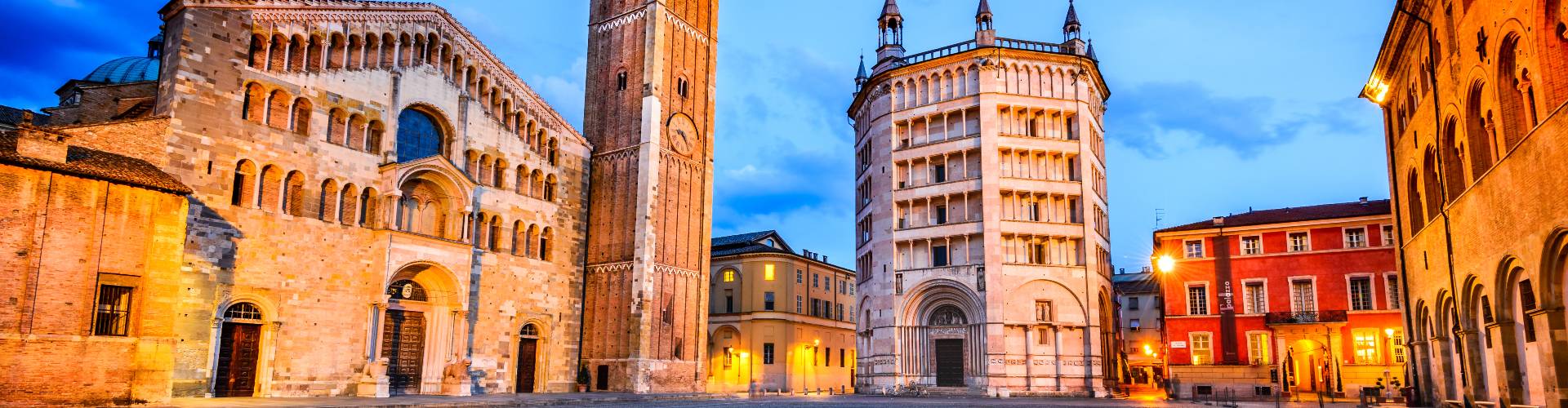
Bologna sits at the center of a wheel of remarkable spokes. Westward lie Modena, with its Romanesque cathedral and traditional balsamic vinegar lofts, and Parma, city of Parmigiano Reggiano, prosciutto, and Correggio’s frescoed domes. Eastward, Ravenna glitters with the finest early Christian and Byzantine mosaics in the Western world, and Ferrara preserves its Renaissance street plan and the moated Este castle. Every one of them is within about an hour.

The hills add their own excursions: the painted village of Dozza, whose walls are a gallery of murals above a fine regional wine cellar, the vineyards of the Colli Bolognesi, and the Apennine roads toward truffle country. Lovers of engineering make the pilgrimage through the Motor Valley, where the museums of the great Italian marques cluster between Bologna and Modena, a day we arrange with drivers who share the passion.

With Florence about thirty five minutes away and Venice around ninety by high speed rail, Bologna also serves as a serene base for grand-city days that end back beneath the quiet porticoes. How far to reach depends on the trip’s rhythm, and that judgment is our craft: as part of a custom trip to Italy, we sequence excursions so each one refreshes the journey rather than crowding it, with every transfer arranged and supported around the clock.

Ready to Begin Planning Your Bologna Vacation?

Bologna deserves more than a template. Since 2003, Trips 2 Italy has designed private Italian vacations one traveler at a time, hand selecting every experience based on what you tell us rather than fitting you into a predefined package. Our Italian-born team plans Bologna with the knowledge of people who call Italy home, from the market streets of the Quadrilatero to the hilltop sanctuary of San Luca, and we remain at your side throughout your trip with 24/7 assistance. Tell us how you imagine Bologna, and we will craft the itinerary that matches it.

Explore Our Bologna Vacation Itineraries

Frequently Asked Questions About Things to Do in Bologna

Begin in Piazza Maggiore, the civic heart, with San Petronio’s meridian line and Neptune’s fountain, then walk to the Two Towers and into the Quadrilatero market streets, and crown the visit with the portico climb to the Sanctuary of San Luca. Trips 2 Italy sequences these essentials with expert guides and timed access so the first day delivers the whole character of the city.

The climb of nearly five hundred wooden steps to the Asinelli’s panoramic platform is one of Bologna’s classic experiences, though access has varied in recent years during the careful stabilization of the neighboring Garisenda tower. We confirm current arrangements when building your itinerary and always compose a beautiful alternative panorama, from San Petronio’s terrace to the sanctuary of San Luca.

The portico of San Luca, the longest in the world, climbs 2.3 miles and 666 arches from the Saragozza gate to the hilltop sanctuary, a gentle uphill walk of about an hour. Many of our travelers walk up with a guide and descend by private transfer, or reverse the order for a sunset arrival over the red rooftops.

Modena, Parma, Ferrara, and Ravenna each lie within about an hour, offering balsamic vinegar traditions, Parmigiano Reggiano dairies, Renaissance streets, and the finest Byzantine mosaics in the West. The painted village of Dozza, the Colli Bolognesi vineyards, and the Motor Valley museums add countryside variety, and we compose each excursion with a private driver and the right specialist guide.

Very. Tower silhouettes and whispering vaults, hands-on pasta making that children adore, gelato beneath the porticoes, the canal window on Via Piella, and science collections full of globes and instruments keep every generation engaged, and the compact sheltered center makes walking easy. We compose family itineraries so history and food arrive as adventure rather than obligation.

Evenings flow from aperitivo beneath the arcades to dinner in historic osterie, then onward to opera at the Teatro Comunale, jazz cellars, or summer’s open-air cinema in Piazza Maggiore. Trips 2 Italy secures performances and tables in advance and arranges evening transfers, so the night unfolds without a single logistical thought.