
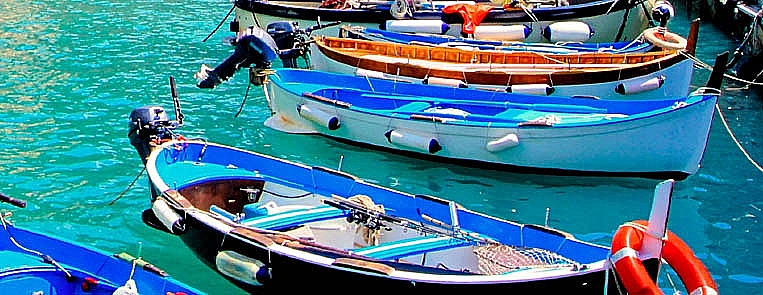
Best of Italy’s Italian Riviera, Piedmont and Aosta Valley Semi Escorted Tour
Discover the breathtaking sights of the Italian Riviera and venture through the Italian Alps surrounding Aosta Valley and Piedmont.
HOME » POPULAR ITALIAN DESTINATIONS » ASTI TRAVEL GUIDE » ASTI HISTORY GUIDE
About this guide: This guide to the history of Asti was written by the Italian-born travel specialists at Trips 2 Italy, a custom tour operator that has designed hand-crafted Italian vacations since 2003. Every recommendation below reflects the same first-hand knowledge our team draws on when we build a private Asti itinerary around a traveler’s interests, dates, and pace. Read it for your research, then let us translate it into a trip designed entirely around you.
Asti began as a settlement of the ancient Ligurians on the banks of the Tanaro, where the routes between the Alps, the coast, and the Po plain crossed. Rome understood the position’s value and refounded the town as Hasta, a name that survives in the city’s modern one, granting it full municipal rights in the first century BC. Roman Hasta prospered as a road town of Piedmont, and its street grid still underlies the historic center.
The most visible Roman survivor is the lower body of the Torre Rossa, the red tower whose ancient masonry once formed part of a gate tower on the road to Turin. Local tradition holds that San Secondo, the Roman officer converted to Christianity and martyred in the early second century, was imprisoned there before his execution, which binds the city’s oldest stones to its patron saint and, through him, to the Palio run in his honor ever since.
After Rome’s collapse, Asti passed through Lombard and Frankish hands as a county seat and cathedral city, gathering the administrative importance that would fuel its medieval leap. By the tenth century the bishops governed a town already growing wealthy on the road trade, and the stage was set for the citizens to claim the city for themselves.
For travelers, the deep past is best read in stones and museums together. The archaeological complex at Sant’Anastasio gathers carved capitals and ancient fragments beneath the city, and the surrounding countryside keeps Roman place names, road lines, and villa footprints beneath its vineyards. Piedmont’s plains carried legions and merchants for five centuries, and Asti was one of the doors they passed through.
Around the end of the eleventh century, Asti’s citizens organized themselves into a commune, one of the first in all of Italy, wresting practical control of the city from its bishop. The date traditionally cited is 1095, and it places Asti in the vanguard of the great Italian experiment in urban self-government, generations before most of Europe imagined such a thing.
Independence had to be defended, and Asti’s medieval centuries read like a war ledger. Frederick Barbarossa burned the city in 1155 on his descent into Italy, and the commune rebuilt, fortified, and fought on through the endless wars with Alba, Alessandria, and the marquesses of Monferrato that defined the region’s politics. The Palio itself preserves the memory of that rivalry: the race was first documented in 1275, run mockingly beneath the walls of besieged Alba.
Through it all, the commune codified its laws, minted its own coin, and built the civic institutions that made it one of the most sophisticated small states in northern Italy. That fierce, self-reliant civic identity remains the city’s temperament today, and the September processions are its living memory.
The commune’s confidence survives in documents as well as walls. The Codex Astensis, the great illuminated register of the city’s medieval rights and treaties, preserves the commune’s world in ink and remains one of Piedmont’s most important civic manuscripts. The historians we pair with travelers bring these sources into the walk itself, so the towers stop being scenery and become arguments.
Asti’s true medieval weapon was credit. From the thirteenth century, the city’s great families operated the casane astigiane, lending houses that spread from Piedmont across the Alps into France, Flanders, England, and the German lands, financing nobles, monasteries, and princes. For roughly two centuries, the bankers of Asti stood among the financial powers of Europe, and the city’s name was a byword for money at interest from London to the Rhineland.
The profits came home as architecture. The families translated their fortunes into the towers that gave Asti its medieval nickname, the city of a hundred towers, and into the Gothic palaces of red brick whose windows and courtyards still line the center. The Torre Troyana, the tower of the Troya banking family, remains the most elegant survivor, and climbing it today means standing on top of a thirteenth-century balance sheet.
This banking age explains something essential about Asti: its monuments were built not by a court but by citizens, merchants, and lenders, which gives the city’s Gothic core a civic, almost republican character. We pair travelers with historians who read these towers and palaces the way archivists read ledgers, and the city’s proud, understated architecture rewards exactly that kind of storytelling.
Asti’s lenders were so ubiquitous that streets named for them appeared in towns far beyond the Alps, and their operations, part pawnbroking and part merchant banking, made the city a hinge in Europe’s money economy alongside the more famous Lombards and Tuscans. Fortunes rose and fell with royal defaults, and the surviving family chronicles read like novels of ambition and ruin.
The free commune’s independence ended the way it did for most Italian city-states: through the ambitions of larger powers. In the fourteenth century Asti passed to the Visconti of Milan, and in 1387 the city crossed into French orbit as part of the dowry of Valentina Visconti when she married Louis of Orleans. For nearly two centuries, Asti was governed as a French possession, a curious destiny for so fiercely Italian a city.
In 1575 the city passed definitively to the House of Savoy, joining the Alpine duchy whose capital at Turin would eventually forge modern Italy. Under the Savoy centuries, Asti settled into its enduring role as a prosperous provincial capital of vineyards and trade, its medieval fabric quietly preserved by the absence of any need to rebuild.
The transition mattered for more than politics. The Savoy state’s roads, markets, and agricultural reforms bound the Monferrato’s wine country ever more tightly to Turin, and the vineyard landscape that UNESCO now protects took its recognizable modern shape in these centuries, ridge by ridge, cellar by cellar, farmhouse by farmhouse.
Traces of the French centuries linger charmingly: in dialect words, in the city’s ease with manners and fashion from beyond the Alps, and in the paradox that Asti’s most celebrated son, Alfieri, wrote furiously against tyranny in a city long practiced at negotiating with distant masters. History here left layers rather than scars, and a good guide peels them one conversation at a time.
Asti’s modern identity was distilled in two revolutions, one literary and one sparkling. The literary revolution was born in the city itself in 1749 with Vittorio Alfieri, whose tragedies of liberty against tyranny made him a prophet of the Risorgimento. When Italy finally unified under the House of Savoy in 1861, with Piedmont as its engine, Asti could fairly claim to have supplied some of the movement’s earliest fire.
The sparkling revolution came from the hills. In 1865, in the cellars of Canelli south of the city, Carlo Gancia perfected the methods that turned the Moscato grape into Italy’s first great sparkling wine, the ancestor of Asti Spumante. The achievement industrialized gracefully: the underground cathedrals of Canelli, vast vaulted cellars tunneled beneath the town, became the engine rooms of an export that carried Asti’s name onto tables across the world.
The twentieth century brought hardship, resistance during the Second World War in these very hills, and then recovery through the vine. The province’s postwar renaissance was built on Barbera, Moscato, and the slow recognition that its landscape and food culture were treasures. In 1935 Asti became a provincial capital, and its wines went on to earn Italy’s highest classifications.
The wine revolution had a second act worth knowing. The phylloxera crisis that devastated European vineyards around 1900 forced the Monferrato to replant and rethink, and the modern map of classified zones, Barbera d’Asti, Nizza, Asti, and Moscato d’Asti among them, is the considered result of that painful renewal. What looks timeless is in fact twice rebuilt, which makes the landscape’s continuity more impressive, not less.
Start beneath the city. The crypt of Sant’Anastasio descends through a thousand years of construction, from early medieval columns to Romanesque vaults, an underground archaeological walk through the city’s deepest layers. The Torre Rossa carries Rome into the streetscape, the Torre Troyana crowns the banking age, and the rotunda of San Pietro in Consavia, a twelfth-century round church built by the Knights Hospitaller, remembers the pilgrimage roads that funneled medieval Europe through the city.
The Cathedral of Santa Maria Assunta is the fullest single document, a Gothic vessel of the fourteenth century frescoed across nearly every interior surface, while San Secondo keeps the patron saint’s tomb and the Palio banners that connect the year 1275 to next September. The Palazzo Mazzetti’s collections and the Palazzo Alfieri complete the walk from medieval commune to enlightened province.
Beyond the walls, the story continues in the landscape: the castles of the Monferrato crowning their villages, the underground cathedrals of Canelli, and the infernot carved into sandstone beneath Monferrato farmhouses. We compose history-focused days that read city and countryside together, with historian guides whose narrative gifts turn stones back into events.
Allow the villages their say as well. Montemagno and Cocconato keep their castles, Moncalvo its ramparts and long views, and the parish churches of the hills their Romanesque bones beneath Baroque dress. History in the Asti country is not concentrated in a single monument but distributed across a hundred hilltops, which is precisely why a knowledgeable driver changes everything.
The province’s greatest preservation achievement is the 2014 UNESCO inscription of the Vineyard Landscape of Piedmont: Langhe-Roero and Monferrato, which recognizes not monuments alone but an entire living system of vineyards, villages, cellars, and skills maintained across centuries. Within it, the underground cathedrals of Canelli and the infernot of the Monferrato stand as protected masterpieces of wine architecture.
In the city, preservation is a civic habit rather than a campaign. The towers and Gothic palaces are restored and inhabited rather than fenced off, the cathedral’s vast fresco cycles receive patient conservation, and the Palio’s costumes, rituals, and archival research are maintained by the neighborhoods themselves with scholarly seriousness. The market has never stopped; the douja is still thrown by local potters.
For travelers, this means Asti’s history is unusually touchable: you can climb the banking tower, descend the crypt, taste wine in cellars a family has used for generations, and watch the medieval city parade in September. We arrange these encounters as part of our Italian cultural tours, pairing each with the specialists who keep the heritage alive.
Visitors play a real part in this economy of care. Choosing the family cellar, the village fair, and the guided crypt visit keeps the custodians custodians, and the province has learned to welcome that kind of traveler generously. It is heritage sustained the Italian way: by being used, poured, raced, and eaten rather than merely admired behind glass.
Asti deserves more than a template. Since 2003, Trips 2 Italy has designed private Italian vacations one traveler at a time, hand selecting every experience based on what you tell us rather than fitting you into a predefined package. Our Italian-born team plans Asti with the knowledge of people who call Italy home, from the thundering piazza of the Palio to the Moscato vineyards of the Monferrato hills, and we remain at your side throughout your trip with 24/7 assistance. Tell us how you imagine Asti, and we will craft the itinerary that matches it.
Discover the breathtaking sights of the Italian Riviera and venture through the Italian Alps surrounding Aosta Valley and Piedmont.
Rich architecture and history, fine gastronomy and wine, and splendid landscapes are all part of this mini tour off the beaten path in the Piedmont and Val d’Aosta regions.
Hasta, sometimes recorded as Hasta Pompeia, a Roman road town on the routes linking the Alps, the Ligurian coast, and the Po plain. The Roman street grid still underlies the historic center, and the lower courses of the Torre Rossa preserve masonry from a Roman gate tower on the road to Turin.
Asti’s medieval banking families, whose lending houses operated across Europe, raised more than a hundred towers in the twelfth and thirteenth centuries as statements of wealth and power. Enough survive, led by the elegant Torre Troyana, to keep the nickname honest, and climbing the Troyana remains the best way to read the medieval skyline.
The race is first documented in 1275, when Asti’s horsemen ran it beneath the walls of rival Alba during a siege, making it the oldest Palio in Italy. It has been run in honor of San Secondo, the city’s patron, ever since, and Trips 2 Italy arranges September itineraries built around race week.
After Rome and the Lombards, Asti governed itself from about 1095 as one of Italy’s first free communes, then passed to the Visconti of Milan, to the French house of Orleans through Valentina Visconti’s dowry in 1387, and finally to the House of Savoy in 1575, under whom it entered unified Italy in 1861.
Vast vaulted cellars tunneled beneath the town of Canelli, south of Asti, where the Italian sparkling wine industry was born in the nineteenth century after Carlo Gancia perfected his methods in 1865. They are part of the UNESCO World Heritage vineyard landscape, and we arrange guided visits and tastings within them.
Remarkably so. The medieval towers, red brick Gothic palaces, frescoed cathedral, and Romanesque crypts survive within a compact walkable core, largely because the city’s later centuries were prosperous but quiet. Trips 2 Italy pairs the center with historian guides who turn a morning’s walk into a thousand years of civic history.