Things To Do in Naples

HOME » POPULAR ITALIAN DESTINATIONS » NAPLES TRAVEL GUIDE » NAPLES THINGS TO DO GUIDE

Naples Travel Guide        Culture        History        Food and Wine        Things to Do        Plan My Trip

About this guide: This guide to things to do in Naples was written by the Italian-born travel specialists at Trips 2 Italy, a custom tour operator that has designed hand-crafted Italian vacations since 2003. Every recommendation below reflects the same first-hand knowledge our team draws on when we build a private Naples itinerary around a traveler’s interests, dates, and pace. Read it for your research, then let us translate it into a trip designed entirely around you.

What Belongs at the Top of Every Naples Itinerary?

Begin in the centro storico, the ancient heart of the Campania region‘s capital. Walk Spaccanapoli end to end, the Greek street that still splits the old city, pausing at Santa Chiara’s majolica cloister and the Gesu Nuovo, then step into the Cappella Sansevero for the Veiled Christ, the sculpture whose marble shroud seems to float over the figure beneath. It fills early, which is why we arrange timed entries as a matter of course.

The National Archaeological Museum follows, ideally with a specialist guide and an unhurried morning: the Alexander Mosaic, the Farnese Hercules and Bull, the frescoes and bronzes of the buried cities. Then the Duomo, where the chapel of San Gennaro glitters with the treasure the city has offered its patron for centuries, and Via San Gregorio Armeno, the street of the nativity makers, working year-round.

This is where planning shows its value most. We sequence the essential sights by neighborhood and hour, reserve entries so masterpieces get quiet minutes rather than crowd views, and pair each morning with the right lunch counter or pizza oven, because in Naples the eating is part of the sightseeing. The difference between meeting the Veiled Christ in the right hour and the wrong one is the difference between awe and endurance.

Give the old city unstructured time as well. Naples changes character by the hour, devotional at morning, theatrical by noon, golden toward evening, and travelers who return to the same lane at different times understand why artists never exhaust it. We build unplanned hours into every Naples day on purpose, because they are where the city does its quiet work.

What Is It Like to Visit Pompeii, Herculaneum, and Vesuvius?

Pompeii is the most complete window onto the ancient world anywhere on earth, an entire Roman city of streets, houses, theaters, and bakeries frozen by the eruption of 79 AD. It is vast, and the difference between wandering it and understanding it is a private archaeologist guide who chooses the route for your interests, from grand villas to the poignant human details, timed for the quietest hours.

Herculaneum, smaller and buried deeper, preserves what Pompeii could not: wooden staircases, sliding doors, mosaics in place, and two-story houses that make the ancient town feel briefly interrupted rather than destroyed. Many travelers find it the more moving site, and pairing the two across a day or two, with the Archaeological Museum in Naples as prologue or epilogue, composes the full story.

Vesuvius itself completes the trilogy. A private transfer climbs to the upper slopes, and an easy guided walk follows the crater rim, with the whole bay spread below from the summit of the volcano that shaped it. Active travelers can extend into the national park’s quieter trails as part of our active trips in Italy, and wine lovers descend to a volcanic vineyard lunch, which remains our favorite way to end the mountain.

Which Museums and Churches Reward Art Lovers?

Capodimonte crowns its hilltop park with one of Italy’s greatest picture galleries, the Bourbon royal collection: Titian, Raphael, Parmigianino, and Caravaggio’s Flagellation, hung in royal apartments above the city. It rewards a half day, and its park alone, the green lung of Naples, deserves the stroll. Across the city, the Certosa di San Martino pairs Neapolitan baroque with the finest presepe collection in existence and a terrace view that explains the whole bay.

The churches are a gallery in themselves. Caravaggio’s Seven Works of Mercy hangs where he painted it in the Pio Monte della Misericordia, the Duomo’s San Gennaro chapel is a treasury of baroque silver and fresco, and San Domenico Maggiore and Santa Chiara carry the tombs and memory of the medieval court. Donnaregina keeps Giotto-school frescoes, and the Sansevero chapel remains the most concentrated marvel of all.

We compose art days with historians who read these rooms fluently, arrange timed and early access where the sites allow it, and sequence major and intimate so the eye stays fresh. For serious enthusiasts, we build entire itineraries around a single thread, Caravaggio in Naples above all, following the fugitive painter through the churches and galleries that still hold him.

Pace matters as much as selection. Two major collections in a day, separated by a long lunch and a neighborhood walk, always outperform four visited in a rush, and the smaller rooms, a single cloister, one chapel, a painting met without a crowd, are where many travelers form their deepest memories of the city. We compose art days around that truth.

What Lies Beneath the Streets of Naples?

An entire second city. The Greek quarrymen who cut the tuff stone for Neapolis left caverns that Romans turned into aqueduct cisterns, and Naples Underground descends forty meters into that honeycomb, through candlelit passages and echoing chambers, ending in the remains of the Roman theater where Nero once performed, hidden inside a block of houses.

The same depths sheltered the city in wartime: thousands of Neapolitans lived in the old cisterns during the bombardments of the Second World War, and the shelters preserve their beds, toys, and graffiti with haunting immediacy. Beneath San Lorenzo Maggiore, a complete excavated market street of the Greek and Roman city waits in the dark, arcades, shops, and all, directly under the medieval basilica.

In the Sanita district, the catacombs of San Gennaro open into vast painted galleries where the city buried and venerated its dead from the second century onward, tended today by a neighborhood cooperative whose story is as inspiring as the frescoes. We weave the underground into itineraries with guides who assemble the layers into one narrative, and travelers emerge understanding Naples as few visitors ever do.

Practicalities matter below ground: passages narrow, temperatures drop, and the best routes vary with the traveler, which is why we match each underground visit to comfort and curiosity alike. Paired with an espresso back in the sunlight and a walk along the decumani above the very chambers you just left, the descent becomes one of the most complete half days the city offers.

Where Do You Find Naples by the Sea?

The Lungomare is the city’s front terrace, a long seafront promenade where Vesuvius supervises every stroll and the evening passeggiata becomes theater. It leads to Castel dell’Ovo, the oldest castle in Naples, rising from the islet where the Greek city began; the fishing harbor of Borgo Marinari at its feet keeps the bay’s most romantic aperitivo tables.

Westward, the Posillipo ridge drapes villas and gardens above the water, with coves, Roman ruins descending into the sea, and viewpoints that have been painted for three centuries. A private boat afternoon along this coast, past the Gaiola islands and into the bay’s hidden inlets with a swim in season, shows travelers a maritime Naples most visitors never suspect.

The hills answer the sea. Ride the funicular to the Vomero at golden hour for the panorama from Castel Sant’Elmo, when the whole bay, the islands, and the volcano compose themselves below, then descend for dinner in Chiaia. We choreograph these hours deliberately, because Naples at sunset, seen from the right terrace, is an experience travelers rank with any single monument in Italy.

Photographers should plan the waterfront around light. Dawn belongs to the fishermen at Borgo Marinari and the pale profile of Vesuvius, late afternoon to the long gold along the Lungomare, and blue hour to the castle floodlights over the water. We time seafront walks and boat hours accordingly, with a guide who knows exactly where to stand when the light arrives.

What Do Evenings Offer in Naples?

The grandest option is a performance at the Teatro di San Carlo, Europe’s oldest continuously active opera house, its gilded horseshoe glowing beneath the royal box as it has since 1737. Opera, ballet, and concerts run through the season, and we reserve seats and arrange backstage visits for travelers who plan around music, pairing the evening with a late supper nearby.

Gentler evenings belong to the neighborhoods. Chiaia fills its lanes with aperitivo tables, the centro storico glows around Piazza Bellini where students and musicians gather beneath the Greek walls, and a pizza dinner at a wood-fired oven, chosen for the night’s mood, remains the most Neapolitan celebration of all. Summer adds concerts in cloisters and festivals along the waterfront.

For families, evening Naples is unexpectedly wonderful: the passeggiata with gelato on the Lungomare, the nativity street bright after dark in December, and puppet traditions that have entertained the city’s children for generations, all woven into a family vacation to Italy at a child-friendly pace. We compose evenings as carefully as days, because in Naples the city’s second act is often its best.

What Day Trips Pair Well With Naples?

The bay is a fleet of choices. Hydrofoils from the city port reach Capri in under an hour for the faraglioni, the gardens, and the celebrated blue grotto; Ischia answers with thermal gardens and vineyard hills; and pastel Procida, Italy’s capital of culture in 2022, offers the bay at its most photogenic and least hurried. We arrange private boats for travelers who want the islands on their own schedule.

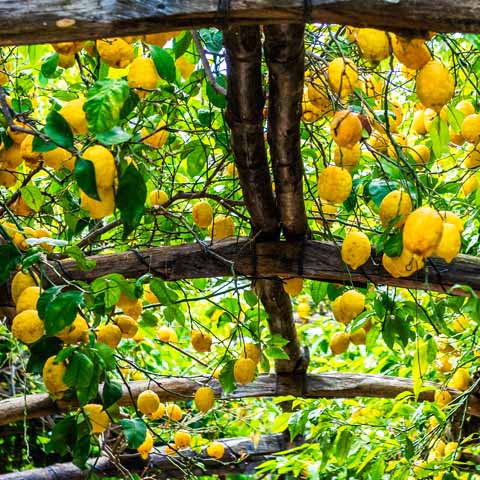
Southward, the Amalfi Coast unwinds its vertiginous ribbon through Positano, Amalfi, and Ravello, an unforgettable day with a private driver and finer still as an overnight. Sorrento and its lemon terraces sit across the bay, while to the west the Campi Flegrei hide the sunken Roman city of Baiae, visible from a glass-bottomed boat, and the great amphitheater of Pozzuoli. North, the royal palace of Caserta answers Versailles with cascading gardens.

How far to reach depends on the trip’s rhythm, and that judgment is our craft. As part of a custom trip to Italy, we sequence excursions so each one refreshes the journey rather than crowding it, with every transfer, guide, and boat arranged in advance and supported around the clock. Naples rewards travelers who resist the urge to see everything, and we design itineraries that make that restraint feel like luxury.

Ready to Begin Planning Your Naples Vacation?

Naples deserves more than a template. Since 2003, Trips 2 Italy has designed private Italian vacations one traveler at a time, hand selecting every experience based on what you tell us rather than fitting you into a predefined package. Our Italian-born team plans Naples with the knowledge of people who call Italy home, from the Greek lanes of the centro storico to the vineyards on the slopes of Vesuvius, and we remain at your side throughout your trip with 24/7 assistance. Tell us how you imagine Naples, and we will craft the itinerary that matches it.

Explore Our Naples Vacation Itineraries

Frequently Asked Questions About Things to Do in Naples

The pairing of the National Archaeological Museum with the centro storico, including Spaccanapoli and the Veiled Christ in the Cappella Sansevero, is the essential first encounter, followed closely by a day at Pompeii or Herculaneum beneath Vesuvius. Trips 2 Italy arranges timed entries, private archaeologist guides, and drivers so each of these lands at its best hour.

Pompeii sits under an hour from the city, and the finest visits combine a private transfer with an archaeologist guide who routes the vast site around your interests and the quietest hours. Many travelers pair Pompeii with Herculaneum or with the summit of Vesuvius in a single unhurried day, which we compose with every detail arranged.

It is one of the city’s most memorable experiences: a descent of forty meters into Greek quarries and Roman aqueduct cisterns, through wartime shelters that once protected thousands, ending at the Roman theater hidden inside a city block. Paired with the excavations beneath San Lorenzo Maggiore, it reveals the ancient city preserved directly under the living one.

Capri, Ischia, and Procida all lie within easy reach by hydrofoil from the city port, each with a distinct character: Capri glamorous and dramatic, Ischia green and thermal, Procida pastel and unhurried. We arrange hydrofoil tickets or private boats and compose island days, or island overnights, around your pace.

Yes. A drive reaches the upper slopes of the volcano, and an easy guided walk follows the crater rim with the entire bay spread below. The experience pairs beautifully with Pompeii or Herculaneum, and wine lovers can finish with a tasting at a volcanic vineyard on the lower slopes, a sequence we arrange with a private driver throughout.

Wonderfully. Castles, underground passages, puppet theaters, funicular rides, pizza-making sessions, and boat days on the bay hold every generation’s attention, and the city’s warmth toward children is famous throughout Italy. We compose family itineraries so history arrives as adventure, with pacing, drivers, and guides matched to the youngest traveler.