
Best Ski Resorts in Italy: An Insider's Guide to the Alps and Dolomites
Italy is one of the most rewarding places in the world to ski, and one of the most misunderstood. Ask most travelers to name a European ski destination and they reach for the Alps of France, Switzerland or Austria. Yet Italy shares those same mountains, adds the incomparable pink rock of the Dolomites, and wraps the whole experience in the food, warmth and pace of life that make the country what it is. You can carve a wide, sunlit run in the morning, sit down to a long lunch on a mountain terrace, and be in a historic town square by evening. That combination is hard to find anywhere else.
This guide walks through the best ski regions in Italy, what makes each one special, and how to think about a trip so the mountains are only part of the story. Every itinerary we build is different, because the best Italian ski holiday for a strong intermediate who wants long days on piste is not the same as the one for a family with young skiers or a couple who want as much time in the spa and at the table as on the snow.
What Makes Skiing in Italy Different?
Three things set Italian skiing apart. The first is scenery. The Dolomites are a UNESCO World Heritage landscape, and skiing beneath their sheer towers is a genuinely different feeling from the rounded peaks elsewhere in the Alps. The second is the culture of the mountain day. Italians treat lunch as a highlight rather than an interruption, so the huts and terraces serve real food and the day has a rhythm that rewards slowing down. The third is contrast. Italy’s ski regions sit within reach of dramatic mountain landscapes, celebrated vineyards and beautiful towns, so a ski trip here never has to be only about the snow.
Because so much of the value is in how the pieces fit together, Italy rewards a planned, private approach over an off the shelf package. The mountains are spread across several regions, each with its own character, and the difference between a good week and a great one usually comes down to matching the destination, the timing and the off slope experiences to the people traveling.
Where Should You Ski in the Dolomites?
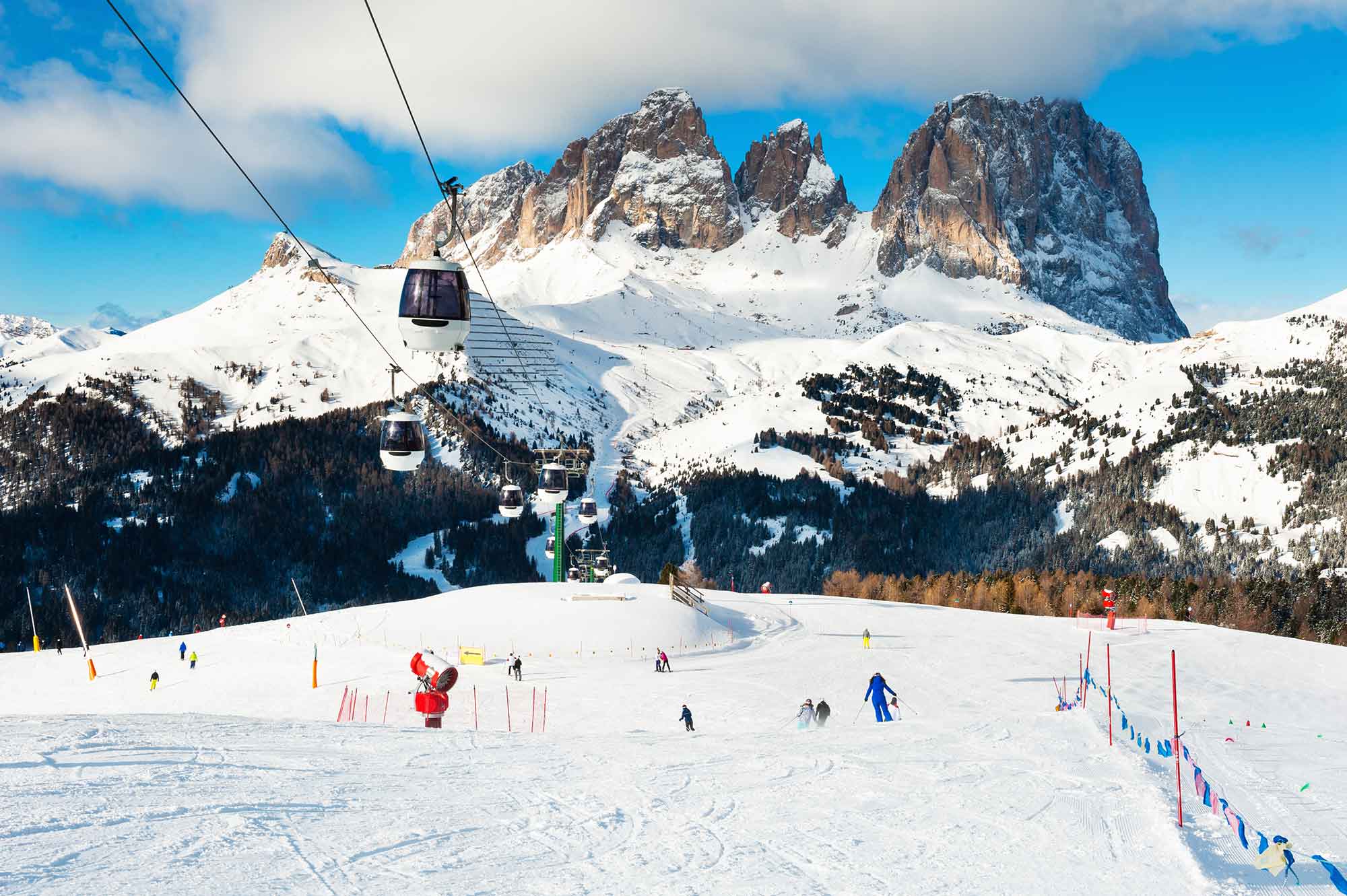
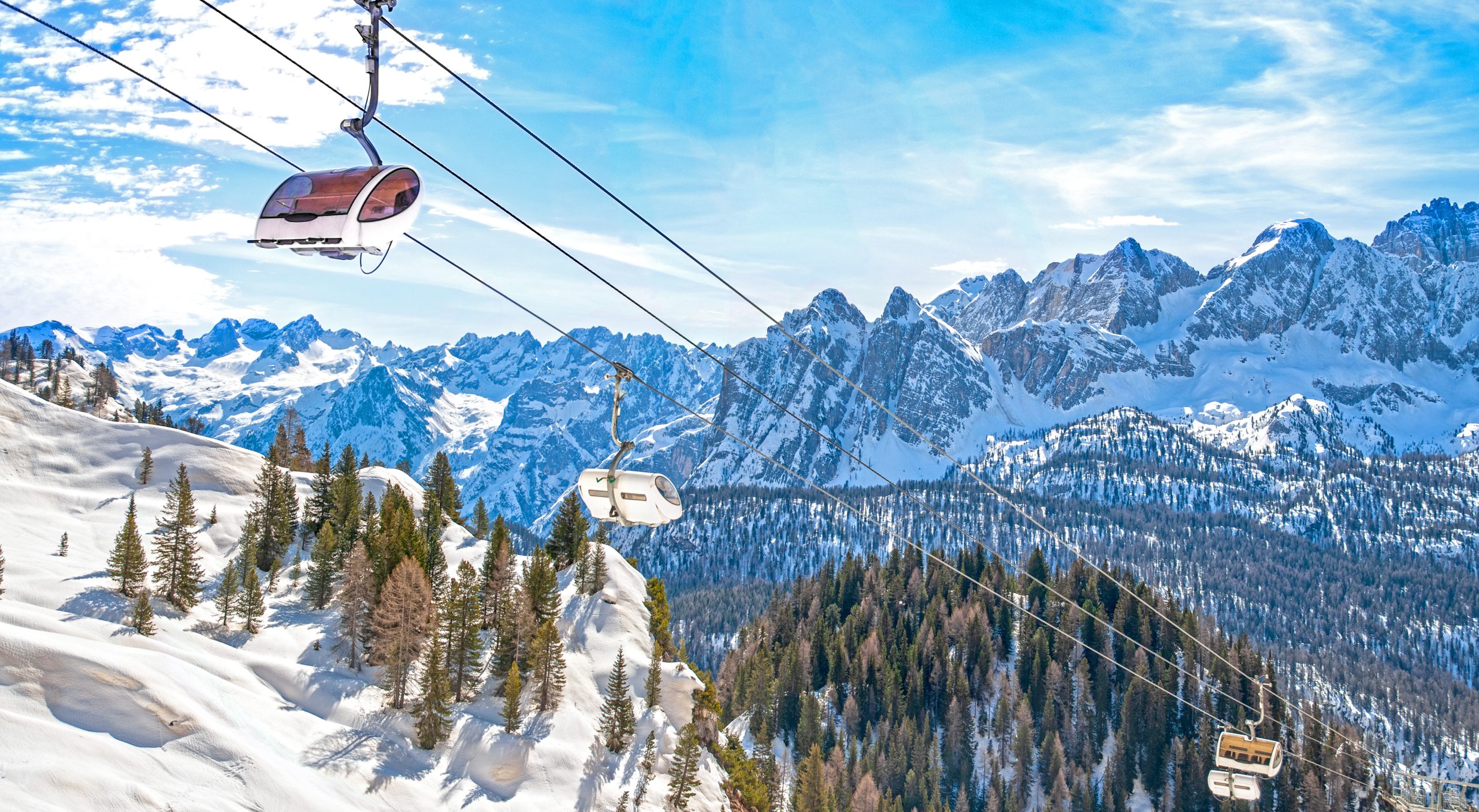
For many skiers, the Dolomites are the reason to come to Italy. The region straddles Trentino Alto Adige and the Veneto, and it is home to one of the largest connected ski networks anywhere, where a single pass opens a web of valleys and villages. The skiing suits confident beginners and intermediates especially well, with long, well groomed runs and gentle sun filled bowls, while the scenery gives even an easy morning a sense of occasion.
Cortina d’Ampezzo, in the Veneto, is the most storied of the Dolomite towns, elegant and social, a place as much about the promenade and the long lunch as the descent. Deeper into Trentino Alto Adige, the villages feel more Alpine and the culture carries a distinctive blend of Italian and Austrian influence, right down to the food. Names like Val Gardena, Alta Badia and Madonna di Campiglio, linked across the Sella Ronda circuit, are the heart of the region. This is the region we most often recommend for a first Italian ski trip, because it delivers the postcard version of the Alps with an unmistakably Italian warmth.
Why Choose the Aosta Valley for High-Altitude Skiing?
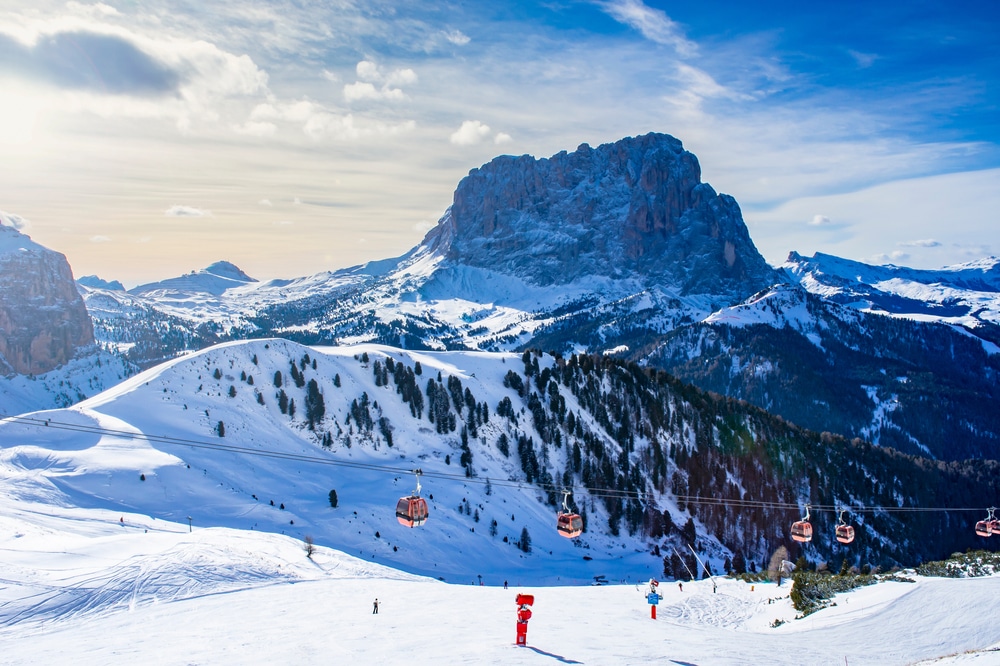
The Aosta Valley in Italy’s northwest sits beneath the highest summits in the Alps, beneath the highest summits in the Alps. This is the region for skiers who want altitude, snow reliability and long descents, with villages that look up at giants. Courmayeur beneath Mont Blanc and Cervinia beneath the Matterhorn are the marquee names here. The high elevation means the season holds later into the spring, which makes it a strong choice for a March or early April trip when lower areas are winding down. Beyond the skiing, the valley is dotted with medieval castles and Roman remains, so the history is never far from the slopes.
What Do Lombardy and Piedmont Offer Skiers?
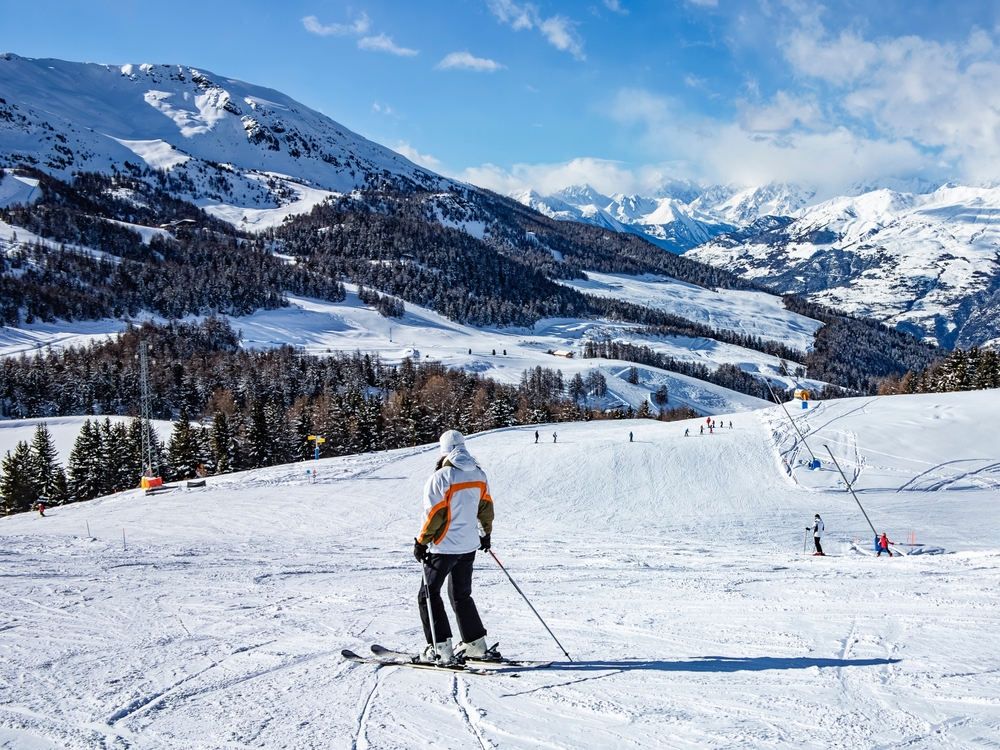
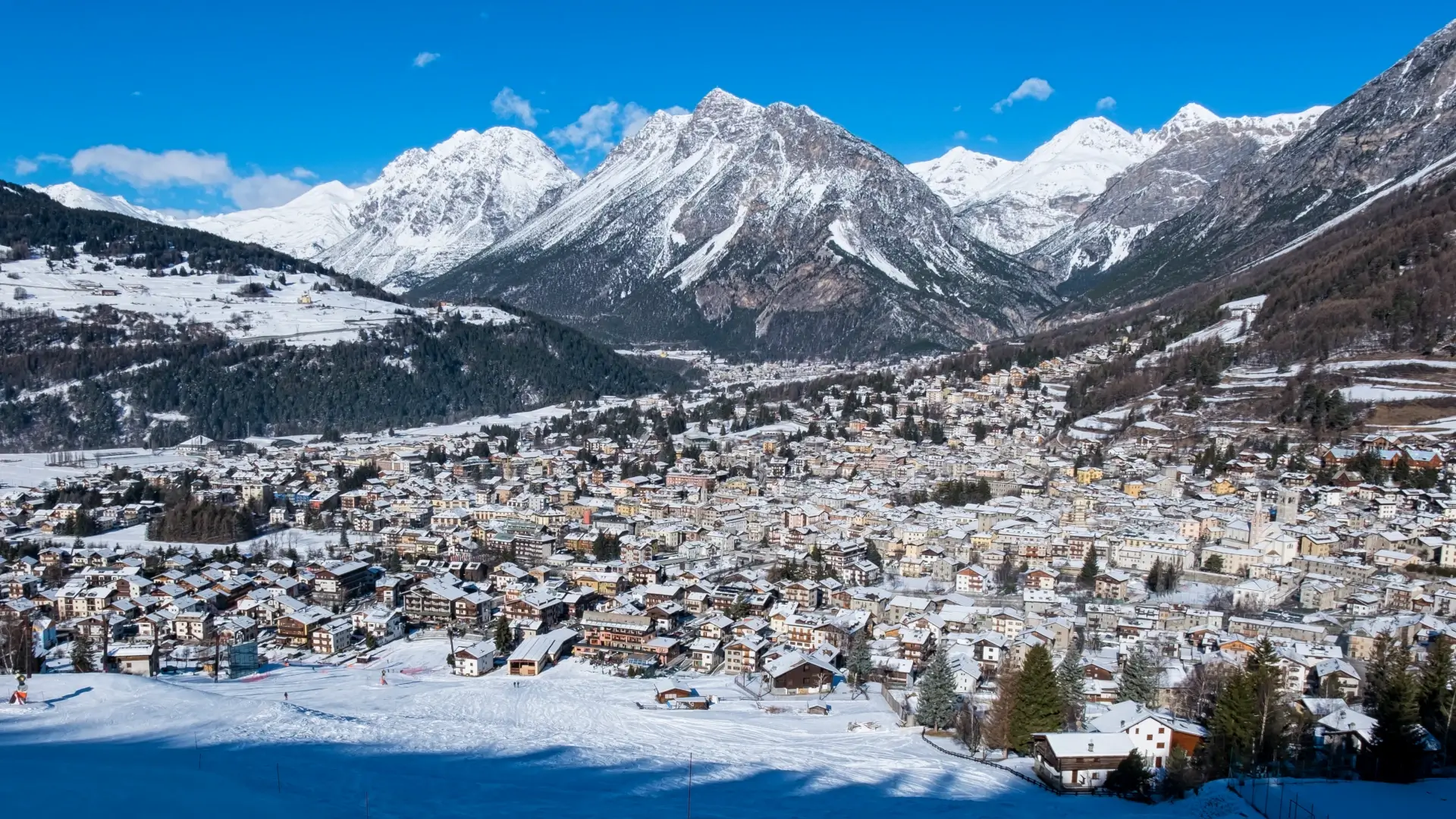
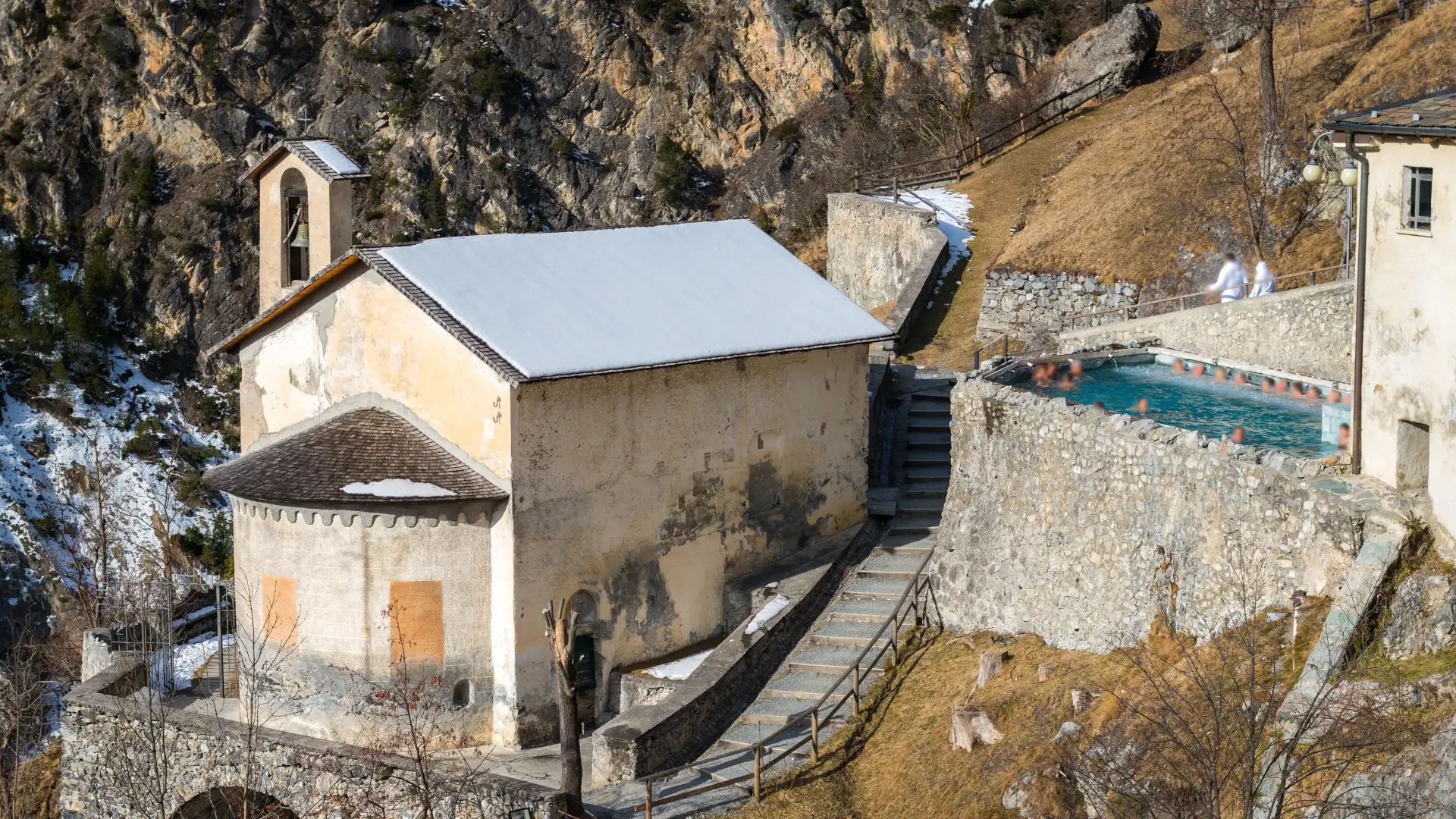
Lombardy holds some of Italy’s highest ski villages, known for long, dependable seasons and, in places, natural thermal springs where you can soak tired legs after a day on the snow. It is a quieter, more local feeling choice, well suited to travelers who want excellent skiing without the busiest crowds.
Piedmont, to the west, offers wide, sunny slopes within easy reach of Turin, which makes for a short and simple transfer at the start and end of a trip. Sestriere and the wider Milky Way area give Piedmont wide, sunny pistes, and Piedmont is also one of Italy’s great food and wine regions, so a ski base here pairs naturally with tastings and long lunches in the surrounding hills. For travelers who want the mountains and the vineyards in the same week, it is hard to beat.
When Is the Best Time to Ski in Italy?
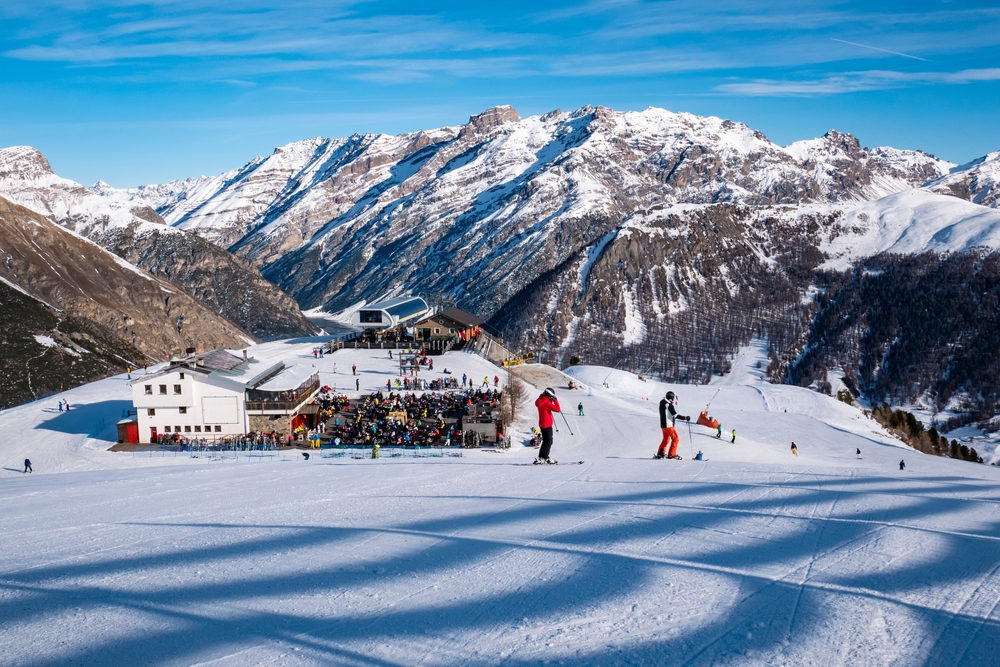
The Italian ski season runs roughly from early December to mid April. The most reliable conditions and the longest days fall between January and March. The Christmas and New Year weeks and the February school holidays are the busiest and liveliest, wonderful if you want atmosphere, less ideal if you want space. The quieter weeks on either side of those peaks are our usual recommendation for travelers who can be flexible, and the high altitude areas of the Aosta Valley and Lombardy carry the season latest into the spring.
What Is There to Do Beyond the Slopes?
The best Italian ski trips are not measured only in vertical descent. A morning on the snow can give way to a spa afternoon, a tasting in a nearby cellar, or an hour wandering a historic town. The mountain regions sit within reach of some of Italy’s most iconic destinations, so it is entirely natural to combine a few days of skiing with time in a city or the countryside. This is the version of a ski holiday that stays with people, and it is the one we most enjoy designing.
How Do You Get to the Italian Ski Regions?
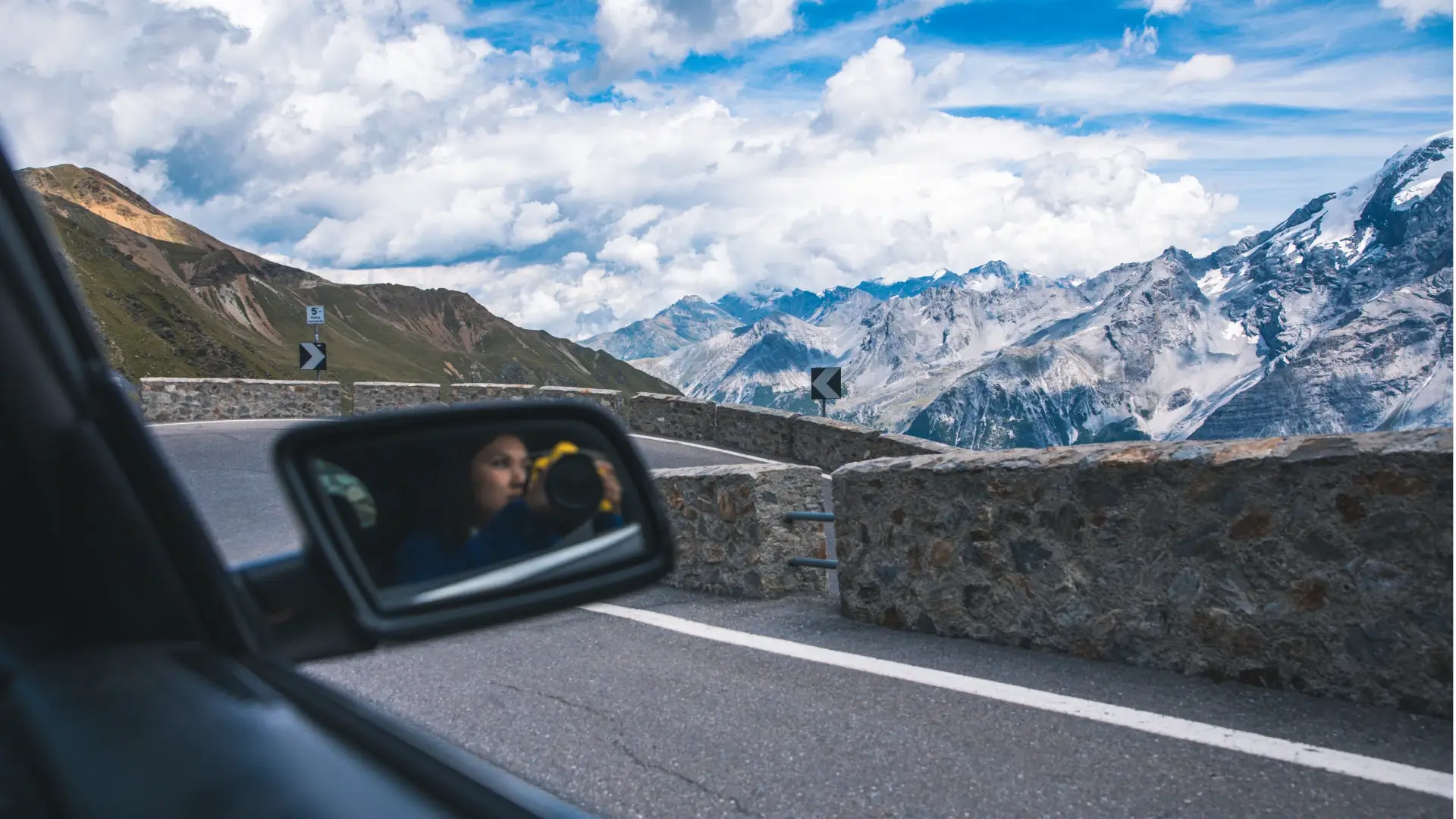
Reaching the Italian mountains is easier than many travelers expect. The Dolomites are within a few hours of Venice, the Aosta Valley and Piedmont sit close to Turin and Milan, and Lombardy’s high villages are reachable from those same gateways. We arrange private transfers so the journey from the airport or the city to the snow is smooth and scenic rather than a logistical puzzle, and we time arrivals so the first morning on the mountain starts well rested. Once you are in resort, many of the best Italian ski villages are compact and walkable, with lifts a short step from where you stay, so a day flows easily from the first run to the long lunch to the evening.
For travelers who want to see more than one area, we plan the route so each leg connects naturally, whether that means pairing two valleys in the Dolomites or bookending a few days on the snow with time in a nearby city. The point of a private itinerary is that the logistics disappear into the background and the trip feels effortless, which is exactly how a mountain holiday should feel.
How Do We Build Your Custom Ski Trip?
Every trip we plan begins with a conversation about how you like to ski and what you want the rest of the day to look like. From there we match the region, the timing and the private guiding and instruction to the group, and we arrange the transfers, the experiences and the details so the week runs without friction. You can see the shape of what is possible across our Italian regions, and when you are ready we will design a trip around exactly the mix of mountains, culture and comfort you are looking for. If a ski holiday is only part of the plan, we build it into a larger custom vacation to Italy so the whole trip flows as one.
Frequently Asked Questions About Skiing in Italy
Where are the best ski resorts in Italy?
Italy's best skiing is spread across the northern Alps and the Dolomites. The Dolomites in Trentino Alto Adige and the Veneto are famous for dramatic scenery and the vast Dolomiti Superski network. Aosta Valley in the northwest sits under the highest peaks in the Alps, Lombardy holds high altitude villages known for long snow seasons, and Piedmont has wide, sunny slopes within easy reach of Turin. The right choice depends on how you like to ski and what you want to do when you step off the mountain.
What is the best time to ski in Italy?
The Italian ski season generally runs from early December to mid April, with the most reliable snow and longest days from January through March. High altitude areas hold their season later into the spring. If you prefer quieter slopes and softer prices, the weeks outside the Christmas and February holiday peaks are ideal, and we plan around them for travelers who can be flexible.
Is skiing in Italy good for families?
Yes. Many Italian ski areas are gentle, well organized and welcoming to children, with dedicated learning areas and patient instruction. We often pair skiing with time off the slopes so a multi generational group can share the trip, which is why a custom itinerary works better here than a fixed package.
Do I need to speak Italian to ski in Italy?
No. Ski schools and mountain staff in the main resorts are used to international visitors and English is widely spoken on the slopes. When we arrange private guiding and instruction, we match you with people who make the day effortless, so language is never a barrier to a great trip.
Can you combine skiing with cities and food and wine?
Absolutely, and it is one of the best reasons to ski in Italy rather than anywhere else. A morning on the snow can be followed by an afternoon in a historic town, and many ski regions sit beside celebrated wine country. We build these contrasts into a single trip so the mountains are only part of the story.
Related Pages
Plan Your Italian Ski Trip
Italy offers a rare combination of world class skiing, breathtaking scenery and a culture that knows how to enjoy the mountains. Whether you are drawn to the Dolomites, the high Aosta Valley or the vineyards of Piedmont, we will build a private itinerary around the way you want to travel. Trips 2 Italy has been designing custom Italian vacations since 2003, more than 20 years of planning trips from the inside. To start yours, call 713-952-4055 or 1-866-464-8259.