
Lombardy occupies a central position innorthernItaly not only froma geographical point of view. Regarding its location, the region stands in the middle of the northern side of the country. From a functional perspective, Lombardy is a strong region, boasting a leading position in the national economic system.
From the point of view of connections, this region is the pivot that links the Italian roads to the rest ofEurope. In fact, Lombardy is located on the intersection of the axes that link the Mediterranean to the North Sea through the valley of the Rhine, and the southwestern and Atlantic Europe to the Balkan and Eastern Europe through the Alpine passes and the valley of Po.
The region was initially called Longobardia, a name derived from the Longobards, some groups of Germanic populations who inhabited the area. The modern name, Lombardy, has Byzantine origins and derives from the initial name.
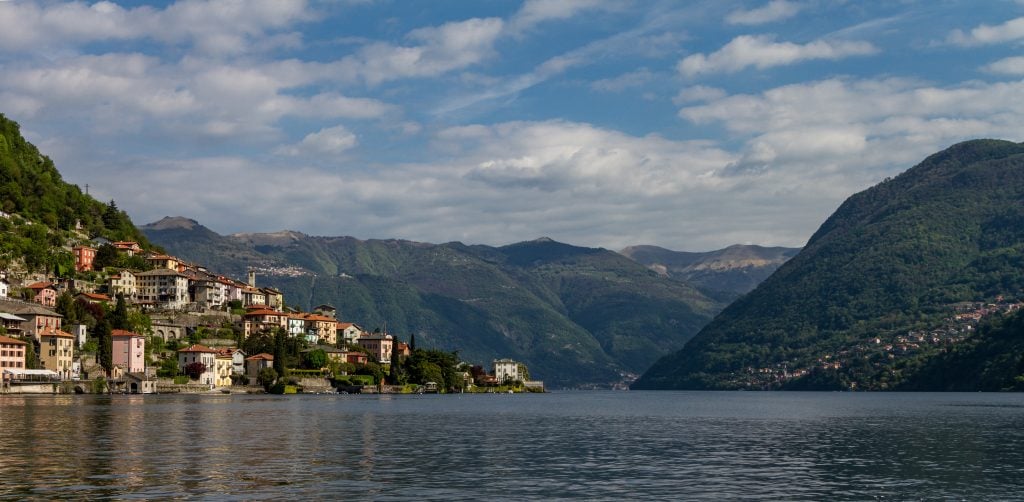
On the map, Lombardy looks like a large quadrilateral stretching from the Alpine watershed to the Po on the North-South axis. The Western border of the region is marked by Lake Maggiore, while Lake Garda pinpoints the Eastern border. Yet, the administrative boundaries of the region are less regular. In fact, in South-West, Lombardy’s administration includes the Lomellina area, while in the South-East, in the province of Mantua, there are two flat strips located on the right bank of the Po which belong to the region.
The region’s borders with Switzerland were shaped by complex historical events which left the canton of Ticino to the neighboring country.
Lombardy is one of the most developed regions in Italy from an economicpoint of view and plays a leading role in the manufacturing and services sectors. The distribution of the municipalities and the innovative spirit of Lombardy are the result of complex historicalevents, which include the passage of many ethnic groups in the region. These events have also marked the structure of today’s Lombardy.
Prehistory of Lombardy
The documentation of archaic industries in Lombardy is very scarce. There are few splinter artifacts dating back to the Lower Paleolithic era, found in the province of Brescia in the area of Mount Netto.
The region doesn’t have strong archaeological evidence of the Middle and Upper Paleolithic eras. Some sporadic materials were found in a few caves in the administrative territory of Erba, and also in the municipality of Entratico, especially in the caves Buco del Piombo and Buco del Corno. However, the remains from the Neolithic and Bronze Age are numerous and have been found in many pile-dwelling settlements on the shores of the lakes and in the outskirts of some villages.
Among the most important findings were some black ceramic artifacts found in Lagozza di Besnate in the province of Varese. These materials belong to a culture from the Neolithic period, and their use was continued in the Copper Age in Lombardy and in other neighboring regions.
Testimonies from the Eneolithic age were found in the outskirts of Cremonese. Noteworthy are also the tombs of Fontanella Grazioli, in the municipality of Casalromano in the province of Mantua, while some ancient remains were also documented in the province of Brescia.
During the Early Bronze Age, the populations inhabiting the region settled mainly around Lake Garda and in the current province of Brescia. These populations developed the Polada culture, characterized by uncooled coarse pottery.
Other prehistoric artifacts found in the region belong to the terramaricindustries and include decorated urns used for cremation and burial rituals, along withother types of ceramics. The territory was of great interest for the prehistoric civilizations and the region kept flourishing in the Early Iron Age. From this era, the culture of Golasecca is probably the most noteworthy.
Notable remains of the culture were found in the Ca’ Morta necropolis near Lake Como, and also in other burial sites in the area of Lake Maggiore.
To the Iron Age belong a series of important engravings found in Valcamonica. Representing human and fauna figures, many of these engravings have a religious nature. In the area of Valtellina, especially in the municipality of Grosio, were found artifacts from the Bronze Age and Neolithic era.
However, the vast majority of the artifacts found in Lombardy are dated in the historical age and belong to the Gallic, Roman and later cultures.
History of Lombardy
Lombardy’s territory has been of particular interest tothe Celtic population, who inhabited the region in its earliest times. The Gauls settled in the pre-Alpine area. The Insubres, another Gaulish population, settled in the central area of the region. From their name derived the name of Insubria, the ancient denomination of Lombardy.
The Insubres, together with other Gaulish peoples, attempted an incursion over the Apennines in 225 BC. They were inflicted in Etruria by Attilio Regolo, and the defeat weakened the Gauls so much that they were unable to defend their own territory from the occupation of the Roman legions.
The Roman legions entered Lombardy and advanced to the river Chiese, where they forced the passage of Adda and defeated the Insubres near their capital, Milan, in 222 BC. These events gave the Romans full control overnorthernItaly.
The Romans established permanent colonies throughout the territory, including Cremona in 218 BC. When Hannibal entered the region later that year, the Gauls abandoned the region, siding with the Carthaginians. This union helped the Gauls regain their independence, but only for a short time, as the region was quickly subdued by the Romans once again.
In Lombardy, the Romans saw an opportunity for the development of agriculture. Their intervention turned the uncultivated lands and marshes into fertile fields, and the Roman subdivisions of the lands still characterizeLombardy’s countryside to this day.
In 101 BC the region was invaded by the Cimbri, but their arrival didn’t shake the loyalty of the inhabitants towards Rome. Following a short social war, the region became a true Roman province and was given the name of Gallia Cisalpina.
The Romantroops conquered the mountainous area of Lombardy in the time of Augustus, and at the end of the third century AD, Milan was named the capitalof the Western Roman Empire as a result of its strategic value in the wars against the barbarians.
During the invasions of the Germanic peoples, Lombardy was devastated by numerous conflicts until the Longobards settled permanently in the region. At that time, they gave the whole territory under their occupation the name Longobardia, to distinguish it from the territories occupied by the Byzantines.
The Longobard kingdom was followed by the Carolingian empire in 774 AD. The Carolingian empire had a short life and fell in 888 AD. Lombardy included, at the time, the areas between Ticino-Trebbia, the Alps and the Apennines, including the valley of Po.
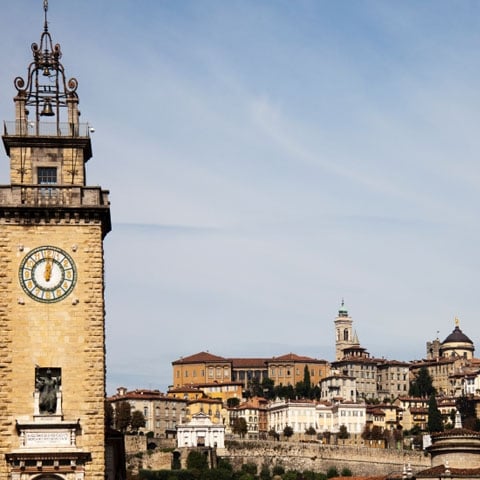
This history of Lombardy continues with a period of struggles between the feudal lords and the bishops. The urban agglomerations started to replace the traditional settlements and the lords, freeing themselves from the protection of the bishops in the eleventh century, created the main municipalities. Among them, we can mention Pavia, Bergamo, Como, Brescia, Cremona, and Lodi.
Political unity emerged in the region in the middle of the thirteenth century, when the Signorie were established.
The Scaligery entered Lombardy in the fourteenth century; at the same time, the possessions of the Visconti extended from Milan to the whole region, with the exception of Mantua, an area flourishing under the rule of the Gonzaga.
Under Gian Galeazzo, the Visconti extended their domains to their maximum extension, including vast territories outside Lombardy. At Galeazzo’s death, in 1402, some of the outer territories of the Visconti domain proclaimed their independence, only to be subjugated by Venice. This was the fate of Brescia and Bergamo.
The domains of Venice extended to Cremona in the sixteenth century, while Bellinzona and Ticino passed under the Swiss domination. In the meantime, Valtellina passed to the Grisons for a short period of time, between 1512 and 1797.
The areas under the Venetian rule only became subject to foreign domination in 1797 when,with the Peace of Campoformidio, the western area was given to Spain and then to Austria.
The administrative boundaries of Lombardy as we know them today were established after the annexation of Valtellina in 1797 and Mincio area in 1815.
During the Napoleonic era, Lombardy became part of the Cisalpine Republic and then passed under the Kingdom of Italy. However, in 1815, following the Congress of Vienna, the region was annexed to the Republic of Venice and became the Lombard-Venetian Kingdom under an Austrian government.
During Risorgimento, Lombardy witnessed some of the most significant episodes of popular uprising and the first war of independence. Milan’s insurrection against the Austrians was led by Carlo Cattaneo, and Lombardy was among the first regions to become part of the Kingdom of Italy after the second war of independence in 1859.
Following the war and annexation to Italy, the region experienced a significant phenomenon of industrialization, especially in the provinces of Brescia, Bergamo, Como, and in the former province ofMilan. The region became the center of the cooperative and trade union movements and has seen strong social tensions between the Catholics and the socialists.
During the First World War, Lombardy’s territory was severely damaged by aerial bombardments, particularly in 1915 in the areas of Brescia and Milan. The region was the epicenter of the labor force struggles that shook Italy between 1919 and 1920, then it witnessed the spread of fascism.
Officially born to recreate a strong Italy, the fascism brought economic and industrial development in the region. Lombardy was one of the main targets of the Anglo-American troops in the Second World War and, after the armistice in 1943, it had a fundamental contribution tothe partisan struggles.
Although deeply marked by the war, Lombardy recovered in only a few years, summing up an important role in the Italian economic and political life.
Archaeology in Lombardy
Traces of an early Etruscan presence have been found in many areas in Lombardy, especially in the territories of Mantua. The Gallic penetration in Lombardy in the fifth and fourth centuries BC left a widespread archaeological documentation in many places. Remains from the Insubres were found in the area of Milan.
Important artifacts were also reported in Brescia, while some noteworthy sites are the necropolises of Somma Lombardo, Castiglione DelleStiviere, andCarzaghetto. The burial sites are also abundant in the Alpine and pre-Alpine areas, the last ones to be occupied by the Romans.
Sadly, the region is not rich in Roman remains. Some municipalities, such as Brescia, Como, and Pavia retain some of the ancient urban networks, but the remains are rather scarce. Moreover, the importance of Cremona in the history of the region is only attested by a few mosaics.
Despite the rather scarce presence of archaeological sites in Lombardy, Milan preserves many remains of grandiose Roman buildings, including theaters and amphitheaters. The largest Roman villa innorthernItaly is in Sirmione.
Under the Capitolium in Brescia are located some sacred buildings from the Republican age, adorned with paintings and mosaics. DesenzanodelGarda features the remains of a grandiose mansion preserving century-old mosaics from the late Roman age.
The art of sculpture in Lombardy is represented by some remarkable works made in marble and bronze preserved in the City Museum in Brescia. Noteworthy is also the Archaeological Museum of Milan, while artifacts and remains from prehistory and history are also scattered throughout the region in numerous other museums.

Travel Guides
[wudrelated include="1837"]
[wudrelated include="2510"]
[wudrelated include="184"]